%20(1).svg)

.svg)

Introduction
Choosing where to invest in Canadian agriculture depends on soil, climate, infrastructure, market access, and local service for farmland equipment. This guide walks landowners and farmers through the provinces that often give the best returns for farmland investment, and ties those choices to real needs around farm equipment, leasing, maintenance, and long-term land care. Where you buy land matters, and so does the availability of reliable farm machinery and local support for tractor sales.
Why province choice matters for agricultural investment
Province-level differences shape the crops you can grow, the scale of operations, and the equipment you need. Soil texture and drainage affect what planting gear you buy. Climate determines your harvest windows and influences your choice of farmland harvesting equipment. Local rules and commodity markets shape profitability and the willingness of dealers to stock agriculture equipment.
Investment success is often about matching machinery, maintenance capacity, and local services to production goals. Provinces with strong dealer networks make it easier to find parts, financing, and used machines when you scale operations up or down.
Top provinces to consider and what each offers
Each province has strengths and tradeoffs. Below are six provinces to look at, with a quick note on why they matter for equipment and land stewardship.
- Saskatchewan: Large-scale grain country, easy access to farmland equipment dealers for combines and large tractors.
- Alberta: Diverse cropping and livestock, strong market for both new and used farmland equipment.
- Manitoba: Good soils for pulses and cereals, solid support for farm equipment for lease and rental services.
- Ontario: Proximity to major markets, higher land costs, deep market for specialty agricultural machinery sales.
- Quebec: Mixed farms and niche crops, local dealers offering tractor equipment for farms and attachments.
- British Columbia: Hilly and varied, suited to specialty and horticulture gear, increasing demand for compact farm equipment.
How to compare provinces for equipment access and costs
When comparing provinces, consider dealer density, auction frequency, and transport costs. Provinces with many auctions or active classifieds often have lower prices for used farmland equipment. Areas close to major roads and ports reduce freight costs for large farm machinery. Think beyond sticker price. Availability of service technicians affects downtime, and downtime affects yield and margins.
Another practical angle is the financing and leasing landscape. Provinces with active agricultural lenders and equipment lessors give investors more ways to match capital to need.
Essential equipment and how provincial choice changes the list
Your equipment list depends on scale and crops. Here are common essentials to budget for and where provincial conditions change the priority.
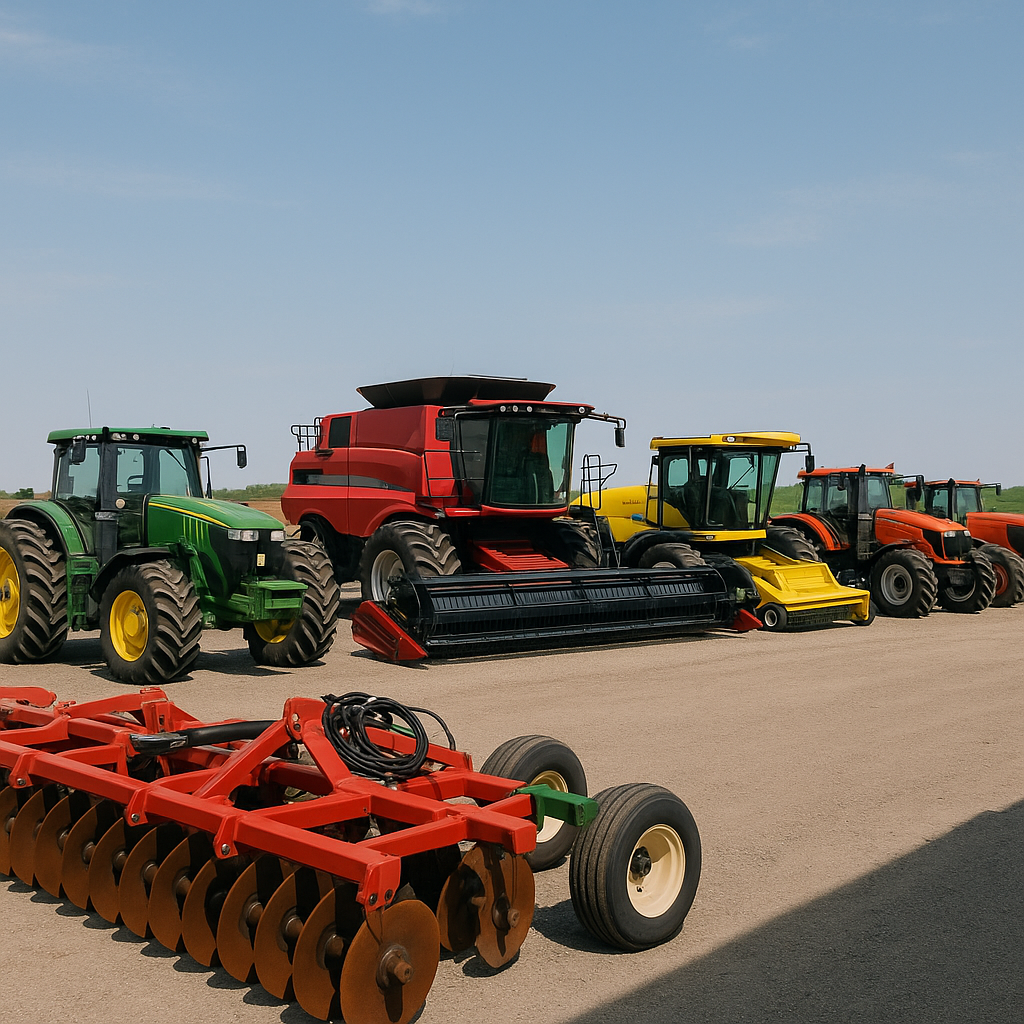
- Tractor sales priority: large tractors in western grain regions, compact tractors in British Columbia and mixed farms.
- Planting equipment for farmland: wide planters are essential in Saskatchewan and Manitoba.
- Farmland harvesting equipment: combines and headers matter most where cereals dominate.
- Sprayers and sprayer attachments: crucial in intensive cropping areas across Ontario and Quebec.
- Baling and forage equipment: higher priority in Alberta and Quebec where livestock dominate.
- Farmland equipment maintenance tools: diagnostic tools and a parts inventory reduce repair delays.
What is farmland equipment?
Farmland equipment means the machines and implements used to plant, manage, and harvest crops or manage livestock. That includes tractors, planters, harvesters, sprayers, balers, and attachments.
Where to find machines and the role of used equipment markets
Dealer networks, auctions, classified listings, and online platforms shape access to machinery. In the prairie provinces, auctions are frequent and often supply a steady stream of used farmland equipment. In Ontario and Quebec, dealerships and trade shows are more common, and they often carry the latest modern agricultural equipment.
Used equipment can let new investors scale faster, but you need a clear inspection and maintenance plan. A reliable local mechanic and access to parts matter more than a small price discount on an old machine.
How to choose farm equipment?
Choose machines that fit your scale, crop, and labor. Look at horsepower needs, implement compatibility, and resale value. Prioritize reliability, parts availability, and local dealer support for farm machinery.
Financing, leasing, and the growing rental market
Not every investment needs to be an outright purchase. Leasing and rental reduce capital pressure and let you match capacity to seasonal needs. Many provinces now have rental services that specialize in short-term needs for planting or harvest.
When comparing options, factor in maintenance responsibilities, insurance, and transport costs. Leasing often covers major repairs, while rentals are typically short-term and priced per use.
Can I lease farmland equipment?
Yes, you can lease farm equipment through dealers, banks, and specialized lessors. Leasing works well if you want to keep cash for land or if equipment needs change with crop rotation.
New versus used: a practical comparison
New machines have warranties and the latest efficiency features. They can lower fuel and labour costs over time. Used machines cost less up front and can be a smart choice when margins are tight or when you need multiple machines quickly. Think through expected hours of use and likely repair costs.
For many investors in Canada, a hybrid approach works: buy a new tractor for daily heavy use, and supplement with good, maintained used farmland equipment for less critical tasks.
Is used farm equipment reliable?
Used machines can be reliable if inspected, maintained, and used in line with their history. Prioritize service records, hours of use, and a pre-purchase inspection from a mechanic or dealer.
Local services that matter: dealers, mechanics, and auctions
After-sales service shapes operational uptime. Provinces with dense networks of dealers and independent mechanics reduce downtime on critical equipment. Look for regions with regular equipment auctions if you expect to buy or sell machinery often. Online platforms and regional auction houses are more active in the Prairies and parts of Ontario.
Dealers also influence access to farmland equipment financing, warranty servicing, and trade-in values. If you plan long-term investment, proximity to a reputable dealer is a risk reducer.
Soil stewardship and equipment impact on long-term land value
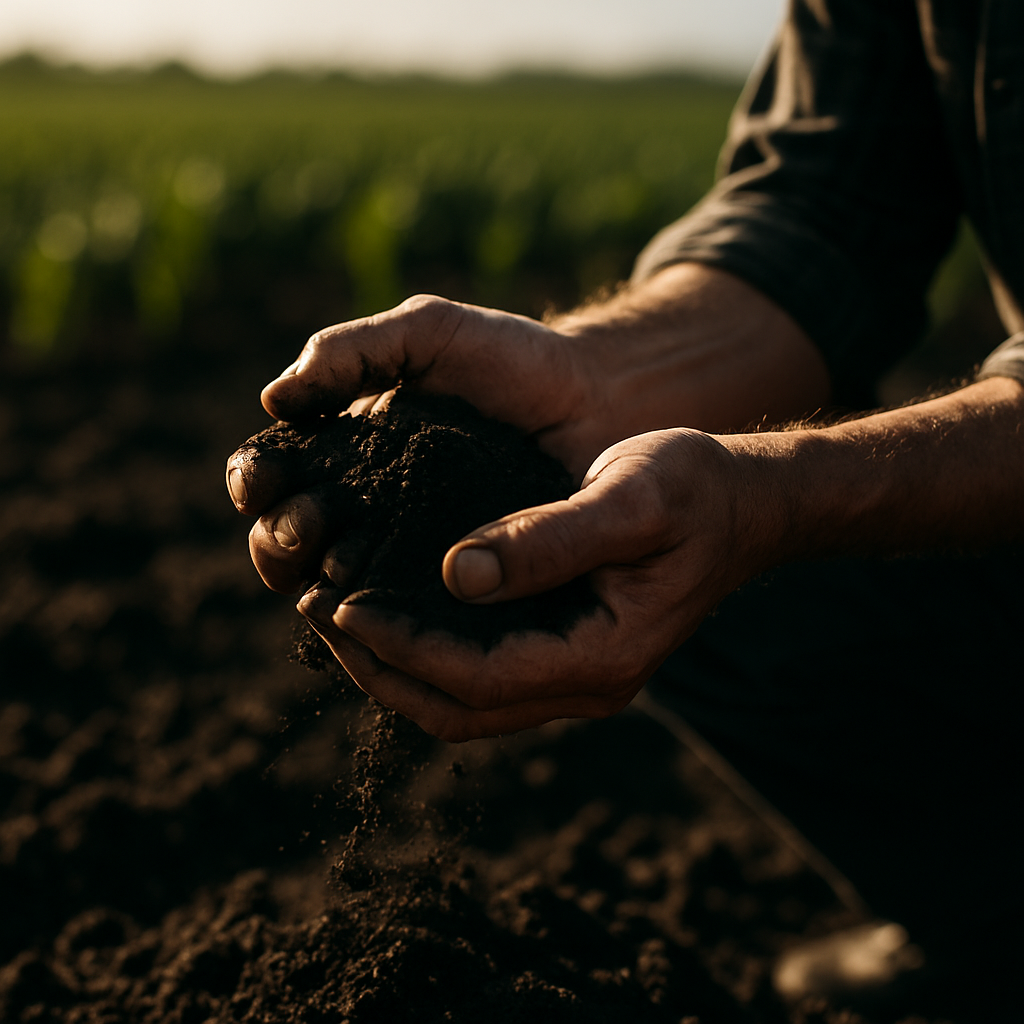
Equipment choices affect soil health. Heavy machines increase compaction risk, which can reduce yields and increase erosion. Matching machine width and tire or track technology to soil type reduces compaction. In provinces with fragile soils or shorter growing seasons, lighter compact farm equipment and careful traffic management can preserve productivity.
Long-term land value depends on yield sustainability. Invest in equipment that supports conservation tillage, cover crop seeding, and precise nutrient applications. Those practices help protect the asset you are buying into.
Leasing land, equipment sharing, and management of tenant responsibilities
If you invest as a landowner who leases to operators, clarity in contracts about equipment and land care is essential. Define who is responsible for maintenance of equipment left on site, who pays for repairs, and how soil conservation practices will be enforced. Tools like inventory lists and inspection checkpoints at tenancy start and end are practical and enforceable steps.
Platforms such as Land4Rent can help structure listings and provide a transparent record of agreements, making it easier for landowners and tenants to manage expectations without conflict.
Practical tips for buying equipment in different provinces
Think logistics. Moving large machines between provinces adds cost. Inward freight to remote regions raises final cost and reduces the attractiveness of bargain used machines. Plan for winter storage and off-season maintenance where winters are harsh.
Look for regional strengths: Saskatchewan and Manitoba for large grain machinery, Alberta for mixed operations and livestock gear, Ontario for specialty crop equipment and service density, Quebec for mixed farms with strong local dealer networks, and British Columbia for specialty and compact equipment.
Maintenance and checklist for long-term asset protection
Establish a maintenance plan on day one. Regular oil, filter, and hydraulic checks extend machine life. Keep a log of repairs and hours of use. A well-maintained used machine often outperforms a neglected newer model.
Consider a spare parts kit for critical components, and build relationships with local service shops. In regions with lower dealer density, proactive maintenance saves costly downtime during peak windows like planting and harvest.
How market trends affect province choices
Watch commodity prices, input costs, and equipment trends. For example, rising interest in direct seeding and no-till affects demand for specialized planters and residue managers. Emerging precision tools and telematics are more available in regions with strong capital investment and dealer support. Those trends will affect resale values and the ongoing cost of ownership.
Conclusion
Choosing the best province for agricultural investment in Canada requires balancing land quality, climate, market access, and equipment support. The Prairies lead for large-scale grain operations, Ontario and Quebec for market proximity and diverse cropping, and British Columbia for specialty and smaller operations. Match your equipment strategy to provincial strengths and the services available locally. Use leasing, rentals, and targeted purchases to reduce capital strain, and document responsibilities clearly when leasing land or equipment. For landowners and tenants, small tools like clear inventories and platforms such as Land4Rent can make leasing relationships more transparent and reduce disputes.
Find or lease farmland faster with Land4Rent.
Frequently Asked Questions (FAQs)
What is the best province for large-scale grain equipment needs?
Saskatchewan and Manitoba are top choices for large-scale grain operations because they have wide fields, frequent auctions, and dealers that support large farm machinery.
How much does farmland equipment cost?
Costs vary widely by type, age, and condition, but expect tractors and combines to be the largest single purchases, with prices influenced by hours of use and local demand.
Can I rent farmland equipment instead of buying?
Yes, rental is common for peak tasks and can be cost effective for small or seasonal needs, especially where rental fleets are local.
How to finance farm equipment purchases?
Financing options include dealer financing, bank loans, and equipment leases, each with different impacts on cash flow and ownership timing.
Is used farm equipment a good option?
Used equipment can be a very good option when inspected and maintained, and when local service and parts are available.
What equipment should small farms prioritize?
Small farms often prioritize a reliable tractor, planting and cultivation tools suited to their acreage, and a durable sprayer or broadcast applicator.
How to maintain farm equipment for longevity?
Follow a routine maintenance schedule, keep service records, and address repairs promptly to reduce long term costs and downtime.
Why do tractor prices vary by province?
Prices differ due to local demand, dealer density, transport costs, and the availability of used machines through auctions and classifieds.
What causes farm equipment trends like precision adoption?
Trends come from cost pressures, labour availability, yield improvement opportunities, and dealer support for new technology.
How to sell used farm equipment effectively?
Use clear records, good photos, and multiple channels like auctions, dealerships, and online platforms to reach buyers and maximize sale value.

.png)


.svg)


.svg)