%20(1).svg)

.svg)

Introduction
The farmland rental business in 2026 looks fundamentally different from what it did even five years ago. What was once a fragmented market dominated by private handshake deals and opaque pricing has transformed into a transparent, technology-driven sector where competitive bidding determines rates and digital platforms handle everything from listing to lease signing. Canadian landowners and farmers are increasingly moving away from traditional broker-led arrangements toward direct, auction-based marketplaces that deliver measurable efficiency gains and often higher returns.
This shift reflects broader changes in how agricultural land leasing in Canada functions as both an investment asset class and an operational necessity for producers. The emergence of specialized rental platforms has introduced standardized workflows, verified participants, and real-time market pricing where little transparency existed before. Understanding these new business models is no longer optional for landowners seeking competitive returns or farmers needing reliable land access.
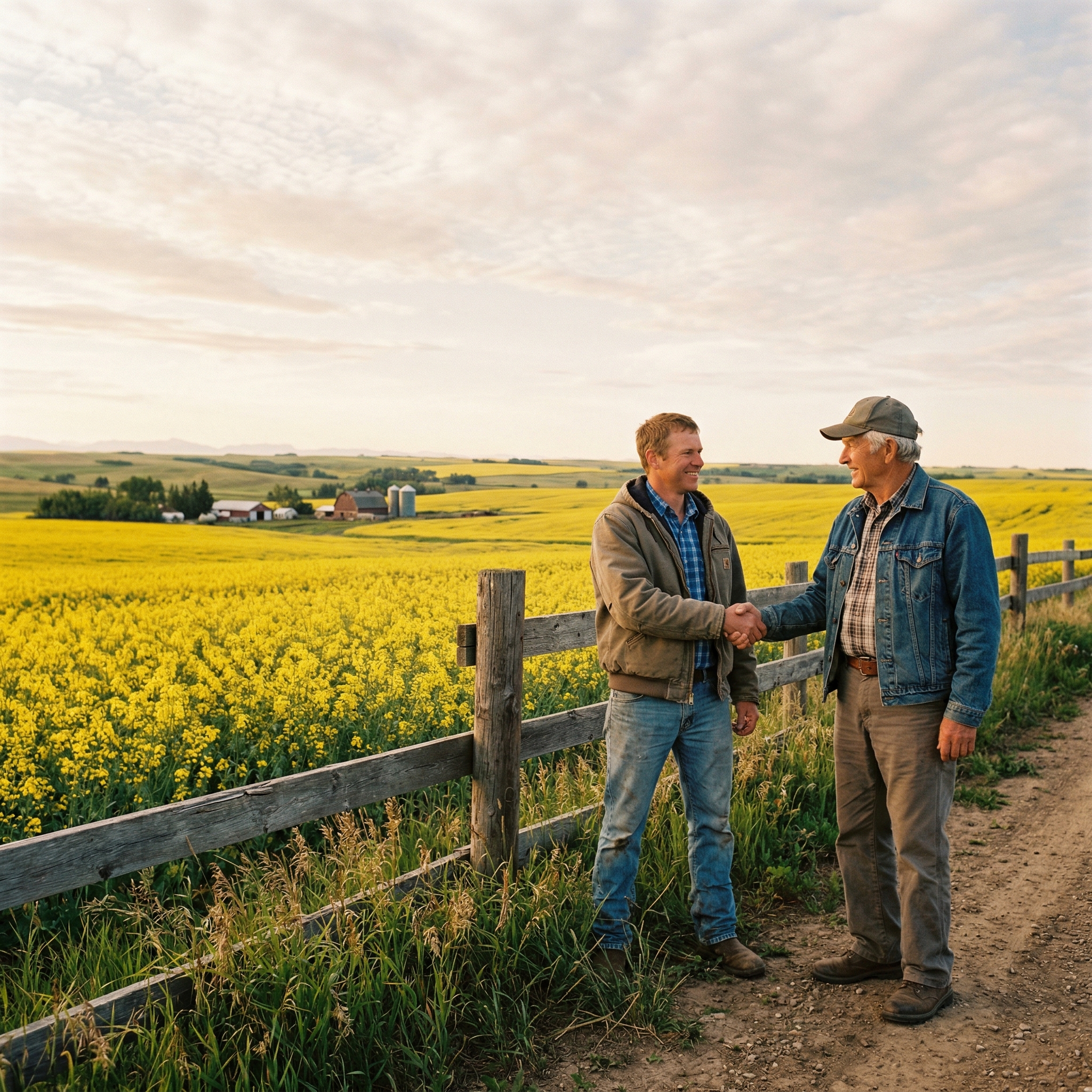
The Core Components of Modern Farmland Rental Businesses
Today's successful farmland rental operations share several defining characteristics that separate them from legacy models. These businesses are built on transparency, technology infrastructure, and market-driven pricing mechanisms rather than relationship networks or regional brokers.
Competitive Bidding as the Foundation
The most significant departure from traditional leasing is the widespread adoption of competitive bidding systems. Instead of landowners guessing at appropriate rates or accepting the first offer from a neighboring farmer, rental prices are now determined through structured auctions where multiple farmers bid on the same parcel. This model introduces genuine price discovery to a market that historically operated on anecdotal information and personal connections.
End-to-End Digital Infrastructure
Modern farmland rental marketplaces function as complete transaction platforms rather than simple classified listings. The business model depends on controlling the entire rental lifecycle from initial property posting to final payment processing.
This comprehensive approach eliminates the need for third-party lawyers, separate payment processors, or manual paperwork coordination. Landowners answer a standardized questionnaire about their property and preferred terms, and the platform generates a legally binding lease agreement automatically. Rental payments are processed directly through the system, creating auditable records for both parties while simplifying tax reporting. Verification processes confirm the identity and legitimacy of both landowners and tenants before any transaction occurs, reducing fraud risk that often plagues peer-to-peer arrangements.
Why Traditional Models Are Declining
The question of how farmland rental businesses work now has a fundamentally different answer than it did a decade ago. Traditional models relied on personal networks, local brokers charging percentage fees, and private negotiations that benefited insiders with established relationships. These approaches created information asymmetry in which well-connected participants had significant advantages over newcomers or absentee landowners.
Digital platforms have dismantled these barriers by making listings universally accessible and replacing relationship capital with transparent data. The cost structure has also shifted dramatically, with many platforms charging flat listing fees or small transaction percentages instead of the hefty broker commissions that previously consumed significant portions of rental income. For farmers, the ability to browse multiple properties simultaneously and submit bids without revealing their identity until winning an auction represents a substantial improvement over the uncomfortable dynamics of direct negotiation with a landowner who might also be a neighbor or community member.
Regional Variations and Provincial Market Dynamics
While the shift toward digital rental models is national in scope, implementation and adoption rates vary significantly by province. Regional differences in crop types, land values, and farming culture all influence how quickly new business models gain traction.
Alberta and Saskatchewan Lead Adoption
The Alberta farmland leasing marketplace and its Saskatchewan counterpart have seen the fastest uptake of auction-based platforms. Both provinces feature large-scale grain operations where farmers routinely manage thousands of acres and actively seek additional rental land each season. The comfort level with technology among younger farm operators in these regions has accelerated the transition away from traditional leasing methods.
Cash rent dominates both markets, making standardized lease agreements and transparent pricing especially valuable. Landowners in these provinces also tend to view farmland increasingly as a financial asset rather than family heritage, which creates openness to business models that prioritize returns over personal relationships. The Saskatchewan farm rental platform landscape has matured rapidly as producers recognize that competitive bidding consistently delivers higher rental rates than private negotiations, sometimes by margins exceeding 20 percent for desirable parcels.
Ontario and Quebec Present Different Challenges
Eastern Canadian markets have been slower to embrace fully digital rental models, though adoption is accelerating. Smaller average farm sizes and more diverse agricultural operations create complexity that standardized platforms must accommodate. Language considerations in Quebec add another layer, requiring bilingual interfaces and culturally appropriate communication approaches.
Crop share arrangements remain more common in Ontario than in Prairie provinces, complicating the automation of lease agreements since terms must account for harvest sharing rather than simple cash payments. However, even in these markets, the core value proposition of verified listings, transparent pricing, and reduced transaction friction is driving steady growth in platform usage.
Revenue Models and Profitability Drivers
Understanding how to start a farmland rental business in the current environment requires examining how successful platforms generate revenue and achieve sustainability. Unlike traditional brokers who charged landowners a percentage of annual rent, modern digital marketplaces employ varied monetization strategies.
Transaction Fees and Subscription Models
Most platforms generate revenue through some combination of listing fees, transaction percentages, and premium subscription services. A common approach charges landowners a modest flat fee to list a property or a small percentage of the successful rental amount once a lease is signed. This aligns platform incentives with landowner success, since higher rental rates directly increase revenue.
Automated Versus Manual Farm Lease Agreements
The efficiency gains from automated farm lease generation represent a significant competitive advantage for platforms that implement this capability effectively. Manual lease creation requires either hiring legal professionals or adapting generic templates that may not address province-specific regulations or unique property circumstances. Both approaches are time-consuming and error-prone.
Automated systems guide landowners through a structured questionnaire covering essential terms like rental rate, payment schedule, maintenance responsibilities, and termination conditions. The platform's software then generates a customized lease document incorporating relevant provincial legal requirements and standard industry clauses. This approach reduces legal costs to near zero while ensuring consistency and compliance across thousands of transactions. For the platform operator, automation means the business can scale without proportionally increasing staff, a critical factor in achieving profitability in what is often a relatively low-margin sector.
Technological Innovations Reshaping the Sector
The farmland leasing business model continues to evolve as new technologies create opportunities for differentiation and efficiency gains. Forward-looking platforms are investing in capabilities that extend beyond basic marketplace functions.
Data-Driven Rate Recommendations
Platforms with sufficient transaction history now offer farmland rental rate determination tools that analyze historical data, soil quality metrics, proximity to grain elevators, and recent comparable transactions to suggest appropriate listing prices. This functionality addresses one of landowners' most common pain points: uncertainty about what their land should rent for in the current market.
Machine learning algorithms can identify pricing patterns invisible to human analysts, such as the premium commanded by parcels with specific soil types in years when certain crops are particularly profitable. As platforms accumulate more data over multiple growing seasons, these recommendations become increasingly accurate, creating a virtuous cycle where better pricing attracts more users, generating more data that improves recommendations further.
Integration with Farm Management Systems
Progressive platforms are building connections with the farm management software that many larger operations already use for crop planning, input tracking, and financial management. These integrations allow farmers to import rental property details directly into their existing systems and export operational data to demonstrate their track record when bidding on new parcels. For landowners, integration means rental income automatically flows into accounting systems without manual data entry.
Such integrations represent a significant technical undertaking but create substantial switching costs once implemented, as users become reluctant to abandon a platform that has become embedded in their operational workflow. This network effect strengthens the competitive position of early movers who invest in building these connections.
What Is a Farmland Rental Marketplace?
At its core, a farmland rental marketplace is a digital platform that matches landowners with farmers seeking rental land, using technology to streamline discovery, negotiation, and transaction completion. These marketplaces function similarly to real estate listing services but are specialized for agricultural land leasing rather than sales. The platform provides search and filtering tools, facilitates communication between parties, and often handles the administrative and financial aspects of completing a lease agreement. The marketplace business model creates value by aggregating supply and demand in a single location, reducing search costs for both sides and enabling transparent price discovery through competitive dynamics.
Competitive Landscape and Market Consolidation
The Canadian market for online farmland rental platforms has grown rapidly, but not all entrants have achieved sustainability. The sector is experiencing early-stage consolidation as platforms with superior technology, deeper capital reserves, or better market positioning absorb or outpace competitors.
What Differentiates Successful Platforms
When evaluating farmland rental platforms comparison in Canada, several factors consistently separate market leaders from also-rans. User experience matters enormously in a sector where many participants are not digitally native and have limited patience for clunky interfaces. Platforms that invest in intuitive design, fast page loads, and mobile optimization gain disproportionate adoption.
Verification and trust mechanisms also prove critical. Farmers need confidence they are bidding on legitimate properties accurately described, while landowners need assurance that tenants can actually pay the agreed rent and will care for the land properly. Platforms that implement robust identity verification, require farmers to demonstrate financial capacity, and maintain responsive customer support build reputations that attract quality participants on both sides.
Geographic coverage creates network effects that favor platforms with national or multi-provincial reach. A farmer in central Alberta might also operate land in Saskatchewan, and prefers a single platform for managing all rental relationships rather than juggling multiple regional services. Similarly, institutional landowners with dispersed holdings across provinces strongly prefer consolidated platforms that provide a single interface for managing their entire portfolio.
How Do Online Farmland Auctions Work?
Online farmland auctions typically follow a structured format where landowners set a minimum acceptable rate and an auction duration, then farmers submit sealed or ascending bids until the deadline. Most platforms use a soft close mechanism where the auction automatically extends if bids arrive in the final minutes, preventing last-second sniping. Once bidding concludes, the highest bidder wins the right to lease the property at their bid price, and the platform initiates the lease agreement process. Farmers usually provide payment method verification before bidding to ensure they can fulfill their obligation if they win. The entire process typically takes seven to fourteen days from listing to signed lease, dramatically faster than traditional negotiation timelines that could stretch across months.
Future Directions and Emerging Opportunities
The evolution of farmland rental business models shows no signs of slowing. Several trends are poised to further reshape the sector over the next few years as platforms mature and participant expectations continue to rise.
Institutional Capital and Farmland as an Asset Class
Pension funds, insurance companies, and specialized agricultural investment firms are increasingly allocating capital to farmland as a portfolio diversification strategy. These institutional players require professional management infrastructure and transparent reporting that traditional private leasing arrangements cannot provide. Digital platforms that can accommodate institutional landowners with portfolio management dashboards, consolidated financial reporting, and compliance documentation will capture a disproportionate share of this growing market segment.
The best farmland rental marketplace in Canada for institutional investors looks different than the optimal platform for a family landowner with a single quarter section. Building the capability to serve both audiences simultaneously represents a significant challenge but also a substantial opportunity, as institutional capital flowing into farmland drives overall market professionalization and increases the total addressable market for rental platforms.
Why Use a Farmland Rental Platform?
The value proposition extends beyond simple convenience. Platforms eliminate geographic constraints, allowing farmers to discover opportunities beyond their immediate network and enabling landowners to access a wider pool of potential tenants than they could reach through personal connections alone. Competitive bidding consistently produces higher rental rates than private negotiations, often significantly so. The administrative burden of lease creation, payment processing, and record-keeping shifts from the landowner to the platform, saving dozens of hours per property annually. Verification processes reduce risk on both sides by ensuring participants are legitimate and financially capable. Perhaps most importantly, platforms create transparency in a historically opaque market, giving both parties confidence they are achieving fair terms based on actual market conditions rather than information asymmetry.
Sustainability and Long-Term Land Stewardship
Forward-thinking platforms are beginning to incorporate environmental and sustainability metrics into their core offerings. Features that track soil health over time, reward farmers who implement regenerative practices, or connect landowners with conservation-minded tenants address growing societal expectations around agricultural sustainability while creating differentiation in an increasingly crowded market.
Some platforms are experimenting with longer-term lease structures that give farmers confidence to invest in soil improvement, knowing they will capture the benefits over multiple growing seasons. Others are building carbon credit tracking into their platforms, anticipating that carbon markets will become a meaningful revenue stream for both landowners and operators. These innovations position rental platforms not just as transaction facilitators but as enablers of more sustainable agricultural systems.
How to Maximize Farmland Rental Income
Landowners seeking to optimize returns should focus on several key strategies. Accurate property descriptions with professional photos and detailed soil information attract more bidders and command premium rates. Timing listings to coincide with farmer planning cycles, typically late fall and winter for spring seeding, maximizes visibility. Flexible terms that accommodate different farming operations broaden the potential tenant pool. Most importantly, leveraging competitive bidding through specialized platforms rather than accepting the first private offer consistently delivers the highest returns. Properties that might rent for two hundred dollars per acre in a private negotiation often command two hundred forty or more when multiple farmers compete in an open auction environment.
Conclusion
The farmland rental business in 2026 has fundamentally shifted from relationship-driven private negotiations to technology-enabled transparent marketplaces. Competitive bidding, automated lease generation, and end-to-end digital transaction management have replaced traditional broker models, delivering measurably better outcomes for both landowners and farmers. As institutional capital flows into agricultural land and sustainability considerations gain prominence, platforms that combine robust technology infrastructure with genuine agricultural expertise will define the sector's next phase of evolution. Landowners who embrace these new models consistently achieve higher rental income while farmers gain reliable access to the additional acreage they need to scale their operations efficiently.
Explore how Land4Rent uses competitive auction bidding and verified listings to connect Canadian landowners with qualified farmers through a complete end-to-end leasing platform.
Frequently Asked Questions (FAQs)
How does a farmland rental business work?
Modern farmland rental businesses operate as digital marketplaces where landowners list properties and farmers submit competitive bids, with the platform handling lease creation, payment processing, and verification to create transparent, efficient transactions.
What are farmland rental rates in 2026?
Rates vary significantly by region, soil quality, and crop prices, but competitive bidding platforms typically reveal market rates ranging from one hundred fifty to four hundred dollars per acre across Canadian provinces, with premium land commanding even higher prices.
How to lease farmland in Canada?
Farmers can lease land by registering on specialized rental platforms, browsing verified listings, submitting bids on desirable properties, and signing automated lease agreements once their bid is accepted, with the entire process often completed digitally in under two weeks.
What is farmland rental rate determination?
Rate determination now relies primarily on competitive bidding where multiple farmers submit offers, supplemented by data-driven tools that analyze soil quality, location factors, and comparable transactions to suggest appropriate pricing ranges for landowners.
How to find farmland for lease in Canada?
The most efficient method is searching specialized online rental platforms that aggregate properties across provinces, offering filters for location, acreage, soil type, and lease terms, with verified listings ensuring accuracy and legitimacy.
Land4Rent vs traditional farm leasing?
Digital platforms like Land4Rent use competitive auctions to determine rates transparently, automate lease agreements, verify all participants, and process payments digitally, while traditional leasing relies on private negotiations, manual paperwork, and personal networks with less price discovery.
Farmland rental rates by province inCanada?
Alberta and Saskatchewan typically see rates between one hundred eighty and three hundred fifty dollars per acre for quality grain land, while Ontario rates range from one hundred twenty to two hundred eighty dollars, with specific rates heavily influenced by local soil quality and crop economics.
How to start a farmland rental business?
Starting a farmland rental business requires building a digital platform with auction functionality, lease automation tools, payment processing integration, verification systems, and sufficient initial capital to attract both landowner supply and farmer demand in your target provinces.
Why use a farmland rental platform?
Platforms deliver higher rental rates through competitive bidding, eliminate administrative burdens through automation, reduce transaction risk through verification, and provide transparency in pricing that private negotiations cannot match.
How to maximize farmland rental income?
Maximize income by using competitive bidding platforms rather than private negotiations, providing detailed property information with professional documentation, timing listings to farmer planning cycles, and maintaining land quality to attract premium bids from multiple interested farmers.



.svg)


.svg)