%20(1).svg)

.svg)

Introduction
Farmland access Canada continues to present one of the most significant barriers to agricultural growth and succession planning. Whether you operate a grain farm in Saskatchewan, manage cattle pasture in Alberta, or grow specialty crops in Ontario, the challenge remains the same: finding available land to rent has traditionally relied on personal networks, word-of-mouth referrals, and decades-old relationships. For landowners, this same opacity creates uncertainty about fair rental rates and limits the pool of qualified tenants. As property values climb and the next generation of farmers seeks entry points into the industry, both sides of the agricultural leasing market face structural obstacles that prevent efficient matching between land access for farmers and landowner revenue goals.
The evolving landscape of agricultural land access now includes digital solutions that challenge traditional methods, creating transparency where ambiguity once dominated. Understanding how these how these access pathways work, what regional variations exist across Canadian provinces, and how modern platforms are reshaping farmland rental markets will help both property owners and tenant farmers make informed decisions about their leasing strategies.
Traditional Barriers to Farmland Access
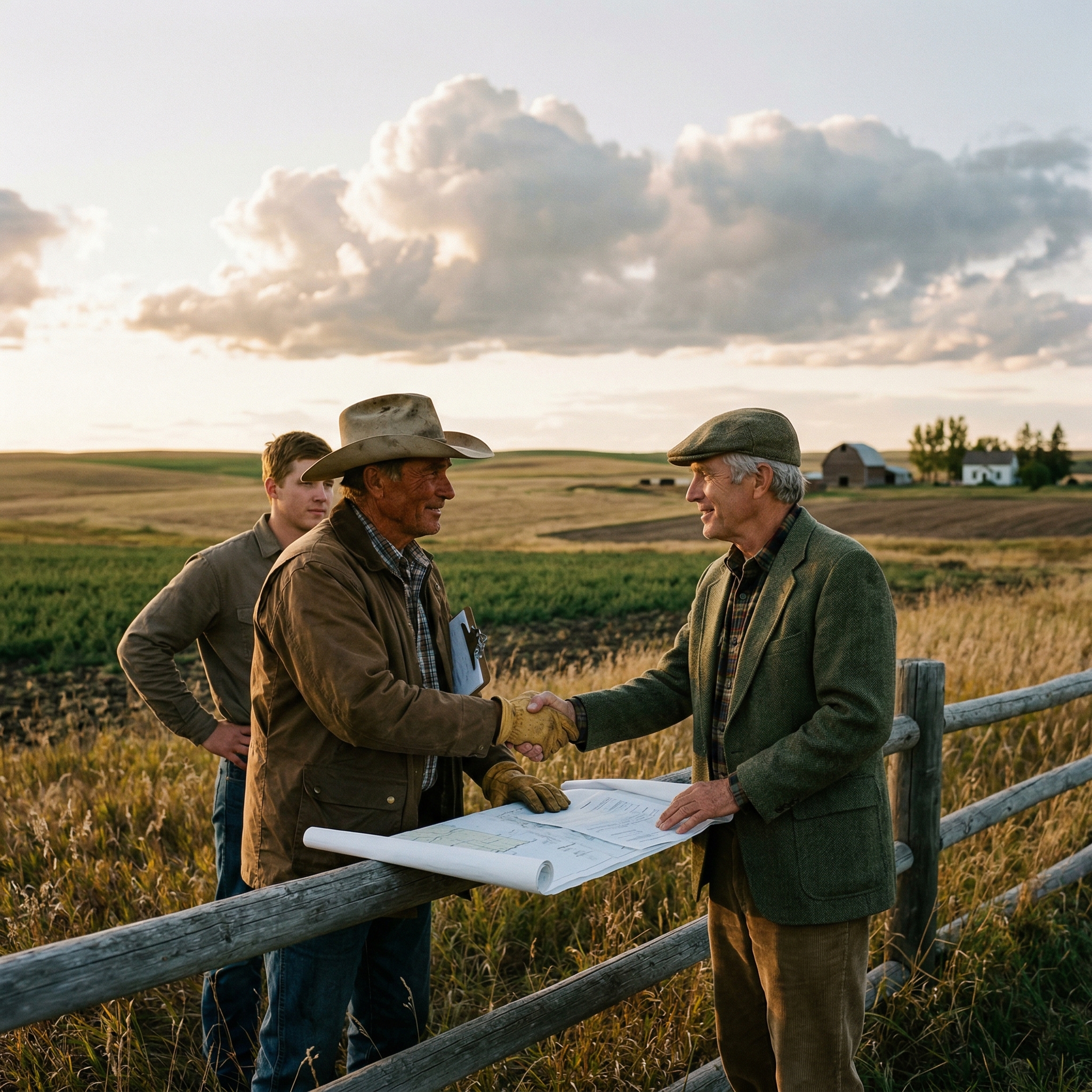
The conventional farmland rental market operates largely through informal channels. Farmers looking to expand typically rely on existing relationships with neighbors, family connections, or introductions through local agricultural networks. While this approach has sustained generations of farming operations, it creates significant limitations for both parties in the transaction.
Limited Network Reach and Information Gaps
Most farmland never reaches an open market. Landowners often lease to the same tenant for decades, or when properties do become available, information about these opportunities circulates only within small geographic and social circles. This structure inherently disadvantages new farmers without established connections and prevents landowners from understanding whether their current rental arrangements reflect true market value. The result is a fragmented system where qualified farmers miss opportunities simply because they were never aware land was available, while landowners may unknowingly accept below-market rates due to limited competitive pressure.
Pricing Opacity and Regional Inconsistencies
Determining fair rental rates in traditional arrangements often involves guesswork rather than data. Without transparent benchmarks, negotiations happen in isolation, leading to wide variations in rental prices even within the same township. Landowners struggle to justify rate adjustments to long-term tenants, while farmers hesitate to challenge existing agreements without clear evidence of comparable transactions. This opacity affects both farmland access Ontario markets and western provinces, though the degree varies by region and crop type.
Administrative Complexity and Legal Uncertainty
Beyond finding each other, landowners and farmers face the practical challenges of formalizing their arrangements. Many rural leases still operate on handshake agreements or outdated written contracts that fail to address modern agricultural practices, environmental stewardship requirements, or dispute resolution mechanisms. Creating comprehensive lease agreements requires legal expertise that adds cost and time to transactions, discouraging both parties from pursuing new arrangements unless absolutely necessary.
Regional Variations in Canadian Farmland Access
Access challenges manifest differently across Canadian provinces, shaped by local agricultural economies, land ownership patterns, and regulatory environments. Understanding these regional differences helps both landowners and farmers contextualize their local markets within the broader national landscape.
Prairie Province Dynamics
Saskatchewan and Alberta dominate Canadian grain production, with farmland rental markets characterized by large acreages and commodity-focused operations. Farmland access Saskatchewan challenges stem partly from consolidation trends, where successful operations expand by absorbing neighboring properties, reducing the number of independent decision-makers in local markets. Farmland access Alberta presents additional complexity due to the province's mixed agricultural economy combining grain, oilseed, and livestock operations, each with distinct land requirements and seasonal timing. Prairie farmland access Canada generally involves longer lease terms and higher total rental values due to larger parcel sizes, though per-acre rates vary significantly based on soil quality and proximity to grain handling infrastructure.
Ontario's Diverse Agricultural Landscape
Ontario's farmland rental market reflects the province's agricultural diversity, ranging from cash crop operations in southwestern regions to dairy farms in eastern counties and specialty crop production near urban centers. Access challenges here often relate to competing land uses, as development pressure and non-agricultural investment drive property values beyond levels justified by farming income alone. Smaller average farm sizes compared to western provinces mean rental transactions happen more frequently but involve more complex negotiations around crop rotation restrictions, drainage maintenance responsibilities, and field access logistics.
Quebec and Atlantic Canada Considerations
Eastern provinces present unique access patterns shaped by different land tenure histories and agricultural traditions. Quebec's farmland market includes considerations around language, zoning regulations specific to agricultural zones, and strong supply management sectors that influence land values beyond commodity pricing. Atlantic provinces typically feature smaller operations and higher proportions of mixed farming, where land access often intersects with intergenerational farm transfers and community-based agricultural networks.
How Digital Platforms Are Expanding Access
Modern technology is addressing many structural barriers that have historically limited efficient matching between landowners and tenant farmers. Digital solutions bring transparency, verification, and market-driven pricing to agricultural leasing transactions.
Transparent Marketplace Dynamics
Online platforms create visibility that traditional networks cannot match. When landowners list available properties on a centralized marketplace, farmers across entire provinces can view opportunities simultaneously rather than waiting for information to filter through personal connections. This transparency benefits both sides: landowners reach a wider pool of qualified tenants, while farmers gain access to farmland for rent beyond their immediate geographic and social circles. Competitive bidding mechanisms allow market forces rather than negotiation skills to determine rental rates, providing objective validation that protects both parties from leaving value on the table.
Verification and Trust Mechanisms
Digital platforms address the trust deficit that often complicates transactions between strangers. Verified profiles for both landowners and farmers establish credibility before any substantive negotiations begin. Background information about farming operations, land management history, and references creates transparency that would require extensive due diligence to achieve through traditional channels. This verification reduces risk for landowners concerned about tenant reliability while giving farmers confidence that listed properties are legitimate opportunities rather than speculative postings.
Integrated Transaction Management
Beyond connecting parties, comprehensive platforms handle the administrative complexity that often slows or prevents rental agreements. Automated lease generation tools produce customized, legally sound contracts without requiring each party to engage separate legal counsel. Integrated payment processing creates documented transaction history that simplifies tax reporting and ensures timely rental collection. These features remove friction points that discourage new leasing arrangements, making it practical for landowners to rent smaller parcels or test relationships with new tenants on shorter terms.
Opportunities for Landowners in the Modern Access Market
Property owners who embrace expanded access channels gain strategic advantages in managing their agricultural assets and maximizing returns while maintaining appropriate stewardship standards.
Maximizing Rental Income Through Competition
When multiple qualified farmers compete for the same property, rental rates reflect true market value rather than the negotiating position of a single incumbent tenant. Landowners discover what their land is genuinely worth to operators who can put it to productive use, often revealing that traditional arrangements undervalued the property. Auction-based platforms make this price discovery efficient and objective, removing the discomfort of direct negotiation while ensuring fair market outcomes. The competitive process also motivates tenants to demonstrate their reliability and expertise, as farmers understand they are competing against peers rather than negotiating in isolation.
Risk Management Through Diversification
Digital access platforms enable landowners to diversify their tenant base more easily than traditional methods allow. Rather than depending entirely on a single long-term tenant whose financial health directly affects rental income security, property owners can split larger holdings among multiple operators or rotate tenants across different parcels. This approach spreads risk while maintaining positive relationships, as changes become business decisions driven by market opportunities rather than personal conflicts. Verified tenant profiles and documented performance history make it practical to confidently engage new farmers without extensive personal knowledge of their operations.
Simplified Administration and Documentation
Managing agricultural leases traditionally requires significant administrative effort, from drafting agreements to tracking payments and maintaining communication throughout growing seasons. Modern platforms consolidate these tasks into single interfaces where landowners monitor all properties, review bids, generate leases, and process payments without juggling spreadsheets, email threads, and paper records. This efficiency matters particularly for landowners managing multiple properties or those who inherited farmland but lack agricultural background, as the platform provides structure and guidance that makes professional land management accessible without deep industry expertise.
Pathways for Farmers Seeking Land Access
Operators looking to expand their farming operations or enter agriculture for the first time now have alternatives to the traditional network-dependent approach that often favored established families and long-term community members.
How Can Farmers Access Farmland in Canada Beyond Personal Networks?
Farmers can secure farmland access online through specialized agricultural marketplaces that list available rental properties across multiple provinces. These platforms allow operators to search for land based on specific criteria including acreage, soil type, location, and rental terms. By creating verified profiles that showcase farming experience, equipment capacity, and references, farmers present their qualifications to landowners who may have no prior connection to them. This digital approach democratizes access by making opportunities visible to anyone with relevant skills rather than limiting them to those with the right connections.
Building Credibility in Competitive Environments
When access expands beyond personal networks, farmers must differentiate themselves through demonstrated competence rather than family reputation alone. Detailed profiles that document farming history, crop specialties, and stewardship practices help landowners assess suitability beyond surface-level credentials. Participating consistently in platform activities, maintaining responsive communication, and honoring commitments on initial smaller parcels builds a track record that supports access to larger or more desirable properties over time. This merit-based system creates opportunities for skilled operators who might lack traditional advantages while maintaining appropriate standards that protect landowner interests.
Strategic Expansion and Portfolio Development
Digital farmland access platforms enable farmers to pursue strategic growth rather than opportunistic expansion limited by which properties happen to become available in their immediate area. Operators can identify land that complements existing operations geographically, matches their equipment and expertise, or provides diversification benefits across different soil types or climate zones. The ability to monitor multiple opportunities simultaneously and respond quickly when suitable properties appear gives farmers flexibility that traditional passive waiting cannot match. This proactive approach particularly benefits younger farmers building operations from scratch, as they can assemble a productive land base more rapidly than incremental neighbor-by-neighbor acquisition would allow.
Best Practices for Successful Farmland Access Transactions
Whether engaging through digital platforms or traditional channels, certain practices improve outcomes for both landowners and tenant farmers in rental arrangements.
Clear Communication of Expectations and Responsibilities
Successful leases begin with explicit agreements about what each party expects from the relationship. Landowners should communicate priorities regarding land stewardship, approved farming practices, maintenance responsibilities, and communication frequency. Farmers should be transparent about their operational plans, including crop rotations, input applications, and how they will address unexpected challenges like pest pressure or weather damage. Written documentation of these understandings prevents later disputes that arise from assumed but never stated expectations. Even on digital platforms that automate many contractual elements, direct conversation about operational details and management philosophy helps ensure compatible matches.
Due Diligence on Both Sides
Landowners benefit from verifying tenant capabilities beyond profile information, including equipment condition, financial stability, and references from previous landlords if available. Site visits before finalizing agreements allow assessment of how prospective tenants manage their current operations. Farmers should likewise conduct thorough property evaluation, examining soil conditions, drainage infrastructure, access routes, and any physical constraints that might affect productivity or operational efficiency. Understanding local weed pressure, pest history, and yield records helps farmers make informed bids that reflect actual production potential rather than assumptions based solely on soil classification or satellite imagery.
Relationship Development and Long-Term Thinking
While competitive platforms emphasize market efficiency, successful agricultural leasing still depends on functional working relationships between landowners and tenants. Both parties should approach transactions as potential long-term partnerships rather than one-off deals, as continuity benefits operations through accumulated local knowledge, stable planning timelines, and reduced transaction costs. Farmers who demonstrate reliability, communicate proactively about field conditions, and maintain properties as if they were their own build reputations that lead to lease renewals and referrals. Landowners who respond promptly to reasonable requests, remain flexible about operational realities, and recognize good stewardship create environments where quality tenants want to continue relationships.
The Role of Technology in Agricultural Land Management
Digital solutions extend beyond initial access transactions to support ongoing management and relationship maintenance throughout lease terms.
What Platforms Provide Access to Farm Leases?
Land4Rent operates as a comprehensive farmland rental access platform designed specifically for the Canadian agricultural market. The platform connects landowners and farmers through live online rental auctions where competitive bidding determines market-driven rates. Verified listings and tenant profiles establish trust between parties, while automated lease generation and integrated payment processing handle administrative requirements that traditionally required separate legal and financial arrangements. By consolidating the entire transaction cycle into a single interface, such platforms reduce friction and make professional farmland leasing accessible to participants regardless of their prior experience with formal rental markets.
Data-Driven Decision Making
Modern platforms generate market intelligence that was previously unavailable in fragmented local markets. Landowners access comparative rental data showing what similar properties command in their region, supporting informed pricing decisions backed by actual transaction evidence rather than anecdotal information. Farmers gain visibility into rental rate trends, availability patterns, and competitive dynamics that help them allocate capital efficiently across expansion opportunities. This data transparency benefits the entire agricultural sector by reducing information asymmetry and supporting more rational resource allocation based on productive capacity rather than historical accident.
Is There a Marketplace for Farmland Access in Canada?
Yes, specialized online marketplaces now serve the Canadian farmland rental sector, creating centralized venues where landowners and farmers engage in transparent transactions. These platforms function as dedicated agricultural exchanges that address the unique requirements of farm leasing, including seasonal timing considerations, crop-specific land requirements, and rural property characteristics that differentiate agricultural real estate from other land use categories. By focusing exclusively on farmland rather than attempting to serve all property types, these marketplaces develop features and processes specifically relevant to agricultural users, from soil classification filters to crop rotation tracking tools.
Conclusion
Improving farmland access in Canada requires both technological innovation and willingness from landowners and farmers to embrace more transparent, market-driven approaches to agricultural leasing. While traditional networks will continue playing important roles in rural communities, digital platforms now provide complementary pathways that expand opportunities beyond geographic and social limitations. Landowners gain tools to maximize returns through competitive bidding and simplified administration, while farmers access rental land based on demonstrated capability rather than family connections. The resulting efficiency benefits Canadian agriculture broadly by ensuring productive land reaches operators best positioned to steward it effectively while providing fair compensation to property owners. As these platforms mature and adoption increases, the structural barriers that have historically constrained farmland access will diminish, creating more dynamic and responsive rental markets across all provinces.
Discover available farmland rental opportunities or list your property on Land4Rent, Canada's specialized platform for transparent agricultural leasing.
Frequently Asked Questions (FAQs)
How can farmers access farmland in Canada?
Farmers can access farmland through personal networks, online rental marketplaces, auction platforms, and by contacting landowners directly to inquire about rental opportunities.
What is the best way to access farmland for rent?
The most effective approach combines traditional networking with digital platforms that provide verified listings, competitive bidding, and transparent market pricing across multiple properties simultaneously.
How do I access agricultural land for lease?
Create profiles on specialized agricultural platforms, attend local farm organization meetings, contact landowners in target areas, and work with agricultural real estate agents who handle rental transactions.
Can I access farmland without owning property?
Yes, tenant farmers regularly access agricultural land through rental agreements without purchasing property, using lease arrangements that provide operational control without ownership capital requirements.
How does farmland access work for new farmers?
New farmers access land by demonstrating competence through education, apprenticeships, starting with smaller parcels, building verified profiles on rental platforms, and securing strong references from agricultural mentors.
Is there a marketplace for farmland access in Canada?
Yes, specialized online marketplaces connect Canadian landowners with tenant farmers, providing centralized venues for listing properties, competitive bidding, lease generation, and payment processing.
How do I access farmland in my province?
Search provincial agricultural directories, join local farm organizations, monitor online rental platforms with geographic filters, and contact county agricultural offices for information about available properties.
Can landowners access farmer profiles online?
Yes, modern rental platforms provide landowners with verified farmer profiles including operational history, equipment capabilities, references, and farming specialties before engaging in lease negotiations.
How to access competitive farmland rental rates?
Use auction-based platforms where multiple farmers bid on properties, review published rental rate surveys, consult with agricultural appraisers, and analyze comparable transactions in your region.
What platforms provide access to farm leases?
Specialized agricultural marketplaces like Land4Rent offer comprehensive lease access services including property listings, verified users, auction bidding, automated agreements, and integrated payment systems.



.svg)


.svg)