%20(1).svg)

.svg)

Introduction
Creating a written lease for agricultural land protects both the owner and the operator. A clear agreement reduces misunderstandings about rent, responsibilities, and long term land care. Whether you are a landowner offering farmland for rent, or a farmer looking to rent agricultural land, the lease is the tool that turns a handshake into predictable obligations and outcomes.
A thoughtful lease helps keep the soil productive, clarifies who pays for what, and sets expectations for crop residue, fences, and drainage. It also makes it easier to resolve disputes, adapt to changing markets, and pass good stewardship practices to the next renter or owner.
Who signs, duration, and basic terms
Every lease should name the parties, the land being leased, and the effective dates. Use legal descriptions, parcel numbers, or clear maps. State whether the lease is annual, multiyear, or terminable with notice. Common term types include cash rent, crop share, or flexible hybrids. Decide who will carry insurance and whether the lease transfers with a sale.
How long is typical farmland lease?
Terms vary, many row crop leases are annual and renewed each year, while pasture or specialty leases often run three to ten years. Longer terms can encourage conservation investments, shorter terms give flexibility to both parties.

Essential lease clauses and stewardship
Before drafting, agree on the big items: rent amount and timing, crop rights, who controls inputs, and how soil and improvements are managed. The paragraph below lists the core clauses that a practical lease should cover. Use plain language, attach maps, and avoid vague phrases like reasonable or usual without definition.
Each clause will vary with local conditions. For example, a lease on irrigated ground should specify water rights and delivery responsibilities. A pasture lease should outline livestock numbers, grazing rotation, and stock water. If the renter will make improvements, state who owns them at lease end and how costs are handled.
Soil health, maintenance, and stewardship responsibilities
Land longevity depends on clear, enforceable soil and stewardship language. State who will manage erosion, cover cropping, tile and drainage repairs, and residue management. Be explicit about acceptable tillage practices and how enforced conservation measures will be paid for.
Attach a stewardship addendum if you expect the renter to follow specific practices like no-till, grassed waterways, or rotational grazing. If conservation costs are shared, outline the cost share percentage and approval process before work begins. Clear language about soil testing, fertility plans, and pesticide responsibilities keeps both parties aligned.
Rent setting, negotiation, and disputes
Rent can be cash per acre, a share of production, or a hybrid with base rent plus incentives. Market comparables and local farmland lease rates are useful starting points. Consider soil type, tile, fencing, and proximity to markets when setting price. If you are a landowner asking how much to rent farmland, research local rentals and factor in production costs for the operator.
How to lease farmland for fair rent?
Start with local rate surveys, adjust for field quality and improvements, then decide whether to use a fixed price or a variable model tied to yields or commodity prices. Clearly state adjustments for conditions like drought, crop failure, or changes in input costs.
When using crop share, specify how inputs are split, how harvest is measured, and who covers harvest and storage costs. In cash leases, include a clause for late payments and remedies. If rent is prorated for partial seasons, state the formula. Consider including an annual review clause to reassess rent when markets shift.
Negotiation, renewal, and dispute handling
Negotiations should cover both financial and nonfinancial terms. Landowners often value stewardship and long term soil health. Farmers often value predictability and the ability to make management decisions. Tradeoffs are normal. If a renter invests in a tile line, discuss compensation, cost share, or increased rent as recognition.
How to negotiate farmland rent?
Bring objective data, list your priorities, and propose solutions such as multiyear agreements or phased rent changes. Agree on a clear renewal process and a timeline for giving notice of nonrenewal.
Include a dispute resolution section that specifies mediation before litigation. Small problems are easier to manage when the lease prescribes a process. Define the notice methods for repairs, defaults, and claims to avoid late surprises.
Write-up, comparisons, and checklist
Convert agreed terms into a written document. Use a simple farm lease agreement template as a starting point but tailor it to the land and enterprise. Attach maps, soil surveys, and utility or easement documents. Check that signatures are dated and that both parties keep original copies.
Consider short checklists for move-in and move-out conditions. Photo documentation and initial soil test results can prevent disputes at lease end. If major investments are planned, add a written annex that spells out approvals, contractor selection, and payment timing.
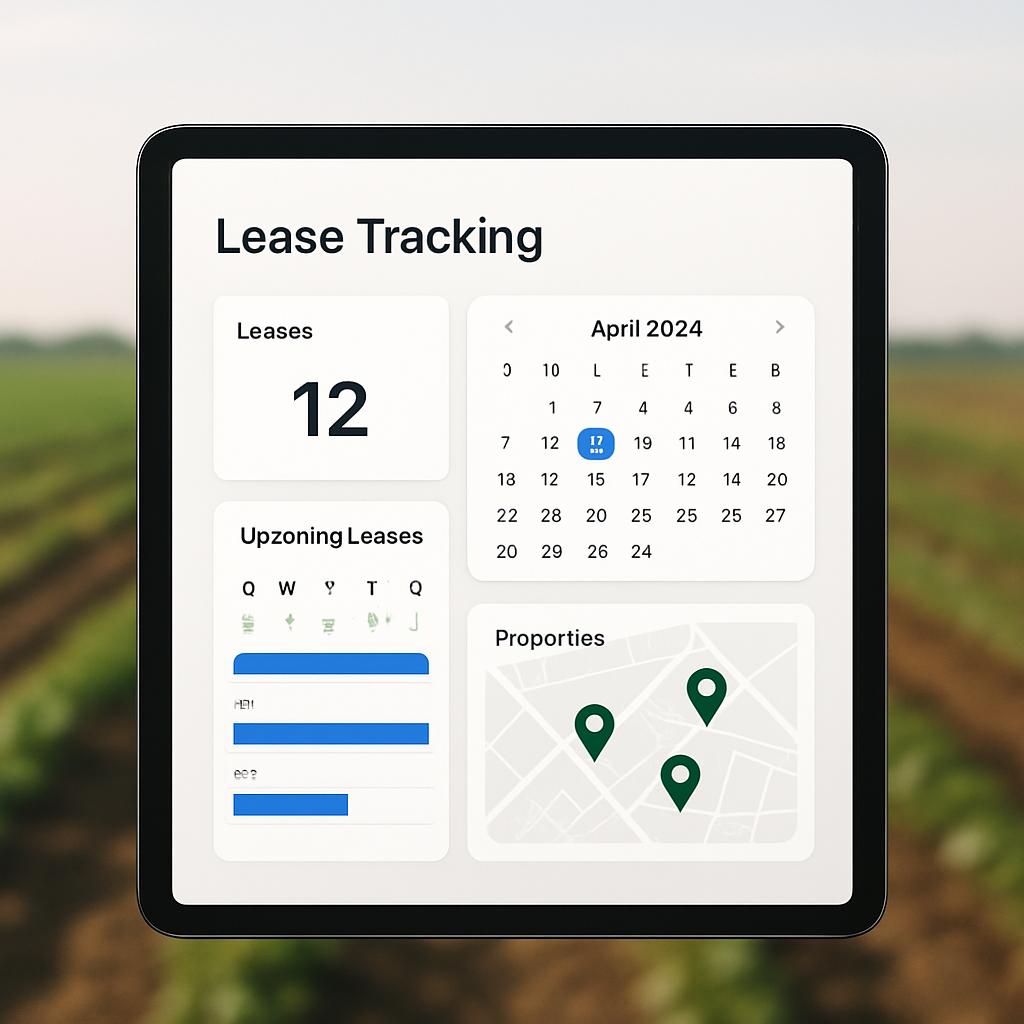
There are software and listing tools that help track leases and payments. Platforms like Land4Rent can make record keeping and communication clearer for both parties when used properly, but a platform does not replace careful drafting and mutual understanding.
Comparisons, risks, and common mistakes
Renting farming land is often cheaper upfront than buying, and it allows farmers to scale operations without a mortgage. For landowners, leasing generates income and can keep land in active production. Compare costs, flexibility, and long term goals when choosing between lease and purchase. A narrative comparison helps landowners see tradeoffs: leasing preserves capital, buying builds equity but increases management obligations.
Common mistakes include vague maintenance language, no plan for termination, and failing to address conservation investments. Other frequent errors are not documenting baseline conditions, failing to set a specific payment schedule, and ignoring local regulations that affect land use. Avoid these issues by being precise and by documenting shared expectations before signing.
Practical checklist before signing
Before either party signs, walk the property together and note fences, tile, gates, and access roads. Attach that document to the lease. Confirm insurance and liability coverage, and discuss tax implications with an advisor if needed.
Keep records of soil tests, conservation plans, and any approvals for structural changes. If the lease will be renewed, set review dates to reassess rent and stewardship practices. Clear record keeping is the simplest way to preserve relationships and protect the land.
Conclusion
Writing a solid farm lease for agricultural land means balancing financial fairness and long term stewardship. Start with clear identification of the land and parties, define rent and payment terms, and include explicit soil and maintenance responsibilities. Use attachments for maps, soil test results, and conservation plans. Negotiate with transparency and sign only when both sides understand their duties. The result is a lease that supports production, protects soil, and reduces conflict.
Keep the lease accessible, update it when conditions change, and respect the records you both create during the term. If you need a template to adapt, use reputable examples, then customize them for your fields and priorities.
Frequently Asked Questions (FAQs)
How to lease farmland?
Outline parties and land, choose a rent method, agree stewardship rules, and put terms in writing before work begins.
What is farmland lease agreement?
A farmland lease agreement is a written contract that sets rights and duties for using agricultural land for a defined term.
How much to rent farmland?
Rent depends on local market rates, soil quality, improvements, and type of lease, so use local comparables to set a fair price.
Why lease agricultural land?
Leasing allows farmers to expand without heavy capital investment and gives landowners steady income while keeping management with experienced operators.
Can I rent farming land?
Yes, if you have an agreement with the owner and meet any legal or permit requirements for the intended use.
How to find farmland for rent?
Search local listings, talk to neighbors, use farming networks, and consider platforms that list farmland for rent in your area.
What are farmland rental rates?
Rates vary by region, crop type, and field quality; consult local surveys or extension services for typical ranges.
How to write farm lease agreement?
Start with a template, adapt clauses to your situation, add maps and attachments, and have both parties review before signing.
What to include in farmland lease?
Include parties, land description, term, rent, use restrictions, maintenance, insurance, and dispute resolution clauses.
What are soil management responsibilities in lease?
Specify who handles erosion control, cover cropping, nutrient management, and tile or drainage repairs to protect long term productivity.

.png)



.svg)


.svg)