Farming & Agriculture
8 min read

Online Farmland Leasing Platforms: Why Digital Beats Traditional

Discover how online farmland leasing platforms bring transparency, competitive pricing, and efficiency to agricultural land rental in Canada, outperforming traditional private negotiation methods through verified users, real-time bidding, and automated agreements.

Published On
April 1, 2026
Written By
Grace Thompson

Introduction

Farmland leasing in Canada has long operated on handshake deals, local relationships, and informal pricing that rarely reflect true market value. For landowners, that often means leaving money on the table. For farmers looking to expand their operations, it means competing for access to land through networks they may not be part of.

The rise of the farmland leasing platform is changing that dynamic in meaningful ways, bringing transparency, competition, and efficiency to a process that has resisted modernization for decades.

This blog compares traditional farmland leasing methods with digital marketplace alternatives, walking through what each approach actually delivers for both landowners and farmers. Whether you own agricultural land in Ontario, Saskatchewan, or anywhere else across the country, understanding these differences will help you make a more informed leasing decision.
How Traditional Farmland Leasing Actually Works

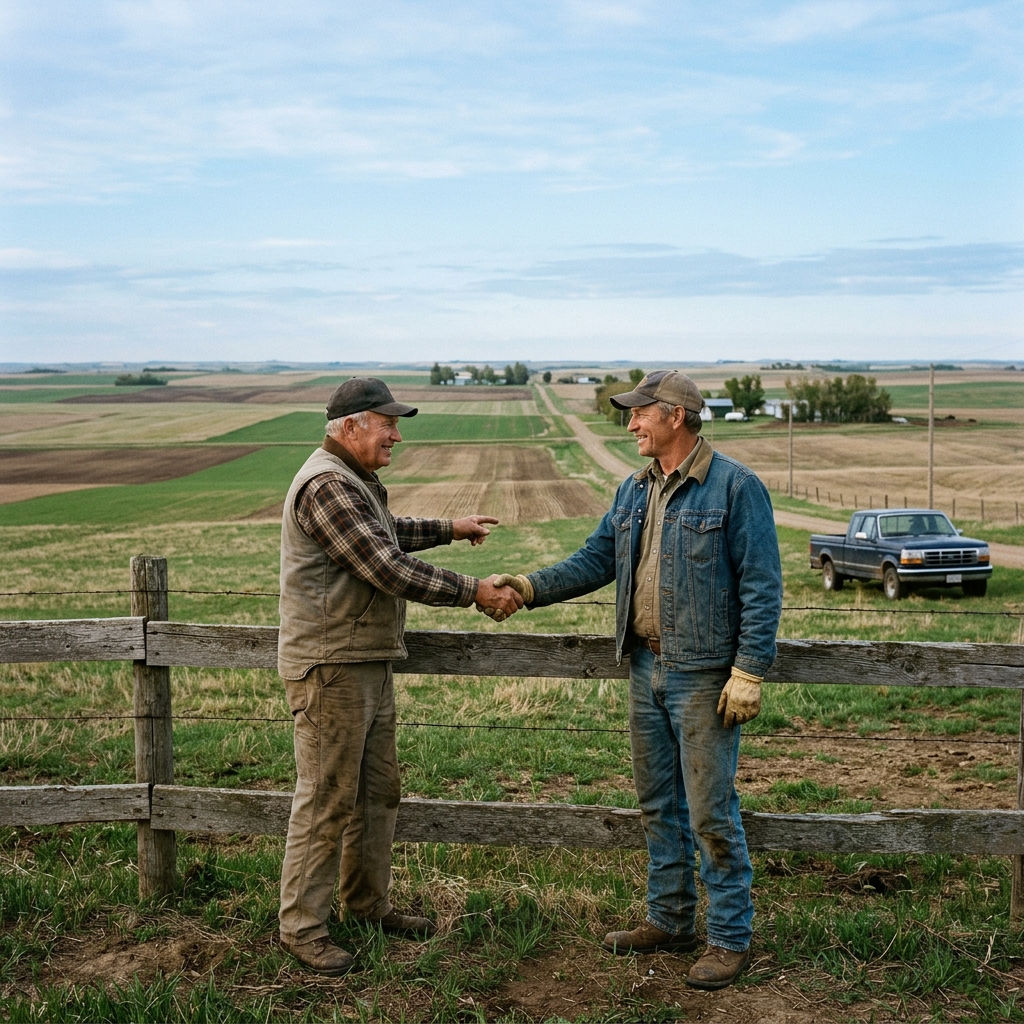
Before evaluating digital solutions, it helps to understand what the traditional process looks like in practice. For most Canadian landowners, leasing farmland has meant relying on who they know. A neighbor expresses interest, a local farmer makes an offer, and a rate is agreed upon over a phone call or in person. The lease, if written at all, is often a generic template that may not reflect current regulations or the specific terms of the arrangement.

When Traditional Methods Still Have a Place

To be fair, there are situations in which traditional leasing still makes practical sense. Long-standing relationships between landowners and established tenants who have leased the same parcel for many years come with built-in trust and continuity. Renewing a lease with a proven farmer who has maintained the land well is a legitimate reason to bypass a competitive process.

The issue is not that personal relationships have no value in farmland leasing. The issue is that most landowners do not have the data to know whether their current arrangement reflects competitive farmland lease rates or whether better-qualified tenants exist whom they have simply never been introduced to.

The Problem of Invisible Market Pricing

In most industries, pricing is publicly visible. In farmland rental, it almost never is. A landowner in rural Ontario has no reliable way to know what comparable parcels are renting for unless they happen to talk to the right people. Access to reliable agricultural data remains a challenge in many regions of Canada. This information gap systematically disadvantages landowners and insulates existing tenants from competitive pressure, regardless of how well they manage the land.

What Online Farmland Leasing Platforms Actually Deliver

Digital marketplaces for farmland rental are not simply websites where listings are posted. The better platforms are end-to-end systems that handle the full leasing lifecycle, from initial listing to signed agreements and processed payments. The shift to online farmland leasing addresses most of the structural weaknesses in the traditional model simultaneously.

Auction-Based Pricing and Real Market Discovery

The most significant advantage of a digital platform is competitive, transparent pricing. A farm lease bidding system allows multiple verified farmers to submit bids on the same parcel, driving the rental rate toward true market value rather than whatever number the first person willing to talk happens to suggest. For landowners, this can mean meaningfully higher returns without additional effort.

For farmers, the same system provides clarity. Knowing what competing bids look like helps a farmer decide what a parcel is genuinely worth to their operation, rather than guessing what the landowner might accept. The process is market-driven on both sides, which tends to produce outcomes both parties can stand behind.

Verified Users and Reduced Risk

One of the underappreciated risks in traditional leasing is not knowing who you are dealing with. A landowner approached by an unfamiliar farmer has no easy way to verify that person’s experience, financial standing, or history with other properties. Digital platforms that require identity and credential verification before anyone can participate materially reduce this risk.

When a farmland rental marketplace verifies both the property listing and the prospective tenant, both parties enter the transaction with a baseline level of confidence that simply does not exist in informal arrangements. That verification layer is particularly important for landowners who do not live near their land and cannot easily assess a prospective tenant in person.

Automated Lease Agreements and Documentation

Generating a legally sound lease agreement has historically required either a lawyer or a willingness to use a generic template and hope nothing goes wrong. Platforms that automate this step, prompting landowners to answer relevant questions and producing customized, binding agreements as output, remove a significant friction point from the process.

This matters beyond convenience. A well-structured lease protects both parties, clarifies expectations around land use and maintenance, and provides a clear reference point if disagreements arise during the tenancy. Automated agreement generation means landowners do not have to choose between paying for legal drafting and taking on unnecessary risk.

Comparing the Two Approaches Side by Side

The contrast between traditional and digital leasing is sharpest when you look at what each model actually delivers across the key dimensions that matter to landowners and farmers. The differences are not marginal. They reflect fundamentally different levels of market access, legal protection, and operational visibility.

Transparency and Pricing Confidence

Traditional leasing produces a rate that one person agreed to on one day, with no visibility into whether it reflects the market. A competitive digital process produces a rate that multiple informed parties bid toward, which is a much more reliable signal of actual land value. For landowners managing farmland as a long-term asset, that pricing confidence has compounding value over successive lease terms.

Farmland leasing across Canada has historically lacked any centralized pricing data. Digital platforms that aggregate bid activity are beginning to create that data, which benefits the broader market over time, not just individual transactions.

Reach and Tenant Quality

Traditional leasing surfaces whoever happens to be nearby and aware that land is available. A digital farmland leasing marketplace surfaces everyone who is actively looking for land in the relevant region, filtered by verification status. The quality and diversity of applicants in a competitive digital process are structurally superior to what any individual landowner can achieve through personal networks alone.

For farmers seeking to lease farmland online, digital platforms offer something equally valuable: reliable access to listings that would never have surfaced through word of mouth. Farmland in Saskatchewan, Ontario parcels, and land across other provinces become searchable and accessible, rather than hidden behind relationships the farmer may not have.

Payment Management and Record Keeping

Managing rent collection manually is a low-stakes inconvenience when everything goes smoothly and a serious problem when it does not. Platforms that centralize payment processing within the system give both landowners and farmers a complete, timestamped transaction record that is useful for accounting, dispute resolution, and tax reporting. That infrastructure turns what was previously administrative overhead into an essentially automatic process.

Practical Considerations Before Moving to a Digital Platform

Transitioning to a digital leasing process is straightforward for most landowners and farmers, but there are a few practical questions worth considering before selecting a platform. Not every digital tool in this space offers the same depth of functionality, and knowing what to evaluate makes the comparison clearer.

Understanding Platform Costs and Returns

Any platform has associated costs, whether in the form of listing fees, transaction percentages, or subscription structures. Landowners should evaluate those costs against the expected improvement in rental rates from competitive bidding. In most cases, a platform that produces even a modest increase in the annual rental rate will more than recover its cost over a multi-year lease term. The economics of transparent farmland rental tend to favor the digital model once real numbers are applied.

Conclusion

The traditional model for leasing agricultural land served a simpler era, when market information was hard to come by and transactions naturally relied on personal trust. Today, the tools exist to bring genuine price discovery, verified participants, automated agreements, and trackable payments into a process that has long operated without them.

Land4Rent is one example of a platform built specifically to address these gaps for the Canadian market, connecting landowners and farmers through a competitive auction system designed to reflect what land is actually worth.

Whether you are a landowner looking to maximize returns on agricultural land or a farmer seeking reliable access to additional acreage, evaluating a purpose-built digital platform against your current approach is a worthwhile exercise. The differences in outcomes, from pricing to documentation to tenant quality, are measurable and consistent.

Ready to see what your farmland could be earning? Visit Land4Rent to explore listings, post your land, or register as a verified tenant farmer.

Frequently Asked Questions (FAQs)

How to lease farmland in Canada?

You can lease farmland in Canada through traditional private negotiations or by listing on a digital farmland marketplace. Online platforms typically offer broader tenant reach, competitive pricing through bidding, and automated lease documentation that simplifies the entire process.

Can I lease my farmland online?

Yes. Specialized platforms allow Canadian landowners to list their agricultural land, receive bids from verified farmers, generate lease agreements, and collect rent payments entirely online. The process is designed to be accessible even for landowners with no prior digital leasing experience.

How to bid on farmland leases?

Farmers register on a farmland leasing platform, complete a verification process, and then submit bids on available parcels during active auction periods. The platform typically displays real-time bidding activity so farmers can assess where their offer stands relative to competing bids.

What is a farmland rental auction?

A farmland rental auction is a competitive bidding process where multiple qualified farmers submit rental rate offers on a listed parcel. The auction format drives pricing toward fair market value and gives landowners visibility into genuine demand for their land.

How does farmland leasing work?

Farmland leasing involves a landowner granting a farmer the right to use agricultural land for a defined period in exchange for rental payments. The terms, including rate, duration, and land use conditions, are formalized in a lease agreement signed by both parties.

What is the best way to lease farmland?

For most landowners, using a purpose-built digital marketplace produces better outcomes than private negotiation, offering competitive pricing, verified tenants, and legally sound lease documentation without the administrative burden of managing the process manually.

How to find farmland for lease?

Farmers can search for available agricultural land through online farmland marketplaces, which aggregate listings from across Canada and allow filtering by province, acreage, and land type. This is significantly more efficient than relying on local networks or word-of-mouth.

How much does it cost to lease farmland?

Farmland lease rates in Canada vary significantly by region, soil quality, and crop type. Competitive bidding platforms tend to surface rates that more accurately reflect current market demand, which can differ substantially from rates established through private negotiation years earlier.

Can farmers lease additional acreage online?

Yes. Digital farmland marketplaces are specifically designed to help farmers access additional acreage beyond what is available through their existing relationships. Verified listings from across provinces make it practical to search, bid, and lease new parcels entirely through the platform.

Is farmland leasing profitable?

For landowners, farmland leasing can generate consistent returns on agricultural land that might otherwise sit idle or be underutilized. The profitability depends on local land values, lease rates achieved through competitive or negotiated processes, and the costs associated with managing the leasing arrangement.


Read More
Read More

Introduction

Farmland leasing in Canada has long operated on handshake deals, local relationships, and informal pricing that rarely reflect true market value. For landowners, that often means leaving money on the table. For farmers looking to expand their operations, it means competing for access to land through networks they may not be part of.

The rise of the farmland leasing platform is changing that dynamic in meaningful ways, bringing transparency, competition, and efficiency to a process that has resisted modernization for decades.

This blog compares traditional farmland leasing methods with digital marketplace alternatives, walking through what each approach actually delivers for both landowners and farmers. Whether you own agricultural land in Ontario, Saskatchewan, or anywhere else across the country, understanding these differences will help you make a more informed leasing decision.

How Traditional Farmland Leasing Actually Works

Before evaluating digital solutions, it helps to understand what the traditional process looks like in practice. For most Canadian landowners, leasing farmland has meant relying on who they know. A neighbor expresses interest, a local farmer makes an offer, and a rate is agreed upon over a phone call or in person. The lease, if written at all, is often a generic template that may not reflect current regulations or the specific terms of the arrangement.

When Traditional Methods Still Have a Place

To be fair, there are situations in which traditional leasing still makes practical sense. Long-standing relationships between landowners and established tenants who have leased the same parcel for many years come with built-in trust and continuity. Renewing a lease with a proven farmer who has maintained the land well is a legitimate reason to bypass a competitive process.

The issue is not that personal relationships have no value in farmland leasing. The issue is that most landowners do not have the data to know whether their current arrangement reflects competitive farmland lease rates or whether better-qualified tenants exist whom they have simply never been introduced to.

The Problem of Invisible Market Pricing

In most industries, pricing is publicly visible. In farmland rental, it almost never is. A landowner in rural Ontario has no reliable way to know what comparable parcels are renting for unless they happen to talk to the right people. Access to reliable agricultural data remains a challenge in many regions of Canada. This information gap systematically disadvantages landowners and insulates existing tenants from competitive pressure, regardless of how well they manage the land.

What Online Farmland Leasing Platforms Actually Deliver

Digital marketplaces for farmland rental are not simply websites where listings are posted. The better platforms are end-to-end systems that handle the full leasing lifecycle, from initial listing to signed agreements and processed payments. The shift to online farmland leasing addresses most of the structural weaknesses in the traditional model simultaneously.

Auction-Based Pricing and Real Market Discovery

The most significant advantage of a digital platform is competitive, transparent pricing. A farm lease bidding system allows multiple verified farmers to submit bids on the same parcel, driving the rental rate toward true market value rather than whatever number the first person willing to talk happens to suggest. For landowners, this can mean meaningfully higher returns without additional effort.

For farmers, the same system provides clarity. Knowing what competing bids look like helps a farmer decide what a parcel is genuinely worth to their operation, rather than guessing what the landowner might accept. The process is market-driven on both sides, which tends to produce outcomes both parties can stand behind.

Verified Users and Reduced Risk

One of the underappreciated risks in traditional leasing is not knowing who you are dealing with. A landowner approached by an unfamiliar farmer has no easy way to verify that person’s experience, financial standing, or history with other properties. Digital platforms that require identity and credential verification before anyone can participate materially reduce this risk.

When a farmland rental marketplace verifies both the property listing and the prospective tenant, both parties enter the transaction with a baseline level of confidence that simply does not exist in informal arrangements. That verification layer is particularly important for landowners who do not live near their land and cannot easily assess a prospective tenant in person.

Automated Lease Agreements and Documentation

Generating a legally sound lease agreement has historically required either a lawyer or a willingness to use a generic template and hope nothing goes wrong. Platforms that automate this step, prompting landowners to answer relevant questions and producing customized, binding agreements as output, remove a significant friction point from the process.

This matters beyond convenience. A well-structured lease protects both parties, clarifies expectations around land use and maintenance, and provides a clear reference point if disagreements arise during the tenancy. Automated agreement generation means landowners do not have to choose between paying for legal drafting and taking on unnecessary risk.

Comparing the Two Approaches Side by Side

The contrast between traditional and digital leasing is sharpest when you look at what each model actually delivers across the key dimensions that matter to landowners and farmers. The differences are not marginal. They reflect fundamentally different levels of market access, legal protection, and operational visibility.

Transparency and Pricing Confidence

Traditional leasing produces a rate that one person agreed to on one day, with no visibility into whether it reflects the market. A competitive digital process produces a rate that multiple informed parties bid toward, which is a much more reliable signal of actual land value. For landowners managing farmland as a long-term asset, that pricing confidence has compounding value over successive lease terms.

Farmland leasing across Canada has historically lacked any centralized pricing data. Digital platforms that aggregate bid activity are beginning to create that data, which benefits the broader market over time, not just individual transactions.

Reach and Tenant Quality

Traditional leasing surfaces whoever happens to be nearby and aware that land is available. A digital farmland leasing marketplace surfaces everyone who is actively looking for land in the relevant region, filtered by verification status. The quality and diversity of applicants in a competitive digital process are structurally superior to what any individual landowner can achieve through personal networks alone.

For farmers seeking to lease farmland online, digital platforms offer something equally valuable: reliable access to listings that would never have surfaced through word of mouth. Farmland in Saskatchewan, Ontario parcels, and land across other provinces become searchable and accessible, rather than hidden behind relationships the farmer may not have.

Payment Management and Record Keeping

Managing rent collection manually is a low-stakes inconvenience when everything goes smoothly and a serious problem when it does not. Platforms that centralize payment processing within the system give both landowners and farmers a complete, timestamped transaction record that is useful for accounting, dispute resolution, and tax reporting. That infrastructure turns what was previously administrative overhead into an essentially automatic process.

Practical Considerations Before Moving to a Digital Platform

Transitioning to a digital leasing process is straightforward for most landowners and farmers, but there are a few practical questions worth considering before selecting a platform. Not every digital tool in this space offers the same depth of functionality, and knowing what to evaluate makes the comparison clearer.

Understanding Platform Costs and Returns

Any platform has associated costs, whether in the form of listing fees, transaction percentages, or subscription structures. Landowners should evaluate those costs against the expected improvement in rental rates from competitive bidding. In most cases, a platform that produces even a modest increase in the annual rental rate will more than recover its cost over a multi-year lease term. The economics of transparent farmland rental tend to favor the digital model once real numbers are applied.

Conclusion

The traditional model for leasing agricultural land served a simpler era, when market information was hard to come by and transactions naturally relied on personal trust. Today, the tools exist to bring genuine price discovery, verified participants, automated agreements, and trackable payments into a process that has long operated without them.

Land4Rent is one example of a platform built specifically to address these gaps for the Canadian market, connecting landowners and farmers through a competitive auction system designed to reflect what land is actually worth.

Whether you are a landowner looking to maximize returns on agricultural land or a farmer seeking reliable access to additional acreage, evaluating a purpose-built digital platform against your current approach is a worthwhile exercise. The differences in outcomes, from pricing to documentation to tenant quality, are measurable and consistent.

Ready to see what your farmland could be earning? Visit Land4Rent to explore listings, post your land, or register as a verified tenant farmer.

Frequently Asked Questions (FAQs)

How to lease farmland in Canada?

You can lease farmland in Canada through traditional private negotiations or by listing on a digital farmland marketplace. Online platforms typically offer broader tenant reach, competitive pricing through bidding, and automated lease documentation that simplifies the entire process.

Can I lease my farmland online?

Yes. Specialized platforms allow Canadian landowners to list their agricultural land, receive bids from verified farmers, generate lease agreements, and collect rent payments entirely online. The process is designed to be accessible even for landowners with no prior digital leasing experience.

How to bid on farmland leases?

Farmers register on a farmland leasing platform, complete a verification process, and then submit bids on available parcels during active auction periods. The platform typically displays real-time bidding activity so farmers can assess where their offer stands relative to competing bids.

What is a farmland rental auction?

A farmland rental auction is a competitive bidding process where multiple qualified farmers submit rental rate offers on a listed parcel. The auction format drives pricing toward fair market value and gives landowners visibility into genuine demand for their land.

How does farmland leasing work?

Farmland leasing involves a landowner granting a farmer the right to use agricultural land for a defined period in exchange for rental payments. The terms, including rate, duration, and land use conditions, are formalized in a lease agreement signed by both parties.

What is the best way to lease farmland?

For most landowners, using a purpose-built digital marketplace produces better outcomes than private negotiation, offering competitive pricing, verified tenants, and legally sound lease documentation without the administrative burden of managing the process manually.

How to find farmland for lease?

Farmers can search for available agricultural land through online farmland marketplaces, which aggregate listings from across Canada and allow filtering by province, acreage, and land type. This is significantly more efficient than relying on local networks or word-of-mouth.

How much does it cost to lease farmland?

Farmland lease rates in Canada vary significantly by region, soil quality, and crop type. Competitive bidding platforms tend to surface rates that more accurately reflect current market demand, which can differ substantially from rates established through private negotiation years earlier.

Can farmers lease additional acreage online?

Yes. Digital farmland marketplaces are specifically designed to help farmers access additional acreage beyond what is available through their existing relationships. Verified listings from across provinces make it practical to search, bid, and lease new parcels entirely through the platform.

Is farmland leasing profitable?

For landowners, farmland leasing can generate consistent returns on agricultural land that might otherwise sit idle or be underutilized. The profitability depends on local land values, lease rates achieved through competitive or negotiated processes, and the costs associated with managing the leasing arrangement.

Read More
Read More
Explore All Legal Articles
Login