%20(1).svg)

.svg)

Introduction
Healthy soil is the foundation of productive farmland, and effective organic farming and practical agronomy make that foundation stronger. This guide is written for landowners, tenants, and managers in Canada who need hands on steps to assess soil, manage nutrients, and protect long term productivity. The advice is practical for mixed operations, small pastures, and large field crops, and it focuses on approaches that work across provincial differences without getting lost in specific regulations.
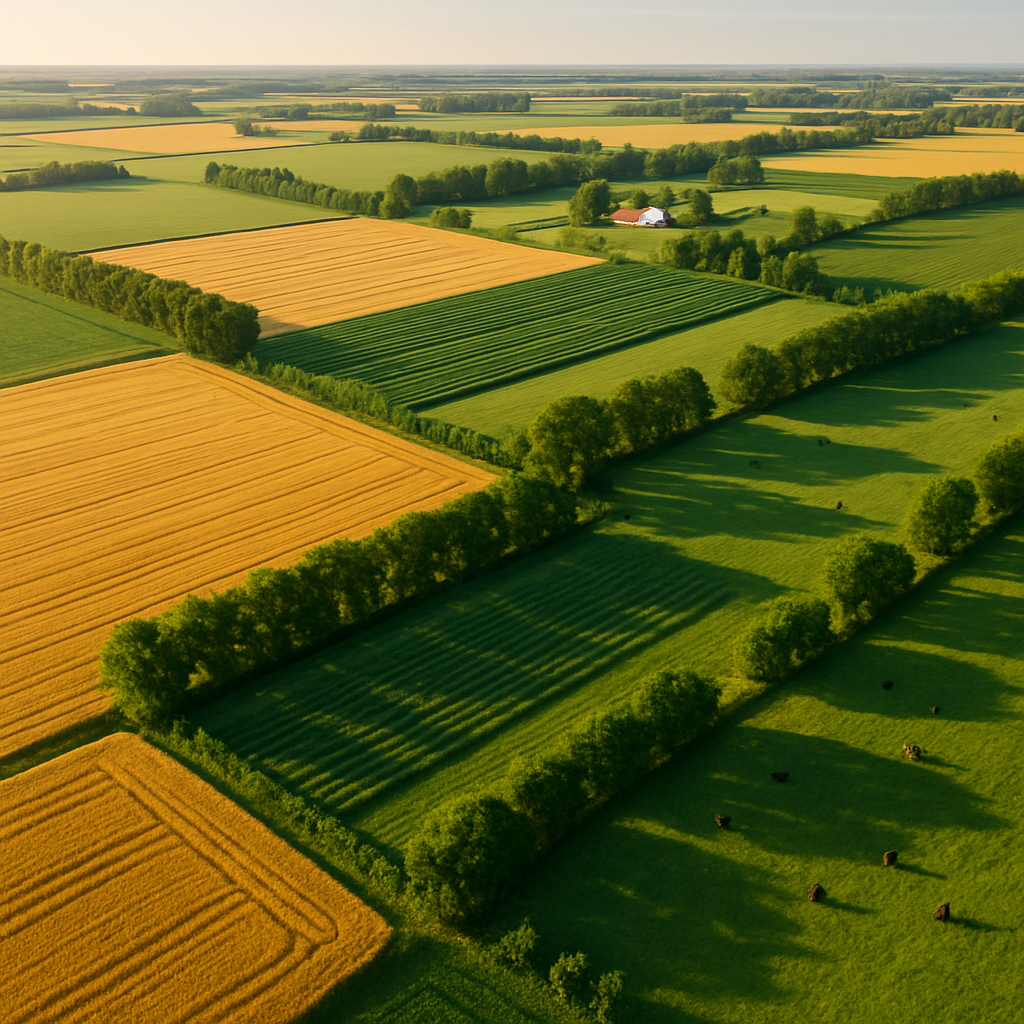
Basics of Canadian Soil and Why It Matters
Soils across Canada vary by region. Prairies soils may be rich in organic matter in spots but vulnerable to erosion. Boreal fringe soils can be shallow and acidic, while maritime soils often need attention to drainage. Regardless of region, two realities matter: crops need balanced nutrients and tilth, and long term value depends on maintaining or improving soil health in farming. Healthy soil supports yields, reduces input costs, and lowers risk from drought and heavy rain.
When planning changes, start with a simple mindset: measure first, change in steps, monitor results. That reduces surprises and protects the landowner and operator relationship in leased arrangements.
How to improve soil health?
Improving soil begins with clear goals: increase organic matter, improve structure, and maintain balanced nutrients. Practical steps include increasing continuous living cover, limiting harmful disturbance, adding organic inputs where suitable, and matching nutrient supply to crop demand. Start small if you must. Adopt one or two practices, document results, then expand.
Key principles are supporting biology, guarding surface cover, and minimizing compaction. These deliver steady improvements in water infiltration and nutrient cycling.
How to test farmland soil?
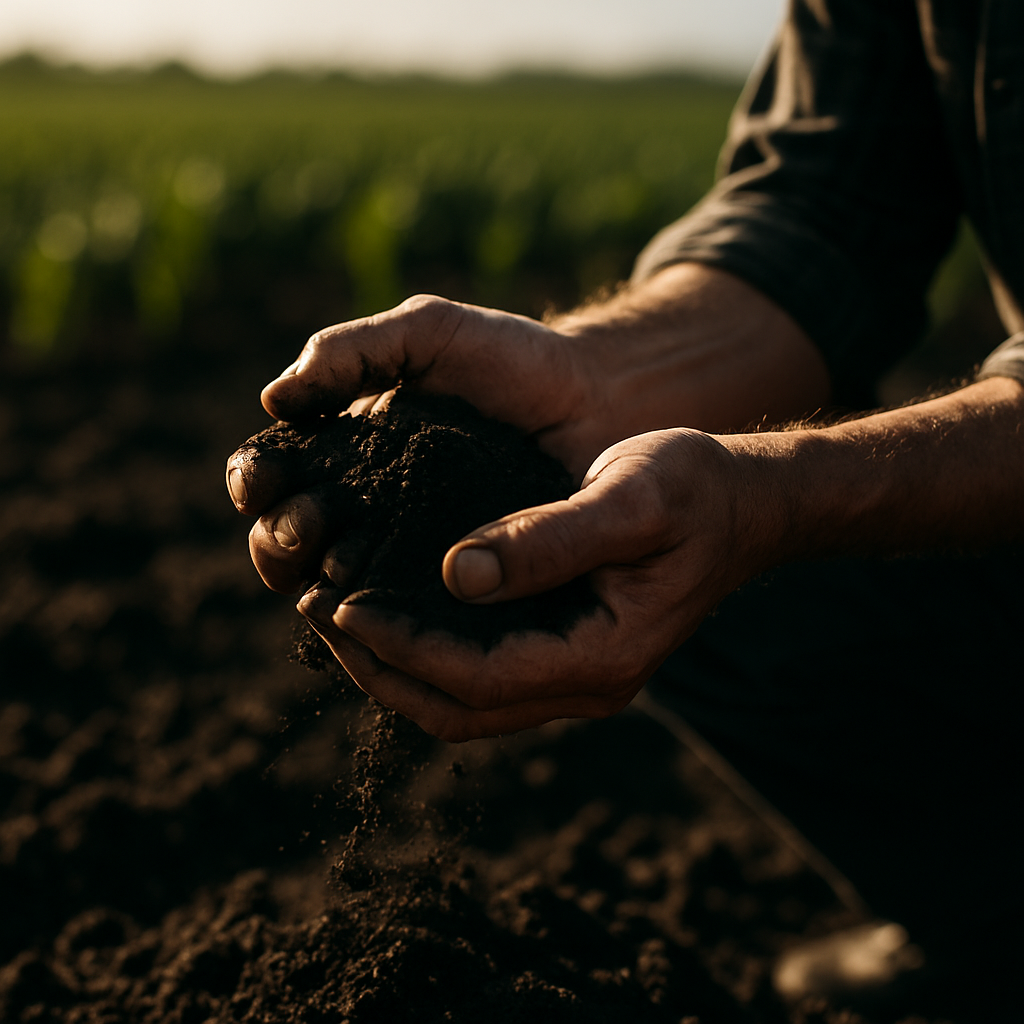
Proper testing guides almost every decision on a farm. A standard approach is to sample by field or management zone, send samples to a reliable lab, and track results season to season. Beyond basic nutrient numbers, consider organic matter and pH testing, and use field checks for compaction and drainage.
Follow a consistent sampling protocol: sample the same depth, at the same time of year, and combine multiple cores per management unit. Save all lab reports and make small changes based on trends, not single tests.
Soil management practices for organic farming
Organic systems rely more on biological and cultural practices than on synthetic inputs. Farmers who focus on long term fertility emphasize building soil organic matter and feeding the soil food web. A mix of cover cropping, compost or manure where allowed, and careful rotation supports that goal.
Below is a concise list of core practices that help regenerate soil under an organic program. Use them together rather than expecting one method to fix all issues.
- Use diverse cover crops for soil health to keep roots in the ground year round.
- Design crop rotation soil health plans that break pest cycles and balance nutrient demands.
- Apply compost or well managed manure as a slow release soil amendment for agriculture.
- Manage residue and tillage to protect organic matter while controlling weeds.
- Encourage grazing or green manure mixes where livestock are part of the system.
- Monitor soil fertility for crops and respond to plant needs with biologicals or approved amendments.
Soil erosion prevention and conservation
Soil loss is irreversible on human timescales. Preventing erosion preserves productive topsoil and reduces costs for everyone. Simple steps give big returns: protect the surface, keep vegetation on vulnerable slopes, and use barriers or diversion when runoff concentrates.
The following list collects reliable conservation tactics that fit many Canadian landscapes. Choose the mix that fits the slope, soil type, and cropping system on your farm.
- Maintain continuous cover with cover crops for soil health or residue retention after harvest.
- Use contour seeding, strips, or grassed waterways to slow and spread runoff.
- Reduce intensive tillage on slopes and adopt conservation tillage where possible.
- Install buffer strips and shelterbelts along erodible edges.
- Manage grazing intensity to prevent bare patches and hoof damage.
Managing nutrients and soil chemistry
Balanced nutrients and stable pH are essential for plant uptake and microbial activity. Aim to match nutrient supply to crop needs. Overapplication wastes resources and underapplication reduces yield and stresses the system. Test for phosphorus, potassium, nitrogen patterns, and pH. Track trends over time rather than reacting to a single season.
When adjusting pH, apply amendments judiciously. Lime corrects acidity but requires cost and time to change the soil environment. Online provincial extension resources offer regional targets for pH and nutrient sufficiency that help set realistic goals.
Precision tools and mapping for effective soil work
Precision tools can save money by matching inputs to within-field needs. Use grid or zone sampling, combine lab results with yield maps, and consider variable rate seeding or application where economically justified. Precision soil mapping helps protect soil by avoiding blanket treatments and by highlighting problem areas early.
Start with simple mapping: GPS field boundaries, record soil test locations, and overlay yield data when available. This basic mapping yields immediate value and informs larger investments later.
Farmland leasing and soil responsibilities
Leases should define who handles routine soil care, who pays for major improvements, and how soil quality is measured at lease start and end. Clarify responsibilities for farmland soil testing, cover cropping, and remediation work. Written expectations reduce disputes and protect long term value.
For owners and tenants working together, consider a practical checklist at lease signing: baseline soil tests, a list of expected conservation practices, and a process for approving significant changes. Platforms such as Land4Rent can help list responsibilities and record agreements, making expectations clear without replacing local judgment.
Comparing soil management approaches
Choices include no till, reduced till, conventional till, and organic rotations. Each approach has benefits and limits. No till often reduces erosion and preserves structure but may increase reliance on herbicides unless paired with strong rotation and cover cropping. Tillage can help seedbed preparation but reduces organic matter over time. Organic strategies build long term resilience, but may require more attention to fertility sources and residue management in the short term.
Compare practical outcomes, not ideology. Look at input costs, labor, yield consistency, and how each approach affects soil over five to ten years. Good agronomy balances short term needs and long term soil care. For many Canadian farms a combination of tactics, adapted year by year, yields the best results.
Planning improvements and tracking progress
Make a multi year plan. Include measurable targets such as organic matter percentage, reduced compaction zones, or improved infiltration. Use consistent soil testing and field observations to measure progress. Keep records and share them if the land is leased. When both owner and operator see improvements, it encourages continued investment.
Start with modest, achievable goals. For example, aim to add one percentage point of organic matter over five years on lighter soils. Small changes in management can compound into meaningful gains.
Conclusion
Healthy soil on Canadian farmland is a function of knowledge, consistent action, and good communication between landowners and farmers. Use testing, targeted amendments, cover crops, sensible tillage, and mapped decisions to build resilience. Soil care is an investment in the future value of the land and in predictable production. Clear lease language and shared records make soil stewardship easier and fairer for everyone involved.
List or explore available farmland, where lease terms are clearly defined and responsibilities are documented from the start. Visit Land4Rent.
Frequently Asked Questions (FAQs)
How to improve soil health?
Improve it by increasing living roots, keeping surface cover, reducing compaction, and adding organic inputs where needed. Monitor and adapt based on test results.
What is soil management?
Soil management is the set of practices used to maintain or improve soil function, including nutrient management, tillage, cover cropping, and erosion control. It balances production goals with long term soil health.
Why is soil fertility important?
Fertility supplies the nutrients plants need to grow, affecting yield and crop quality. Without balanced fertility, crops underperform and soils degrade over time.
How to test farmland soil?
Sample consistently by management zone, send to a reputable lab, and test for nutrients, pH, and organic matter. Use results to guide amendments and rotations.
Can soil be regenerated in agriculture?
Yes, soils can be regenerated with practices that rebuild organic matter, protect structure, and restore biological activity, though recovery takes time. Progress is measurable with regular testing.
What are best soil conservation methods?
Maintain cover, reduce tillage on vulnerable ground, use contouring and grassed waterways, and manage grazing intensity to prevent bare soil. Combine methods based on landscape risk.
How does crop rotation affect soil?
Rotation breaks pest cycles, spreads nutrient demand, and supports diverse root systems that improve soil structure. It is a low cost way to raise resilience.
Is soil testing necessary for leasing?
Yes, baseline testing protects both owner and tenant by documenting starting conditions and guiding management decisions. It reduces the risk of disputes later.
How to prevent soil erosion on farmland?
Keep the soil covered, minimize disturbance, slow runoff with contouring and buffers, and manage grazing to avoid bare areas. Preventative measures are more cost effective than repair.
What soil amendments for organic farming?
Compost, well managed manure, and approved mineral amendments can supply nutrients in organic systems, while also building organic matter. Apply based on test results and crop needs.

.png)




.svg)


.svg)