%20(1).svg)

.svg)

Introduction
Soil mites are tiny arthropods that live in the upper few centimeters of soil. On Canadian farms they are part of a busy micro-community. These animals help break down crop residue, mix organic matter, and support the food web that feeds worms, springtails, and beneficial nematodes. Farmers and landowners who learn what the creatures do can use that knowledge when drafting lease terms, planning rotations, and agreeing on soil stewardship expectations with tenants.
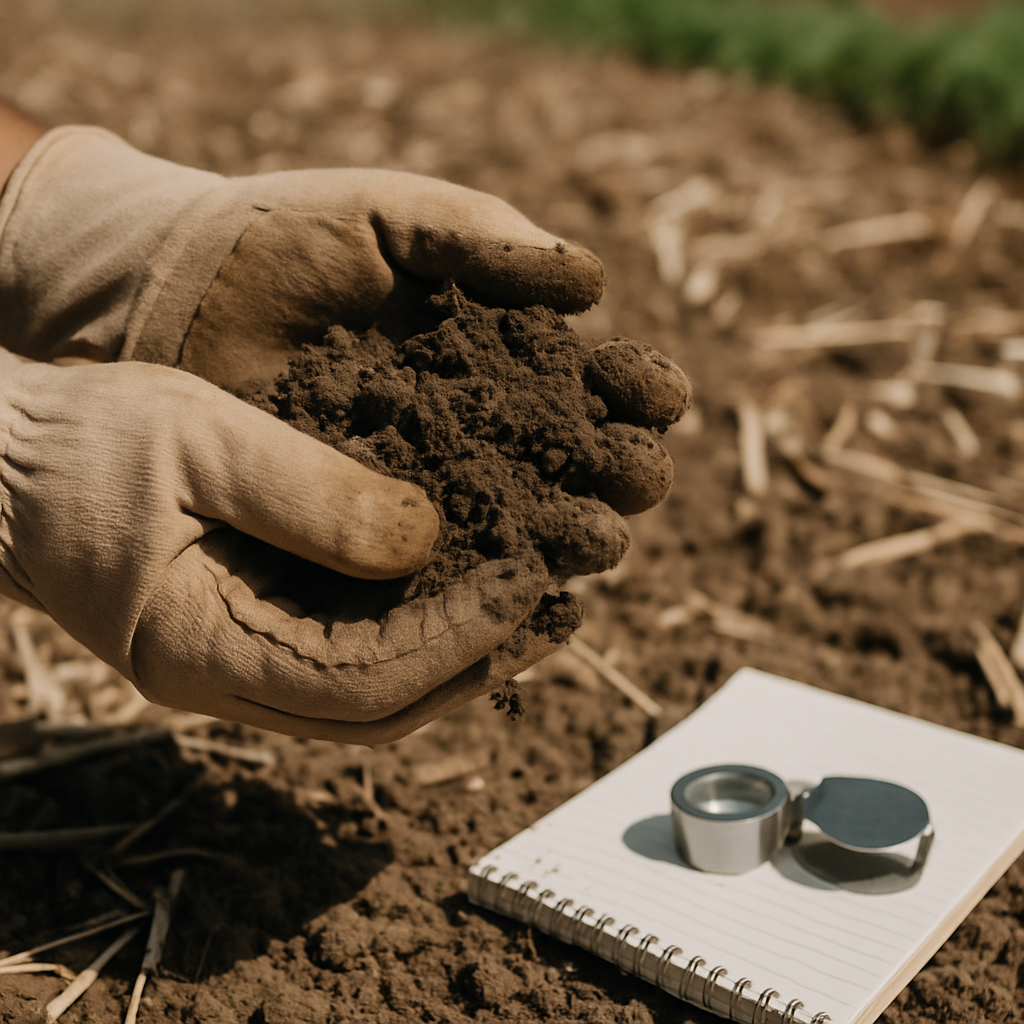
What are soil mites?
What are soil mites? They are small arachnids, often under 1 millimeter long. The group includes many forms, from the slow, saprophagous mites that feed on decaying matter, to predatory mites that eat other microarthropods. On farmland you may see references to ground mites, black soil mites, or brown soil mites in surveys. Most are not visible to the naked eye unless you disturb the surface or use a hand lens.
How to identify common types of soil mites
Identification on the farm is practical, not taxonomic. Look for size, color, and behavior in disturbed soil. Small white mites in soil often come from decaying organic pockets, while black soil mites may be more sclerotized predators. Beware: many growers confuse tiny soil mites with surface pests such as springtails or root aphids.
If you need a quick field check, use a white tray and a brush. Pick a handful of soil from the top horizon, tap it on the tray, and watch for movement. Predatory mites move quickly. Saprophagous types move slowly among fragments. If you want a formal ID, a lab with a microscope can place them into broader groups.
Are soil mites harmful?
Are soil mites harmful? For most crops and pasture systems the answer is no. Many mites are neutral or beneficial. Some species in specific situations can nibble on fine root hairs or seedling cotyledons, but such damage is rare at field scale. The more common problem is when growers misidentify surface populations of pests such as spider mites in soil or root-feeding pests and respond with broad measures that harm beneficial soil life.
Beneficial services provided by soil mites
Think of mites as part of the soil cleaning crew. They shred leaf litter and help convert carbon into forms other organisms can use. They also create microchannels that improve aeration and water infiltration. Predatory mites suppress populations of smaller pests and help keep microbe-feeding communities in balance. Overall, a living mite community signals a biologically active soil.
Below is a practical list of roles these organisms play on farmland, useful to include in stewardship discussions and lease clauses.
- Decomposition of crop residues into finer organic matter
- Stimulation of microbial communities that cycle nutrients
- Predation on small soil pests, supporting natural pest control
- Contribution to soil structure through movement and aggregation
- Indicator value for overall soil biological health
- Support for early-season seedling establishment by keeping harmful microbes in check
How to encourage beneficial soil mites on farmland
Practical management is simple and fits common stewardship goals. Reduce unnecessary soil disturbance, keep living roots in the ground when possible, and maintain a layer of organic cover. Avoid heavy use of nonselective fumigants or long-residual insecticides that can deplete mite populations. When negotiating leases, include clauses that align tenant practices with these aims.
Farmers and landowners can take specific steps to support mite-friendly soils. The list below offers concrete actions that can be written into lease guidance or used by operators.
- Adopt reduced tillage or no-till practices where feasible
- Use cover crops to feed soil food webs year round
- Apply compost or well-processed organic amendments sparingly and regularly
- Rotate crops to prevent build-up of specific root pests
- Limit broad-spectrum soil insecticides to targeted, documented needs
- Set aside field margins or hedgerows to support predator diversity
How do mites in potting soil or houseplants differ from field populations?
Why do soil mites appear in houseplants? Potted media is a concentrated, warm, and stable environment. That can lead to visible populations of tiny soil mites, including white mites in plant soil. On farms, populations are diffuse and part of a larger matrix. In pots, they may be more noticeable but are usually feeding on decaying roots and organic particles rather than living roots.
If you see mites in potting soil at home, simple sanitation and a change in watering patterns are often enough to reduce numbers. On farmland, these same principles scale to field-level practices like residue management and drainage improvements.
How to check for soil mites and decide if action is needed
Checking is inexpensive. Use these steps: sample the top few centimeters, place soil on a light background, and look for movement. Record the context: recent tillage, pesticide applications, or heavy residue. If plants show root decline or patchy dieback, consider a focused diagnostic rather than assuming mites are the cause. Most often, symptoms point to water, nutrients, or root pathogens.
Leasing, contracts, and soil stewardship responsibilities
Leases should reflect practical soil care expectations. For farmland, consider clauses that cover tillage limits, allowable chemical use, and organic amendment standards. Include shared monitoring protocols so both parties know how soil biology, including beneficial soil mites, will be tracked. Short-term tenants benefit from clear guidance, and long-term landowners protect soil capital.
When drafting or negotiating terms, specify who pays for soil tests, when habitat features must be maintained, and what remediation steps follow a damaging event. Digital tools and services can centralize records, and platforms such as Land4Rent can help document agreed practices and inspections in a clear format without replacing legal advice.
When to treat, and what works against harmful soil mites
Most mite populations do not require treatment. If monitoring and a trusted agronomist identify a problematic species, start with nonchemical options: improve drainage, reduce surface residue that shelters pests, and encourage predators. For severe, specific outbreaks, targeted treatments may be necessary. Physical measures like solarization of small lots or replacing contaminated potting mixes work for containers.
Comparisons of common options are useful. For example, neem oil vs diatomaceous earth soil mites compares a botanical contact repellent with an abrasive powder. Neem works best on soft-bodied surface pests. Diatomaceous earth can reduce surface crawler numbers but can also harm beneficial microarthropods when used broadly. Choose the least disruptive effective approach.
Record keeping, monitoring, and long-term soil care
Long-term land health depends on consistent records. Track tillage dates, pesticide uses, compost applications, and cover crop choices. Include simple biological checks, like snapshot counts of microarthropods or percent residue cover. Regular checks make it possible to link management changes to soil response.
In lease renewals, attach monitoring data to the agreement. That reduces disputes and helps both parties commit to building soil organic matter and biological diversity. When you document that beneficial mites in soil are present and increasing, that signals progress to lenders, insurers, and future tenants.
Common misconceptions and practical comparisons
Many people confuse soil mites vs spider mites, or assume all white mites in soil are pests. Spider mites are typically plant-surface feeders and will show webbing on leaves, while most soil-inhabiting mites are hidden in the matrix. Another common confusion is mixing up soil mites vs fungus gnats, which are fly larvae feeding on roots and are often linked to overwatering.
When choosing a remedy, balance efficacy with ecological cost. For instance, broad insecticides may eliminate a mite annoyance but also remove predator species and delay natural recovery. Record decisions, test small areas if possible, and favor options that fit longer term soil health goals.
Practical advice for tenants and landowners working together
Clear, practical terms reduce conflict. Include operational items like approved pesticide lists, limits on deep tillage, and requirements for residue handling after harvest. Agree on how to handle visible pest problems: who calls a diagnostic lab, who pays for treatment, and what interim steps are allowed. Consider a joint annual check-in to review soil biology data.
Tools that centralize lease records, invoices, and inspection photos can keep everyone aligned. A service like Land4Rent can help store inspection reports and agreed practices so both landowner and tenant access the same record. Keep clauses simple and enforceable, focusing on behaviors that affect soil life rather than technical taxonomies.
Conclusion
On Canadian farmland, most soil mites are allies. They support nutrient cycling and biological control. Farmers and landowners should aim to protect and encourage diverse microarthropod communities through reduced disturbance, cover cropping, and careful chemical use. Monitoring and clear lease language make it easier to maintain soil health across tenures.
Start small: add a biological check to your next field walk. Record one or two management changes, and review their effects the following season. Over time these modest steps preserve soil capital and can improve resilience to drought and disease. Head over to Land4Rent to read about Soil Health Practices for Canadian Farmland.
Frequently asked questions (FAQs)
What are soil mites?
Soil mites are tiny arachnids that live in soil and organic matter, with roles from decomposition to predation.
Are soil mites harmful?
Most soil mites are not harmful and are beneficial, though a few species can damage seedlings in specific situations.
How to get rid of soil mites?
For problematic indoor or potted cases, reduce moisture, replace media, and use targeted, low-impact treatments.
Why do soil mites appear in houseplants?
Potted media offers warmth and decaying material, which can concentrate mite populations and make them visible.
Can soil mites harm plants?
Rarely, some mites may nibble roots or seedlings, but most feed on detritus or other small soil organisms.
How to identify soil mites?
Sample the surface, place soil on a white tray, and watch for movement; a microscope helps for precise ID.
What kills soil mites naturally?
Poor habitat, drying, and biological predators reduce mite populations without chemical inputs.
How to prevent soil mites in pots?
Use fresh, sterile potting mix, avoid overwatering, and allow the surface to dry between waterings.
Do soil mites eat plant roots?
Most do not eat healthy roots; they feed on decaying matter and small soil organisms, with a few exceptions.
How long do soil mites live?
Life spans vary by species, typically from weeks to several months depending on temperature and resources.

.jpg)
.png)


.svg)


.svg)