%20(1).svg)

.svg)

Introduction
If you own agricultural land in Canada, deciding how to lease it is one of the most consequential choices you will make as a landowner. Traditional private negotiations have long been the default, but they carry a real risk: you may not know whether the rental rate you are accepting reflects what the market will actually bear. FCC's multi-year farmland rental rate analysis has confirmed this directly, finding that rental agreements set through private negotiation consistently lag behind actual farmland value changes sometimes by years, because rates are locked in for multiple seasons without reference to current market conditions. Farmland auctions offer a transparent alternative, where competitive bidding replaces guesswork and rental rates are set by real market demand rather than informal conversations.
This guide walks you through exactly what farmland auctions are, how they work in practice, how they compare to conventional leasing, and what factors should guide your decision. Whether you own a quarter section in Saskatchewan or a grain farm in Ontario, understanding this leasing method could meaningfully change how you think about your land's income potential.
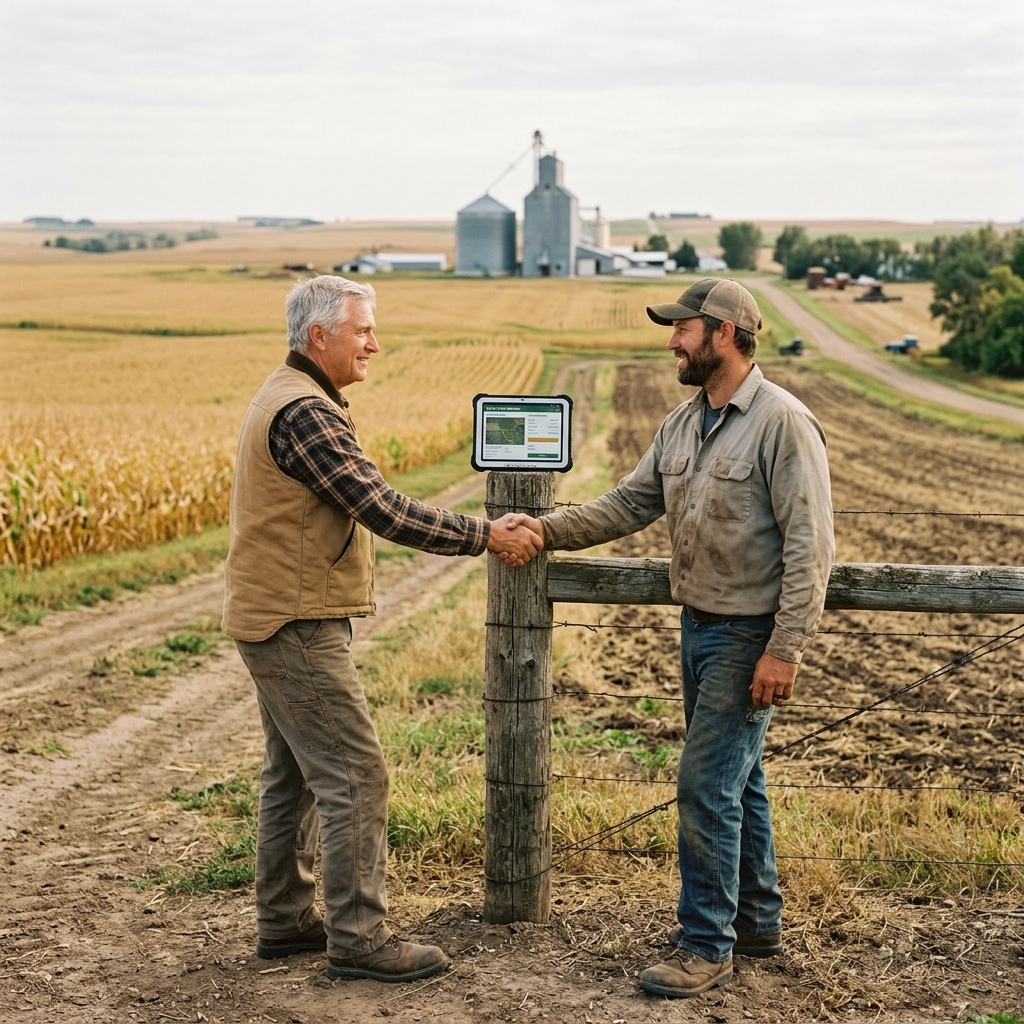
Understanding Farmland Auctions
Before evaluating whether an auction is the right leasing approach for your property, it helps to understand what the process actually involves and how it differs from the kind of deal most Canadian landowners have historically made.
What Is a Farmland Auction?
A farmland auction is a structured process in which agricultural land is offered for lease through competitive bidding. Rather than a landowner setting a fixed price and hoping to find a willing tenant, the auction opens the opportunity to multiple qualified farmers simultaneously.
How Do Farmland Auctions Work?
The process typically begins when a landowner lists their property on an auction platform, providing details about acreage, soil quality, current use, and lease terms. The platform verifies the listing and opens it to a pool of registered, pre-qualified farmers. Interested tenants place bids on a per-acre rental basis, and the competition drives the rate upward until the auction closes. At that point, the winning bidder and the landowner move into lease execution, often supported by automated documentation tools built into the platform.
One of the defining features of this model is transparency. Real-time farm lease bidding means landowners can watch the process unfold and see exactly what competing farmers are willing to pay. There is no back-and-forth negotiating, no ambiguity about whether a better offer was available, and no reliance on a single relationship to fill a vacancy.
Who Uses Agricultural Land Auctions?
Agricultural land auctions are used by a range of Canadian landowners, from retired farmers who have inherited land but are not actively farming, to estate administrators managing agricultural assets on behalf of a family, to investment entities holding farmland as a long-term asset. Farmers who participate as bidders range from established operations looking to expand their acreage to newer producers seeking a fair shot at land they could not otherwise access through the closed networks of private leasing.
Farmland Auction vs Private Lease: A Practical Comparison
Most Canadian landowners start with private leasing because it is familiar. You find a farmer through word of mouth, agree on a rate, sign a lease or a handshake agreement, and repeat the arrangement year after year. That model has its place, but it also has structural limitations that become more apparent when land values and rental markets shift.
How Rental Rates Are Set
In a private negotiation, rental rates are typically anchored to what both parties already know or what a neighbor charges. This often means rates lag behind actual market conditions by years. If farmland rental values in your area have risen due to commodity price movements, land consolidation, or regional demand, a private tenant has little incentive to volunteer that information. FCC's guidance on setting rental prices explains that productive value, the revenue potential of the land, and asset value together determine a fair market rent, yet landowners relying on private negotiation rarely have access to the real-time market data needed to apply these calculations accurately. A competitive bidding process, by contrast, surfaces the market rate automatically because multiple farmers are competing for the same opportunity. The final bid reflects what your land is genuinely worth to working farmers in that moment.
Farmland Auction vs Private Lease: Transparency and Trust
Private leasing relies heavily on personal trust and long-standing relationships. This can work well when both parties are aligned, but it can also lead to informal arrangements with weak documentation, inconsistent payment terms, and limited recourse when disputes arise. Auctions introduce a formal structure from the outset. Bidders are typically verified, lease terms are set in advance, and the entire transaction is documented. This reduces ambiguity and gives both the landowner and the tenant a cleaner starting point for the relationship.
Speed and Efficiency
Finding a tenant through private channels can take weeks or months, particularly if your property is in a region with a smaller farming community or if the previous tenant has left with little notice. Online farmland auctions compress this timeline considerably. By opening your land to a verified pool of interested farmers simultaneously, you can receive competitive bids within days of listing. For landowners with time-sensitive lease renewals or vacant land sitting idle, this speed differential has direct financial consequences.
Regional Considerations: Land Auctions Canada
Canada's agricultural land market is not uniform. Soil quality, commodity focus, farm size norms, and rental rate benchmarks vary significantly from province to province. Understanding how auction dynamics play out in your specific region is an important part of evaluating whether this approach suits your situation.
Farmland Auctions in Ontario
Farmland auctions in Ontario operate in a market characterized by high land values, significant competition for quality acreage, and a diverse mix of crop and livestock operations. The demand for additional rented acres is particularly strong among cash crop producers in southwestern Ontario, where consolidation pressures have pushed farmers to seek every available acre. Competitive bidding in this environment can produce rental rates that exceed what a private negotiation might yield, especially for tile-drained, high-productivity parcels where multiple operators are vying for the same land.
Farmland Auctions in Saskatchewan and Alberta
Farmland auctions in Saskatchewan involve some of the most sought-after grain and oilseed land in the world. The province's flat, high-yield prairie soils attract serious producers, and competitive bidding can reflect that demand sharply. Statistics Canada's 2021 Census of Agriculture profile of Saskatchewan confirms the province holds over 40% of Canada's total cultivated farmland, with oilseed and grain farms generating nearly 80% of provincial farm revenues, the scale and concentration that makes competitive bidding for Saskatchewan farmland especially consequential for landowners. Farmland auctions in Alberta similarly serve a diverse agricultural base, with bidders ranging from grain farmers in the Peace Region to mixed operations in central Alberta. Alberta Agriculture and Irrigation's analysis of provincial agricultural real estate transfers shows that Alberta farmland values reached a decade-high average of $3,530 per acre in 2023, with declining transaction volumes indicating a tight supply market where competitive lease pricing has become increasingly valuable to landowners. In both provinces, auction platforms that draw from a wide geographic pool of verified farmers tend to generate stronger competitive dynamics than locally circulated private listings.
What Regional Factors Should You Consider?
Before listing your land on any auction platform, it is worth assessing a few region-specific factors: the current benchmark rental rate for comparable land in your area, the density of active farmers who might be interested bidders, whether your land has specialized attributes such as irrigation rights, organic certification, or specialty crop suitability that would appeal to a niche audience, and how your provincial tenancy regulations affect the lease terms you can legally offer. These factors directly influence how competitive your auction is likely to be and what floor or reserve price you should set.
Key Benefits of Using a Farmland Bidding Platform
or landowners who have not yet explored auction-based leasing, the benefits are more practical and immediate than they might initially appear. This is not simply about getting a higher dollar figure on paper. It is about building a leasing process that is structurally sound and repeatable.
Benefits Worth Knowing
Auction platforms bring a number of concrete advantages that private leasing rarely provides from the start. Platforms like Land4Rent, which run live online rental auction systems specifically for Canadian farmland, are built to address the gaps that informal leasing leaves open.
Is Auction-Based Leasing Right for Every Landowner?
Not every situation calls for a competitive auction. If you have a long-standing tenant relationship built on trust, clear documentation, and fair rates that have kept pace with market conditions, there may be little reason to disrupt it. The auction model delivers the most value when a lease is coming up for renewal, when rental rates have not been reviewed in several years, when a previous tenant has departed and the land needs a new farmer quickly, or when a landowner simply does not have the personal network to find a qualified tenant on their own. In those scenarios, competitive farmland bidding consistently outperforms the private negotiation alternative.
Practical Steps to Get Started with Online Farmland Auctions
If you have decided that auction-based leasing is worth exploring for your property, the process of getting started is more straightforward than many landowners expect. The key is approaching it with the same care you would bring to any formal business transaction.
Preparing Your Land Listing
A strong listing is the foundation of a competitive auction. Gather the relevant information about your property before listing: total acreage, soil productivity ratings, drainage infrastructure, current cropping history, any existing improvements, and the lease term you are offering. The more clearly you can describe what is being offered, the more informed the bids will be and the less likely you are to face post-auction disputes over expectations. Setting a reserve price based on current regional benchmarks is a practical way to protect yourself while still allowing the market to push the rate higher.
Evaluating Bids and Finalizing the Lease
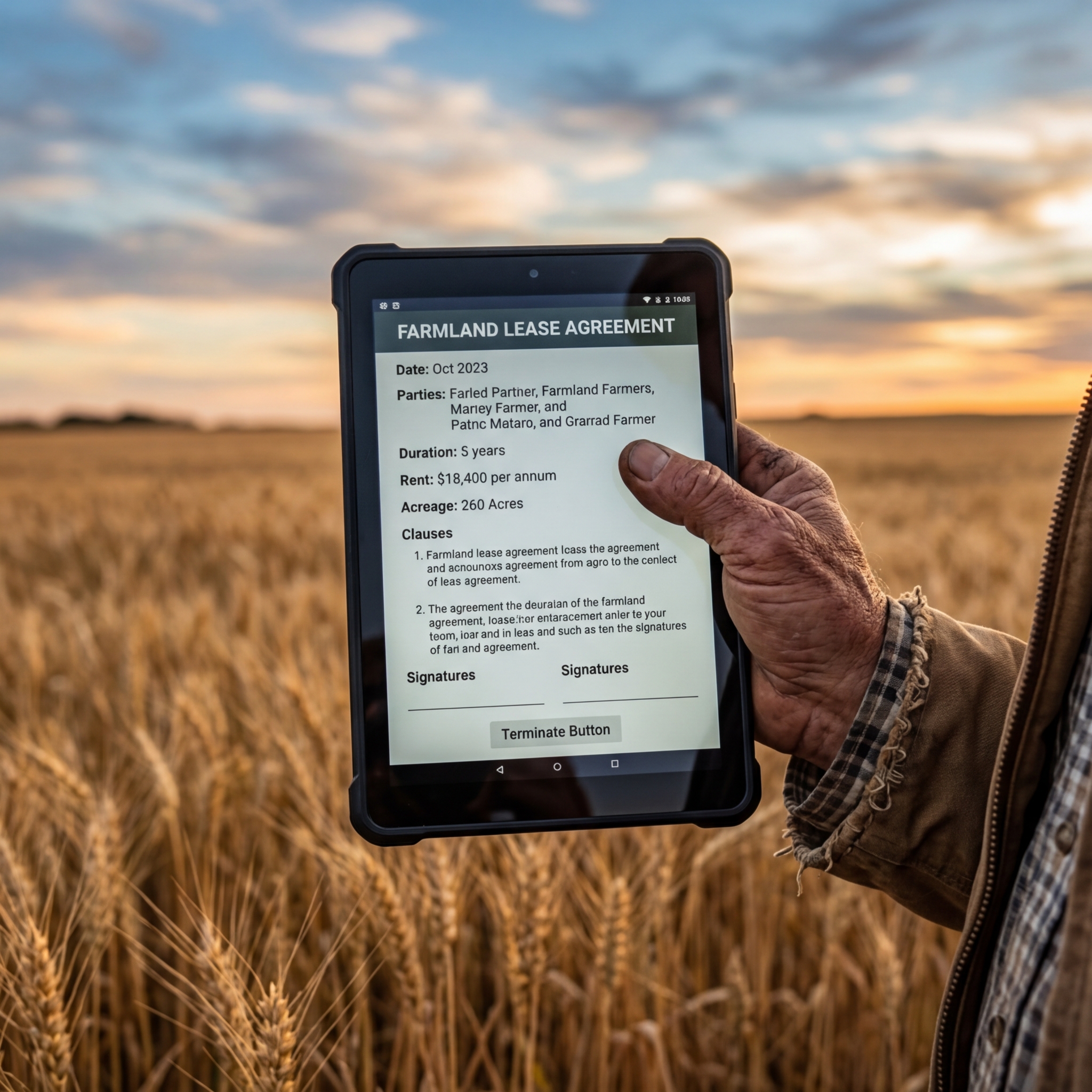
Once the auction closes, evaluate the winning bid not only on price but on the farmer's profile and any supporting information the platform provides. A slightly lower bid from a verified, experienced operator with a strong track record may represent a better long-term outcome than the highest dollar figure from an unknown bidder. After selecting a tenant, ensure your lease is documented formally, covers crop-year terms clearly, and includes provisions for land care standards. Platforms that offer automated lease generation simplify this step considerably, reducing the time between auction close and a signed agreement.
Conclusion
Farmland auctions represent a structurally sound, market-driven alternative to private leasing that Canadian landowners in every province are beginning to take seriously. Whether your land is in the canola fields of Alberta, the grain belt of Saskatchewan, or the cash crop regions of Ontario, competitive bidding surfaces rental rates that private negotiations rarely match. The process is transparent, faster than most traditional methods, and increasingly accessible through dedicated online platforms. Land4Rent is one example of a Canadian platform built specifically for this purpose, offering landowners end-to-end auction tools, verified farmer access, and integrated lease management in a single place. If your lease is coming up for renewal or you are evaluating how to maximize the return on agricultural land you own, exploring the auction model is a practical and worthwhile step.
Ready to see what your land is worth on the open market? List your farmland on Land4Rent and let competitive bidding set the rate.
Frequently Asked Questions (FAQs)
How do farmland auctions work?
A landowner lists their agricultural property on an auction platform, and verified farmers submit competitive bids for the right to lease it, typically on a per-acre basis. The highest qualifying bid at the close of the auction secures the lease, and the parties then move into formal documentation.
How to bid on farmland in Canada?
To bid on farmland in Canada, you typically register on an auction platform, complete a verification process, and then submit bids on listed properties during the active auction window. Most platforms require proof of farming operation and some level of identity or financial verification before bidding is permitted.
How to find farmland auctions near me?
Online farmland auction platforms with national reach are the most reliable way to find auctions in your area, as they aggregate listings across provinces and allow you to filter by location. Local agricultural publications and provincial farm organizations can also post notices of upcoming auctions.
Farmland auctions Ontario: what should I know?
Ontario farmland auctions tend to be highly competitive, particularly for tile-drained cash crop land in the southwestern part of the province where demand for rented acres consistently outpaces supply. Landowners in Ontario should set a well-researched reserve price and ensure their listing clearly describes drainage, soil class, and lease term length.
Farmland auctions Alberta: how active is the market?
Alberta has an active agricultural leasing market across grain, oilseed, and mixed farming regions, and online auction platforms have made it easier for landowners to reach qualified bidders beyond their immediate area. Rental rate benchmarks vary significantly by region, so knowing your local comparables before setting a reserve price is important.
Can I auction my farmland for rent rather than for sale?
Yes, farmland auctions are commonly used for leasing purposes, not just outright land sales. The auction determines the annual or per-acre rental rate that the winning farmer will pay under a formal lease agreement, not the purchase price of the land itself.
What is the difference in a farmland auction vs private lease?
A farmland auction determines rental rates through open competitive bidding, which typically produces a market-accurate rate and introduces formal structure from the start. A private lease relies on negotiation between known parties, which can result in below-market rates and less formal documentation.
What are the best farmland auction platforms Canada has available?
The best platforms for Canadian farmland leasing auctions are those that specialize in agricultural land, verify both landowners and farmers, offer integrated lease generation tools, and have active listings across multiple provinces. Platforms purpose-built for the Canadian market tend to serve landowners better than general-purpose auction sites.
What is a live online farm auction?
A live online farm auction is a real-time bidding event conducted through a digital platform, where farmers submit competing bids within a set timeframe and can often see bid activity as it happens. This format combines the transparency of a traditional live auction with the geographic reach and convenience of an online marketplace.
How to participate in agricultural land auctions as a farmer?
Farmers looking to participate in agricultural land auctions should register on a dedicated platform, complete any required verification steps, and monitor active listings that match their location and operational needs. Having a clear budget per acre and understanding the lease terms being offered before bidding is essential to making competitive and sustainable offers.

.png)


.svg)


.svg)