%20(1).svg)

.svg)

Introduction
Most Canadian landowners hold the majority of their wealth in familiar places: stocks, bonds, and residential real estate. While these assets have proven their value over time, relying too heavily on any single category exposes investors to unnecessary risk. Diversification is one of the most fundamental principles of sound financial planning, yet many landowners overlook an asset sitting right beneath their feet. Agricultural land capable of generating rental income offers a unique opportunity to build resilience into an investment strategy without the volatility tied to equity markets or the operational demands of traditional property management.
For those who own farmland in provinces like Ontario or Saskatchewan, leasing that land to active farmers provides a steady income stream that moves independently of stock market swings and housing cycles. This blog explores why farmland diversification deserves serious consideration, how it compares to conventional strategies, and what steps landowners can take to start generating rental income from their agricultural holdings today.
Understanding Diversification and Why It Matters
At its core, diversification means spreading investment capital across multiple asset classes to reduce exposure to any single source of risk. When one sector underperforms, gains in another can offset losses and smooth overall returns. This principle applies whether you manage a modest portfolio or oversee significant family wealth.
What Is Diversification in an Investment Context?
Diversification is the practice of allocating resources across different investment vehicles so that no single event or market condition can devastate your financial position. Traditional investors achieve this by holding a mix of equities, fixed income, and sometimes cash equivalents. The goal is not to maximize returns on every holding, but to create a balanced structure that can weather economic uncertainty. A well-diversified portfolio ensures that when one asset class declines, others may hold steady or even appreciate, preserving capital and income over the long term.
How Does Portfolio Diversification Protect Against Risk?
Markets are unpredictable. Interest rate changes, geopolitical events, and sector-specific disruptions can all trigger sudden losses. By holding assets with low or negative correlations to one another, investors reduce the likelihood that all holdings will decline simultaneously. For example, during a stock market correction, government bonds often rise in value as investors seek safety. Similarly, tangible assets like farmland tend to perform independently of equity markets, providing stability when financial instruments face turbulence. This insulation is what makes diversification so powerful: it transforms a collection of individual bets into a cohesive strategy designed to endure volatility.
Why Many Landowners Remain Overconcentrated in Traditional Assets
Despite the clear benefits, many landowners continue to hold the bulk of their wealth in stocks, bonds, and urban real estate. This happens for several reasons. Traditional assets are well understood, easily accessible through brokers and financial advisors, and deeply embedded in mainstream investment culture. Farmland, by contrast, often feels unfamiliar or operationally complex to those who did not grow up in agriculture. The perception that leasing land requires specialized knowledge or hands-on involvement discourages exploration of this option. As a result, landowners miss the opportunity to leverage an existing tangible asset that could generate reliable passive income and strengthen their overall financial position.
Why Farmland Rental Income Is a Compelling Diversification Strategy
Farmland offers characteristics that make it exceptionally well-suited for investors seeking to diversify their investment portfolio. Unlike stocks or bonds, agricultural land produces income tied to food production rather than corporate earnings or interest rates. This fundamental difference creates a buffer against the forces that drive conventional market cycles.
How Farmland Rental Income Moves Independently of Market Volatility
When stock markets fall or interest rates shift, farmland rental income remains largely unaffected. Farmers need land to grow crops regardless of what happens on Bay Street or Wall Street. Lease agreements are typically negotiated annually based on local agricultural conditions, not financial market performance. This independence makes farmland rental income diversification a stabilizing force within a broader portfolio. While equities may lose value during a recession, your tenant continues planting and paying rent. While bond yields fluctuate with central bank policy, your farmland generates income tied to the harvest cycle. This lack of correlation is precisely what diversification aims to achieve.
Canadian Farmland Market Opportunities
Canada's agricultural sector is both large and diverse, spanning provinces with distinct growing conditions and crop profiles. Farmland diversification Ontario offers access to high-value grain and specialty crop regions, while farmland diversification Saskatchewan connects landowners to some of the most productive wheat and canola land in the world. Across the Prairies and southern Ontario, demand for rental farmland remains strong as established farmers seek additional acreage and young operators look for affordable ways to scale their businesses. Demographic shifts in rural Canada, including the aging farmer population, are increasing the supply of land available for lease. This creates a favorable environment for landowners willing to enter the rental market, particularly those who work with modern leasing platforms that simplify tenant vetting and agreement management.
Comparing Farmland Diversification to Traditional Strategies
Stocks vs Farmland Diversification
Equities offer the potential for high returns but come with significant volatility. A single earnings report, regulatory change, or macroeconomic shock can trigger double-digit losses in a matter of days. Farmland, by contrast, produces income and appreciates slowly and steadily. While you will not see the explosive gains possible in growth stocks, you also will not experience the stomach-churning corrections that accompany equity investing. Stocks vs farmland diversification is not a question of choosing one over the other, but rather balancing growth potential with stability. Holding both allows you to capture upside from equities while anchoring your portfolio with an asset that behaves independently and generates reliable cash flow.
Farmland vs Real Estate Diversification
Residential and commercial real estate are already familiar to many investors, but these properties require active management, tenant turnover, maintenance, and exposure to local housing market conditions. Farmland leasing is operationally simpler. Once a lease is signed, the tenant manages day-to-day operations. There are no midnight calls about broken appliances, no tenant disputes, and no property managers to hire. Agricultural leases are typically longer-term and less sensitive to urban development trends or interest rate-driven housing bubbles. Farmland vs real estate diversification comes down to operational simplicity and market independence. If you seek passive income without the headaches of traditional landlording, farmland offers a compelling alternative.
Alternative Asset Diversification: Where Farmland Fits
Alternative asset diversification refers to investments outside the traditional stock-bond framework, including commodities, private equity, and tangible assets like timberland or farmland. These alternatives often exhibit low correlation to public markets, making them valuable portfolio stabilizers. Farmland sits at the intersection of real assets and income generation, offering both land appreciation and annual rental payments. For landowners who already possess agricultural property, the barrier to entry is lower than most alternative investments. You do not need to buy into a private fund or navigate complex commodity markets. You simply need to connect with a qualified tenant and structure a lease agreement that protects your interests.
Practical Steps to Diversify Your Income with Farmland Rentals
Understanding the benefits of farmland diversification is one thing. Taking action is another. Below are the concrete steps landowners should follow to begin generating rental income from their agricultural holdings.
How to Get Started with Farmland Leasing
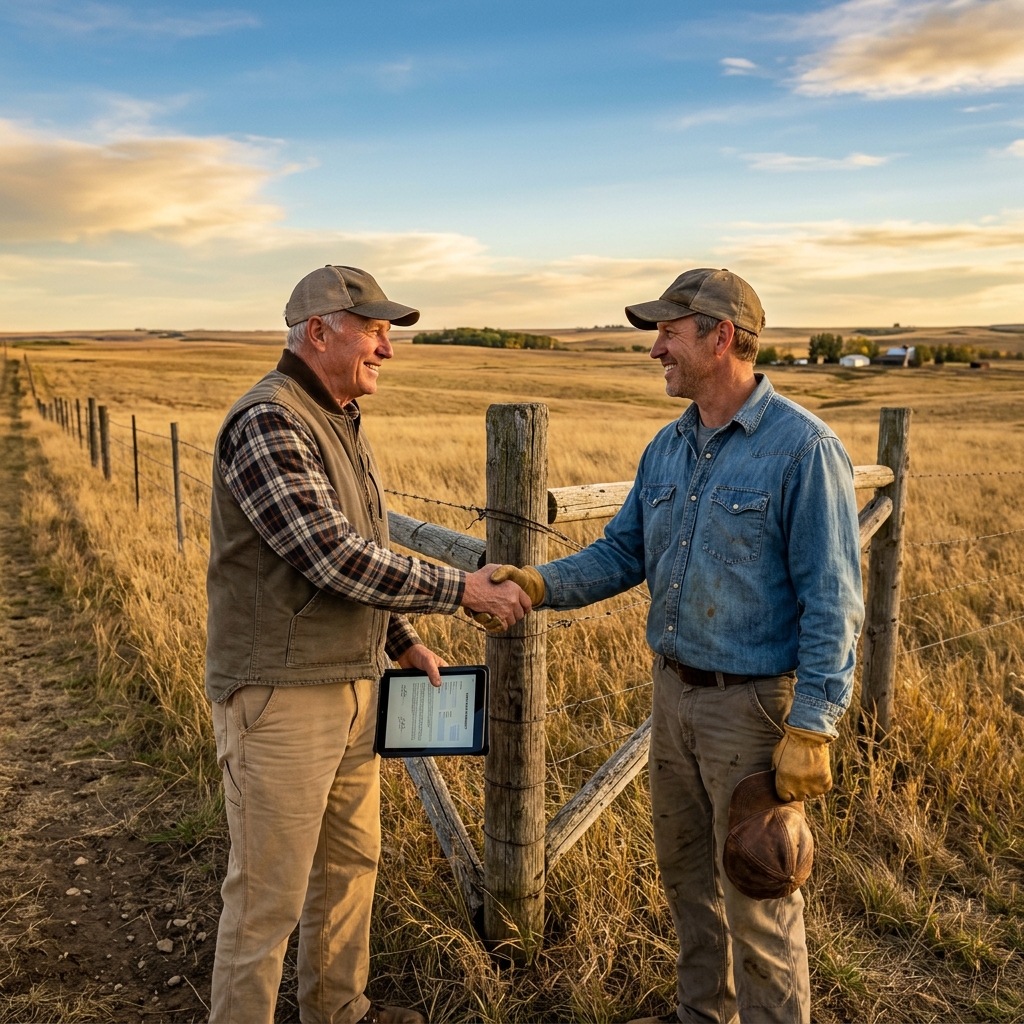
Before listing your property, conduct a basic assessment of your land's rental potential. Understand the soil quality, drainage characteristics, and local crop patterns. Research rental rates for comparable properties in your region to set realistic expectations. Decide whether you want a cash lease, where the tenant pays a fixed annual amount, or a crop-share arrangement, where you receive a percentage of the harvest. Most landowners prefer cash leases for their simplicity and predictability. Once you have clarity on these fundamentals, you are ready to connect with potential tenants through formal channels rather than relying on informal handshake agreements that lack legal protection.
Choosing the Right Platform to Simplify the Process
Modern leasing platforms have transformed how landowners and farmers connect. Rather than relying on word-of-mouth or local classifieds, landowners can now list their properties on specialized marketplaces where verified farmers submit competitive bids. Land4Rent operates as a dedicated Canadian platform that handles everything from tenant vetting to automated lease generation and secure payment processing. By using a service like Land4Rent, landowners gain access to transparent pricing driven by real market demand, reducing guesswork and ensuring fair rental rates. The platform also removes much of the administrative burden, allowing you to focus on portfolio strategy rather than paperwork.
Structuring Lease Agreements That Protect Your Interests
A well-drafted lease agreement is essential to protecting both parties and ensuring a smooth rental relationship. Your lease should specify the rental rate, payment schedule, permitted land uses, maintenance responsibilities, and termination conditions. It should also address insurance requirements, liability, and what happens if the tenant fails to pay. Many platforms provide templates or automated generation tools that produce legally binding agreements based on your inputs. If your land has unique considerations, such as conservation easements or shared access roads, consult a lawyer familiar with agricultural leasing to ensure those details are properly documented.
Long-Term Benefits of Farmland Diversification for Landowners
The decision to lease farmland extends beyond immediate income. It positions your portfolio for long-term resilience and opens pathways for wealth transfer and legacy planning.
Building Financial Resilience Through Multiple Income Streams
Relying on a single income source, whether employment, pension, or investment dividends, creates fragility. If that source is disrupted, your financial stability suffers. Farmland rental income adds a layer of protection by diversifying revenue streams across uncorrelated assets. During years when stock dividends decline or interest income stagnates, your farmland continues producing cash flow. This redundancy is what separates resilient portfolios from vulnerable ones. Over time, the cumulative effect of multiple income streams compounds, providing both security and flexibility to pursue other opportunities without financial pressure.
Preserving Land for Future Generations
Leasing farmland allows you to generate income today while keeping the asset intact for your heirs. Unlike selling land to raise capital, which transfers ownership permanently, leasing preserves optionality. Your children or grandchildren may choose to farm the land themselves, continue leasing it, or convert it to another use as circumstances change. This flexibility is invaluable for families who view land as more than a financial instrument. It represents heritage, stability, and a connection to place that cannot be replicated by securities or cash holdings.
Simplifying Estate Planning with Farmland Assets
Farmland held in a family estate can simplify succession planning when structured properly. Unlike businesses that require active management, leased farmland generates income passively and can be transferred to heirs with minimal operational disruption. Establishing a trust or family partnership that holds the land ensures continuity and provides a framework for distributing income or making collective decisions about the property. Working with succession planning professionals familiar with agricultural assets ensures that tax implications, zoning restrictions, and intergenerational goals are properly addressed.
Conclusion
Farmland rental income offers Canadian landowners a proven pathway to strengthen portfolio resilience, reduce exposure to market volatility, and unlock value from an asset that might otherwise sit idle. By understanding the fundamentals of diversification and recognizing the unique benefits of Canadian farmland diversification, you can build a more balanced and durable financial foundation. Whether your land is located in Ontario, Saskatchewan, or another agricultural region, the opportunity to generate steady passive income while preserving ownership for future generations is both practical and financially sound.
Ready to explore how farmland leasing can diversify your income? Visit Land4Rent to connect with verified farmers, access transparent rental auctions, and simplify the entire leasing process through a trusted Canadian platform.
Frequently Asked Questions (FAQs)
What is diversification and why does it matter for landowners?
Diversification is the practice of spreading investments across multiple asset classes to reduce risk and smooth returns over time, protecting landowners from the impact of any single market downturn.
How to diversify investment portfolio using farmland?
Landowners can diversify by leasing agricultural property to farmers, generating rental income that moves independently of stocks, bonds, and other traditional assets.
Can farmland diversify investment portfolio effectively?
Yes, farmland provides low correlation to equity markets, steady cash flow, and inflation protection, making it a strong portfolio stabilizer.
Is farmland good for diversification in Canada?
Canadian farmland offers strong rental demand, favorable tax treatment, and access to some of the world's most productive agricultural regions, making it an excellent diversification tool.
How does farmland provide diversification benefits?
Farmland generates income tied to agricultural fundamentals rather than financial market performance, offering stability during economic volatility and equity corrections.
Why diversify with agricultural land instead of stocks?
Agricultural land produces predictable rental income without the volatility of equities, while also offering tangible asset appreciation and tax advantages unavailable in stock portfolios.
How to diversify with Canadian farmland as a landowner?
List your property on a specialized leasing platform, connect with verified tenants, and structure a cash lease agreement that generates reliable annual income.
Is land a good diversification strategy for long-term investors?
Yes, land provides both income and appreciation potential while preserving ownership for future generations, making it ideal for long-term wealth building.
What are the farmland diversification pros and cons?
Pros include stable cash flow, inflation protection, and low market correlation; cons involve liquidity constraints and the need for basic agricultural knowledge.
What are the best diversification strategies comparison for landowners?
Farmland leasing offers simpler operations than residential real estate, greater stability than stocks, and better inflation protection than bonds, making it a top choice for balanced diversification.



.svg)


.svg)