%20(1).svg)

.svg)

Introduction
For Canadian farmers looking to grow their operations, access to land remains one of the most significant barriers to expansion. With average farmland prices climbing year after year, purchasing additional acreage requires substantial capital, long-term debt, and considerable financial risk. Yet the opportunity for agricultural growth depends heavily on the ability to scale production, diversify crops, and enter new markets. This is where farmland rental opportunities for growth become a strategic advantage. Leasing allows farmers to expand their operational footprint without the heavy upfront costs of ownership, freeing capital for equipment, seed, technology, and labor investments that directly drive productivity and profitability.
This blog explores how farmers can grow your farming operation through strategic farmland leasing, the practical steps to identify and secure quality rental land, and how modern platforms simplify the process. Whether you operate in Ontario, Saskatchewan, or another agricultural region, understanding how to find farms for rent in canada can unlock measurable farm business growth while managing risk and preserving cash flow.
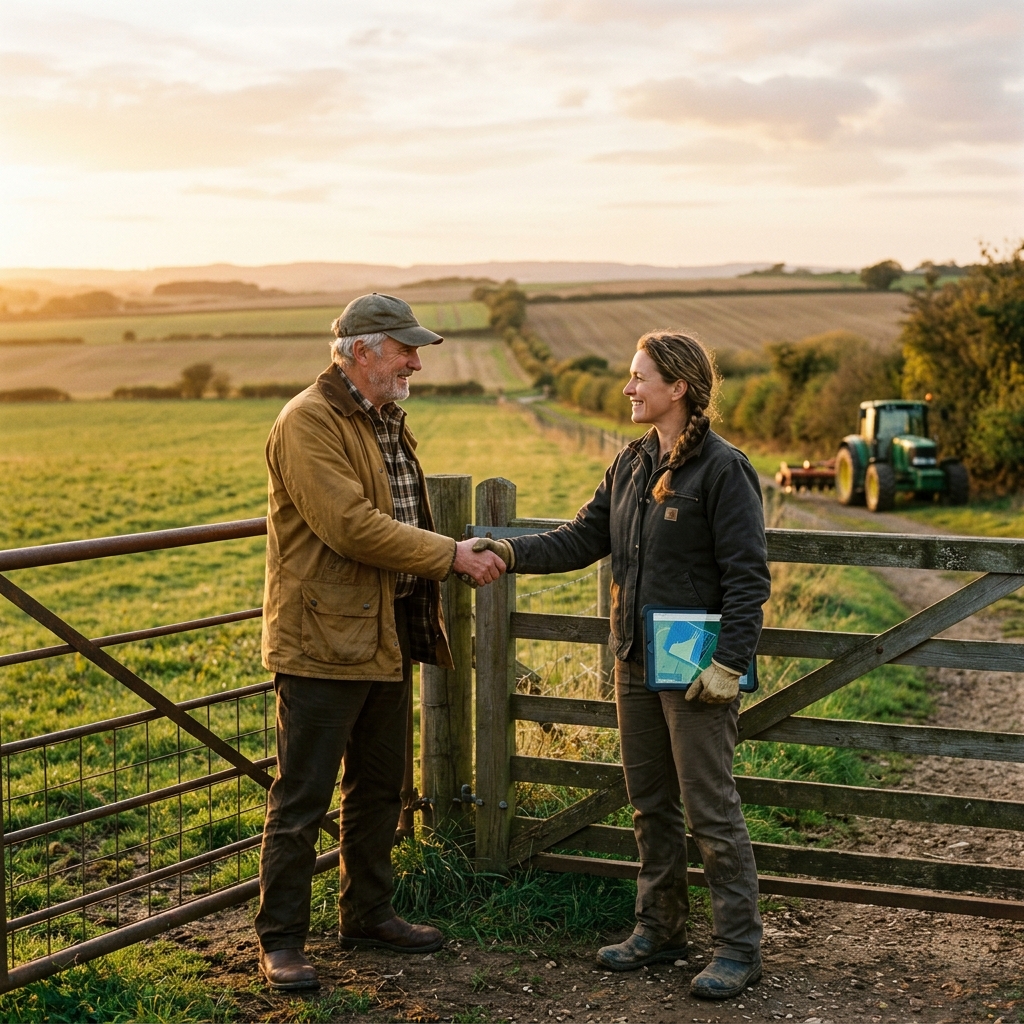
Why Farmland Leasing Is a Strategic Growth Tool
Leasing farmland offers flexibility, reduced capital requirements, and faster pathways to expansion compared to traditional land purchases. For farmers focused on scaling their operations, rental agreements provide immediate access to productive acreage without the decades-long financial commitment that comes with ownership. This approach is especially valuable for operators testing new crops, entering unfamiliar regions, or responding to seasonal market opportunities that require additional capacity.
Financial Advantages of Leasing Over Buying
The financial case for leasing is straightforward. Instead of tying up hundreds of thousands of dollars in land acquisition, farmers can allocate that capital toward inputs, technology, and operational improvements that generate returns within a single growing season. Leasing also eliminates property tax obligations, maintenance costs, and the long-term debt servicing associated with mortgages. For younger or newer operators, this can mean the difference between staying financially viable during lean years and struggling under fixed debt payments. Rental agreements typically span one to five years, allowing farmers to adjust their land base as market conditions, crop rotations, or business strategies evolve.
Expanding Acreage Without Overextending Financially
One of the clearest benefits of farmland leasing is the ability to expand farmland acreage without overextending financial resources. Land purchases often require at least 20 to 30 percent down, followed by annual mortgage payments that remain fixed regardless of crop performance or commodity prices. Leasing shifts this dynamic by offering predictable annual costs that can be scaled up or down based on operational needs. For farmers already managing debt from equipment purchases or infrastructure upgrades, leasing additional acreage provides a pathway to growth that does not compound financial risk.
Testing New Markets and Crop Varieties
Leasing also supports experimentation and diversification. Farmers can lease additional farmland for expansion into new crops or regions without committing to permanent land ownership. This is particularly useful for operations exploring organic certification, specialty grains, or niche markets that require specific soil types or microclimates. A short-term lease allows farmers to test viability, assess yields, and evaluate profitability before making larger, more permanent commitments. If a crop or region does not perform as expected, the farmer can simply choose not to renew the lease rather than being locked into an underperforming asset.
How to Identify and Secure Quality Rental Farmland
Finding the right rental land is not just about acreage. It requires evaluating soil quality, proximity to existing operations, water access, and the landowner's willingness to negotiate flexible terms. Farmers should approach the search process with the same rigor they apply to equipment purchases or crop planning, prioritizing properties that align with operational goals and growth strategies.
How Can Farmers Expand Their Acreage?
Farmers expand their acreage by identifying underutilized or available rental land through networking, local listings, or specialized platforms. Building relationships with landowners, attending agricultural events, and monitoring regional market conditions all contribute to securing access to quality farmland. Many landowners prefer leasing to tenants who demonstrate strong operational track records, financial stability, and clear communication. Presenting a professional proposal that outlines your farming practices, crop plans, and references can significantly improve your chances of securing a lease in competitive markets.
How to Scale a Farming Business
Scaling a farming business requires more than just adding acreage. It involves optimizing operational efficiency, managing cash flow, investing in technology, and maintaining flexibility to adapt to changing market conditions. Leasing additional land supports this growth by allowing farmers to increase production without locking capital into fixed assets. The key is to scale agricultural business operations incrementally, ensuring that each new lease contributes to profitability rather than adding unnecessary complexity or financial strain. Farmers should track performance metrics such as cost per acre, yield per hectare, and return on investment for each leased parcel to make informed decisions about renewal or expansion.
Strategic Advantages of Using a Farmland Rental Platform
Traditional farmland leasing often involves private negotiations, informal agreements, and limited market visibility. This approach can lead to unfair pricing, unclear terms, and disputes over lease conditions. Modern platforms streamline the process by offering transparent pricing, verified listings, and automated lease management. For farmers focused on grow farming business through land leasing strategies, these tools remove friction and reduce risk.
Competitive Pricing Through Market-Driven Auctions
One of the most significant advantages of using a digital farmland rental platform is access to competitive, market-driven pricing. Instead of relying on informal negotiations or outdated regional norms, farmers can participate in live auctions where rental rates reflect genuine demand and property value. This transparency benefits both parties by establishing fair terms based on real-time market conditions rather than guesswork or inflated asking prices. For landowners, auctions maximize returns by allowing multiple qualified tenants to compete. For farmers, they provide confidence that the rental rate aligns with regional benchmarks and property quality.
Verified Listings and Trusted Transactions
Trust is essential in farmland leasing. Platforms that verify both landowners and tenants reduce the risk of fraud, miscommunication, or unreliable agreements. Verified listings ensure that the property details, soil quality, and lease terms are accurate and reflect the actual condition of the land. This level of transparency is especially valuable for farmers leasing land in unfamiliar regions or working with landowners they have not met in person. Land4Rent prioritizes this trust by verifying every listing and tenant, creating a secure environment where both parties can engage confidently.
Automated Lease Agreements and Payment Processing
Managing lease agreements manually can be time-consuming and error-prone. Digital platforms automate this process by generating customized, legally binding lease terms based on landowner inputs and farmer requirements. This eliminates the need for expensive legal consultations or template contracts that may not reflect specific operational needs. Payment processing is also streamlined, with secure online transactions, credit card options, and full transaction records maintained within the platform. This removes the administrative burden of tracking payments, issuing receipts, or chasing late rent, allowing farmers to focus on production rather than paperwork.
Regional Growth Opportunities Across Canada
Canada's diverse agricultural landscape presents unique farmland growth opportunities in Canada for farmers willing to explore regions beyond their immediate area. Each province offers distinct advantages in terms of soil quality, climate, crop suitability, and rental market dynamics. Understanding these regional differences is critical for farmers looking to expand strategically.
Agricultural Growth in Ontario
Agricultural growth in Ontario is driven by proximity to major population centers, well-developed infrastructure, and access to both domestic and export markets. The province's farmland supports a wide range of crops, including corn, soybeans, wheat, and specialty grains. Rental opportunities in Ontario tend to be competitive due to high demand, but they also offer strong yield potential and reliable market access. Farmers leasing land in Ontario should prioritize properties with good drainage, proximity to grain terminals, and favorable lease terms that allow for multi-year agreements.
Saskatchewan Farm Growth Strategies
Saskatchewan farm growth strategies often focus on large-scale cereal and oilseed production, supported by expansive prairie farmland and favorable growing conditions for wheat, canola, and pulses. The province's rental market is characterized by competitive rates and strong landowner interest in long-term leasing relationships. Farmers expanding into Saskatchewan should assess soil classification, access to irrigation, and proximity to grain elevators when evaluating rental opportunities. The ability to manage large acreages efficiently is critical in this region, making equipment capacity and labor availability key considerations.
Opportunities in Quebec, Alberta, and Manitoba
Quebec offers diverse agricultural opportunities ranging from dairy and livestock operations to vegetable and grain production. Rental markets in Quebec are often localized, with strong emphasis on relationship-building and community connections. Alberta's farmland supports extensive cattle ranching, grain production, and emerging specialty crop markets, with alberta farmland leasing rates and practices varying significantly by district. Manitoba's farmland is ideal for wheat, canola, and pulse crops, with competitive rental rates and strong agronomic conditions. Each province presents distinct sustainable farm growth practices that align with regional climate, market access, and operational scale.
Practical Steps to Grow Your Farming Operation Through Leasing
Successfully leveraging farmland leasing for business growth requires a clear strategy, disciplined financial planning, and ongoing performance evaluation. Farmers should treat rental land as an integral part of their growth plan, not just a temporary solution to capacity constraints.
How to Grow Your Farming Operation
Start by defining clear growth objectives. Are you looking to increase total production volume, diversify into new crops, or expand into new geographic markets? Each goal requires a different leasing approach. Farmers focused on volume growth should prioritize large, contiguous parcels with strong yield potential. Those exploring diversification should seek smaller rental properties that support crop rotation or niche markets. Geographic expansion often requires leasing land in unfamiliar regions, making due diligence and local market research essential. Once objectives are set, develop a financial model that accounts for rental costs, input expenses, expected yields, and projected revenues to ensure each lease contributes positively to profitability.
How to Expand Farming Operations Without Buying Land
Expanding without purchasing land requires a shift in mindset from ownership to strategic access. Focus on securing long-term leases that provide stability and allow for capital investment in infrastructure, technology, or soil improvement. Negotiate lease terms that include renewal options, flexible payment schedules, or performance-based adjustments. Build strong relationships with landowners by demonstrating professionalism, clear communication, and reliable rent payments. Many landowners prefer long-term tenants who treat the property responsibly and maintain open dialogue throughout the lease period. By positioning yourself as a reliable, growth-oriented operator, you increase the likelihood of securing favorable rental terms and priority access to future opportunities.
How to Grow Farm Profitability Through Leasing
Profitability hinges on careful cost management and operational efficiency. Leasing reduces upfront capital requirements, but it does not eliminate the need for disciplined financial planning. Track performance metrics for each leased parcel, including cost per acre, yield per hectare, and net return. Use this data to make informed decisions about lease renewals, crop selection, and soil health practices for canadian farmland to ensure long-term productivity. Identify underperforming leases early and negotiate revised terms or exit agreements where necessary. Successful farmers treat rental land as a portfolio, continually optimizing their mix of owned and leased acreage to maximize returns while managing risk.
Overcoming Common Barriers to Farmland Leasing
Despite the clear advantages of leasing, many farmers face barriers that prevent them from fully capitalizing on rental opportunities. These obstacles range from limited market access and lack of transparency to concerns about lease security and landowner reliability. Addressing these challenges requires a combination of strategic planning, technology adoption, and proactive communication.
Can Leasing Farmland Help Business Growth?
Yes. Leasing farmland directly supports business growth by providing flexible, capital-efficient access to additional production capacity. It allows farmers to scale operations in response to market demand, test new crops or regions with minimal risk, and preserve cash flow for investments that drive operational efficiency. The key is to approach leasing farmland as a strategic tool rather than a stopgap solution, ensuring that each rental decision aligns with long-term growth objectives and financial capacity.
How to Grow a Farming Business with Limited Capital
Limited capital does not preclude growth. Leasing shifts financial requirements from large upfront purchases to manageable annual rental payments, freeing capital for inputs, equipment, and technology. Farmers with constrained budgets should prioritize smaller, high-quality parcels that deliver strong returns per acre rather than pursuing large but underperforming properties. Leveraging digital platforms with transparent pricing and verified listings also reduces the risk of overpaying or entering unfavorable agreements. Additionally, building strong credit history and maintaining positive relationships with landowners can improve access to favorable lease terms over time.
What Are Growth Opportunities in Agriculture?
Growth opportunities in agriculture extend beyond acreage expansion to include diversification, technology adoption, value-added processing, and market access. Leasing farmland supports all these pathways by providing the production capacity needed to scale operations, experiment with new crops, or enter premium markets. Farmers can also leverage rental land to implement regenerative practices, test precision agriculture technologies, or establish contracts with processors and buyers that require consistent volume. The flexibility of leasing allows operators to pivot quickly in response to market trends, commodity prices, or changing consumer preferences.
The Role of Technology in Modern Farmland Leasing
Technology is reshaping how farmers access, evaluate, and manage rental land. Digital platforms eliminate geographic constraints, provide real-time market data, and automate administrative processes that once required weeks of negotiation and paperwork. For farmers serious about scaling their operations, adopting these tools is no longer optional.
What Drives Agricultural Growth in Canada?
What drives agricultural growth in Canada is a combination of market demand, technological innovation, access to capital, and availability of productive farmland. In recent years, digital platforms have emerged as a critical enabler by improving transparency, reducing transaction costs, and connecting farmers with landowners more efficiently. This shift allows both parties to make data-driven decisions based on actual market conditions rather than relying on informal networks or outdated pricing norms. As more farmers adopt these tools, the overall efficiency and competitiveness of Canadian agriculture improve, driving broader growth across the sector.
Is Farmland Leasing Good for Growth?
Farmland leasing is good for growth when approached strategically. It offers flexibility, reduced financial risk, and enables rapid scaling in response to market opportunities. However, success depends on careful property selection, disciplined financial planning, and strong landowner relationships. Farmers who treat leasing as a core component of their growth strategy, rather than a temporary workaround, consistently outperform those who rely solely on land ownership. The ability to adjust acreage annually based on performance, market conditions, and operational capacity is a significant competitive advantage in an industry characterized by volatility and uncertainty.
Best Platforms for Farmland Growth
The best platforms for farmland growth combine transparent pricing, verified listings, automated lease management, and secure payment processing. These features reduce administrative burden, minimize disputes, and ensure that both farmers and landowners can focus on their core responsibilities. Platforms that offer live auctions provide additional value by establishing fair rental rates based on competitive bidding rather than subjective negotiation. For farmers seeking reliable access to quality rental land, using a trusted platform like Land4Rent simplifies the process and provides confidence that transactions are secure, transparent, and professionally managed.
Conclusion
Farmland leasing represents one of the most practical and capital-efficient pathways for Canadian farmers to achieve measurable business growth. By providing flexible access to additional acreage without the financial burden of ownership, leasing enables operators to scale production, diversify crops, and enter new markets while preserving cash flow for critical investments in equipment, technology, and inputs. Whether you are exploring opportunities in Ontario, Saskatchewan, or another agricultural region, the ability to strategically leverage rental land can fundamentally transform your operation's growth trajectory. Success depends on careful property evaluation, disciplined financial planning, and the use of modern tools that simplify the leasing process from listing to payment. Farmers who adopt a strategic approach to farmland leasing position themselves to thrive in an increasingly competitive and dynamic agricultural landscape.
Ready to unlock new growth opportunities? Explore verified farmland rental listings and secure your next lease through Land4Rent today.
Frequently Asked Questions (FAQs)
How to grow your farming operation?
Grow your farming operation by leasing additional farmland to increase production capacity without the capital burden of land purchase, allowing you to invest in equipment, technology, and inputs that drive profitability.
How can farmers expand their acreage?
Farmers can expand their acreage by identifying rental opportunities through digital platforms, networking with landowners, and securing leases that align with operational goals and financial capacity.
How to scale a farming business?
Scale a farming business by optimizing operational efficiency, managing cash flow, and leasing farmland incrementally to increase production while maintaining flexibility and minimizing financial risk.
How to expand farming operations without buying land?
Expand farming operations without buying land by leasing additional acreage through verified platforms, negotiating long-term agreements, and building strong relationships with reliable landowners.
How to grow farm profitability through leasing?
Grow farm profitability through leasing by carefully tracking performance metrics for each rental parcel, optimizing input allocation, and focusing on high-quality properties that deliver strong returns per acre.
Can leasing farmland help business growth?
Yes, leasing farmland directly supports business growth by providing flexible access to production capacity, reducing upfront capital requirements, and allowing farmers to scale in response to market demand.
How to grow a farming business with limited capital?
Grow a farming business with limited capital by prioritizing farmland leasing over land purchase, focusing on smaller high-quality parcels, and using digital platforms to secure fair rental rates and verified listings.
What are growth opportunities in agriculture?
Growth opportunities in agriculture include acreage expansion through leasing, crop diversification, technology adoption, value-added processing, and securing contracts that require consistent production volume.
What drives agricultural growth in Canada?
Agricultural growth in Canada is driven by market demand, technological innovation, access to capital, and the availability of productive farmland facilitated by transparent digital leasing platforms.
Is farmland leasing good for growth?
Farmland leasing is excellent for growth when approached strategically, offering flexibility, reduced financial risk, and the ability to scale operations rapidly in response to market opportunities.



.svg)


.svg)