%20(1).svg)

.svg)

Introduction
Introduction
Setting a fair rental rate for farmland has never been straightforward. Landowners often rely on what a neighbour charged a decade ago, and farmers frequently accept terms without knowing whether the rate reflects actual market conditions. The result is a leasing market built on guesswork, relationship dynamics, and incomplete information. Online farmland auctions are changing that by replacing private negotiation with open, competitive bidding that surfaces real market value in real time.
This blog walks through exactly how that process works. Whether you're a landowner trying to understand what your land is worth or a farmer evaluating whether auction-based leasing is right for you, this guide covers the full picture, from how farmland rental auctions are structured to what drives final pricing and why transparency benefits both sides of the transaction.
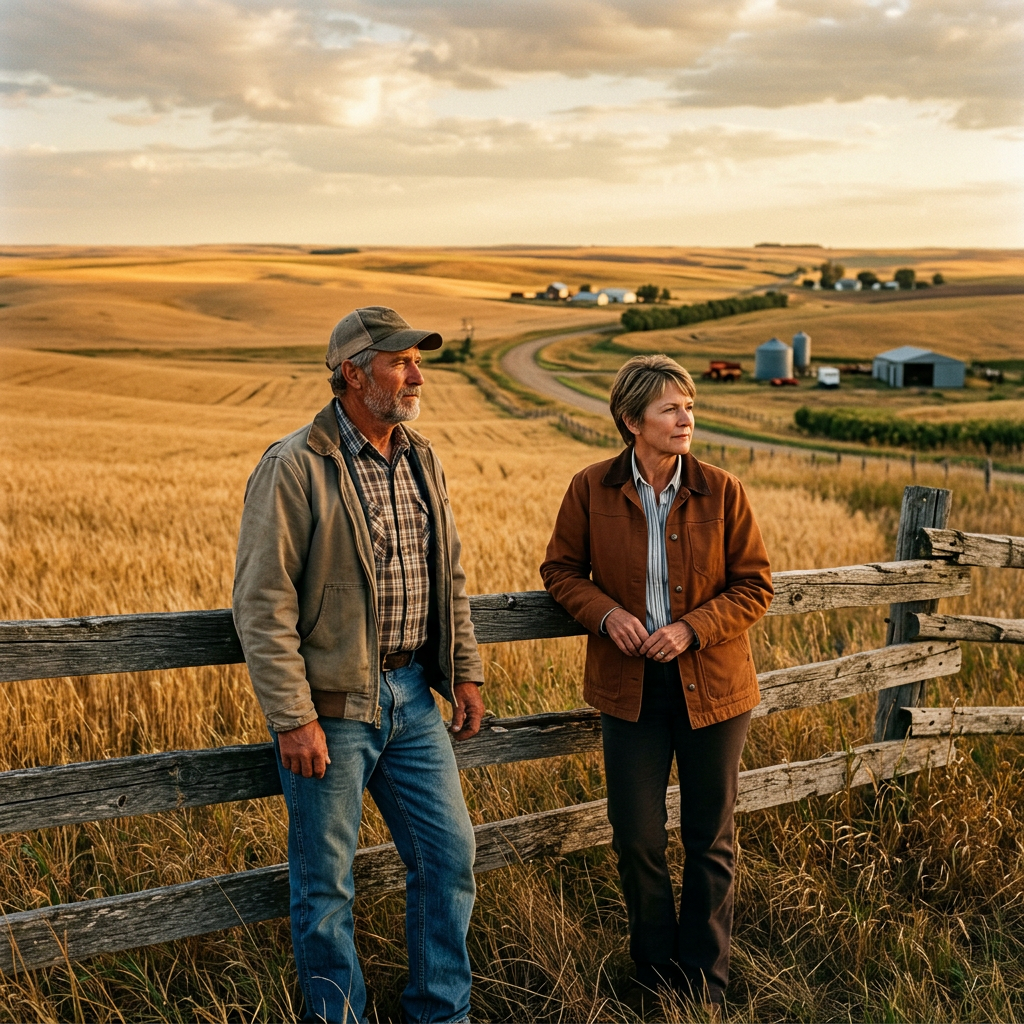
The Problem with Traditional Farmland Leasing
The Problem with Traditional Farmland Leasing
Before examining how online auctions solve the pricing problem, it's worth understanding why the traditional approach falls short. Private leasing has been the norm in Canadian agriculture for generations, but it carries structural weaknesses that consistently disadvantage both parties.
How Private Negotiations Create Pricing Gaps
In a private lease arrangement, the rental rate is typically negotiated between a landowner and a single prospective tenant. That conversation is shaped by personal history, local reputation, and whatever comparable rates either party can informally reference. There is no mechanism to test whether the agreed price reflects genuine demand. Here are the core problems this creates:
- Information asymmetry: One or both parties lack access to current market data, so the rate reflects limited knowledge rather than actual supply and demand.
- Underpricing by landowners: Owners who want to maintain goodwill with long-term tenants often accept below-market rates rather than risking conflict.
- Overpaying by farmers: Without competitive benchmarks, tenants sometimes agree to rates higher than what an open market would produce.
- Missed opportunities: The best-suited farmer for a given parcel may never learn it's available, leaving both parties worse off.
- Lease inertia: Rates set years ago persist unchanged, drifting further from current market reality with each passing season.
Why the Information Gap Persists
Unlike residential real estate, where sold and leased prices are often publicly accessible, agricultural land rental data in Canada is largely private and fragmented. There is no centralized registry of what farmers pay per acre in a given region. Provincial crop insurance data and academic surveys provide rough estimates, but those figures lag real-time market conditions by months or years.
This creates a structural disadvantage for anyone entering or re-evaluating a lease. Without a live, aggregated view of what the market is actually bidding on comparable land, both parties are negotiating in partial darkness.
What Farmland Auctions Replace
An auction doesn't replace the relationship between a landowner and farmer. It replaces the pricing mechanism. Instead of two parties guessing at a fair number, an open bidding process generates a rate that reflects what the market, across multiple informed participants, is genuinely willing to pay. That number is far more defensible and far more accurate than anything a private conversation can produce.
How Online Farmland Auctions Actually Work
How Online Farmland Auctions Actually Work
Understanding how farmland auctions work requires tracing the process from the moment a listing goes live to the moment a lease is signed. Each stage serves a specific function in producing accurate, market-tested rental rates.
Listing and Verification
The process begins when a landowner submits their property to an auction platform. A credible platform will verify both the listing and the identity of the landowner before anything goes public. This verification step is critical because it ensures that every parcel in the auction pool is legitimate, accurately described, and legally available for lease. Farmers bidding on a property need to trust that the soil type, acreage, drainage conditions, and access details they're reading are accurate, because those factors directly inform how much they're willing to bid.
Once verified, the listing is published with a defined auction window. That window creates urgency and ensures all interested farmers are evaluating the same property at the same time, under the same conditions. This is structurally different from a private lease, where timing is informal and a landowner may speak with only one or two prospects before signing.
Competitive Bidding and Price Discovery
The bidding phase is where price discovery actually happens. Multiple farmers, each independently evaluating the parcel based on their own operational needs, acreage requirements, equipment capacity, and financial position, submit bids. Because each bidder is competing against others, they have an incentive to bid at or near the true value of the land to them.
This competitive dynamic is what separates auction pricing from negotiated pricing. In a negotiation, each party is anchored to a starting number and works toward a compromise. In live farmland auction bidding, there is no anchor except what the market is willing to pay. The final price isn't a compromise; it's a signal. It reflects genuine demand from informed participants operating with access to the same listing information at the same time.
What Drives the Final Bid Price
Several factors shape where competitive bids land in a farmland rental auction. Location is the most obvious driver. A parcel in a high-productivity region of Saskatchewan or Ontario will attract more bidders and higher bids than isolated, lower-yield land. But location is only one variable. Soil quality, drainage infrastructure, field shape, proximity to grain handling facilities, and the number of acres available all influence how aggressively farmers bid.
Timing matters too. Listings that open during active planning periods, typically late fall or early winter when farmers are making acreage decisions for the coming season, tend to generate stronger competition. An auction platform that understands agricultural cycles will time listings accordingly, maximizing participation and producing rates that reflect peak seasonal demand rather than off-peak indifference.
Farmland Auctions vs. Private Leasing: A Practical Comparison
Farmland Auctions vs. Private Leasing: A Practical Comparison
The question most landowners and farmers eventually ask is direct: are farmland auctions actually better than private leases, or just different? The answer depends on what you're optimizing for, but the structural advantages of the auction model are significant and consistent.
Transparency and Accountability
In a private lease, the rate is known only to the two parties involved. There's no external validation that the number is fair, and neither party can be fully confident they've achieved the best outcome. In an auction, the final price is the product of open competition. Every bidder had access to the same information and the same opportunity. The landowner knows they've tested the market, and the winning farmer knows they secured the land at a rate they themselves determined was appropriate. That mutual confidence is difficult to achieve in a private negotiation, regardless of how cordial the relationship.
Are Farmland Auctions Better Than Private Leases for Pricing Accuracy?
For pricing accuracy specifically, the evidence consistently favours the auction model. When multiple informed parties compete for the same asset under identical conditions, the resulting price is a truer reflection of market value than any bilaterally negotiated rate. This is why competitive bidding is the standard pricing mechanism for public resource allocation in many sectors. Agricultural land is simply catching up to a model that other asset classes adopted long ago.
That said, private leases aren't without merit. Long-standing tenant relationships carry real value, particularly when a farmer has managed the land well for years and the landowner values continuity. Some auction platforms accommodate this by allowing existing tenants to participate in the auction for their current parcel, giving them the opportunity to retain the lease at a market-validated rate.
Access and Reach
One underappreciated advantage of online farmland auctions is geographic reach. A private lease is limited to whoever the landowner knows or whoever drives past the property. Farmland auctions Canada-wide reach farmers who would never have discovered the listing otherwise. For landowners with land in competitive agricultural regions, wider reach directly translates to more bidders and stronger pricing outcomes.
Regional Dynamics: How Location Shapes Auction Outcomes
Canada's agricultural regions differ significantly in land productivity, crop mix, infrastructure, and competitive intensity. Those differences show up clearly in auction outcomes, making regional context an important part of understanding how rental rates form.
Prairie Province Auction Characteristics
The prairie provinces, particularly Saskatchewan and Alberta, represent some of Canada's most actively leased farmland. Farmland lease auctions Alberta and Saskatchewan tend to attract competitive bidding for large, contiguous grain parcels, where operational scale matters significantly to farming economics. Farmers in these regions often operate large equipment across substantial acreage, so adding a well-positioned parcel to their operation carries real efficiency value, and bids reflect that.
Saskatchewan farm lease auctions in particular see strong participation for well-drained, road-accessible parcels with established yield histories. The province's relatively flat terrain and established grain marketing infrastructure mean that location and soil productivity are the dominant pricing variables rather than access or topography.
Ontario and Eastern Markets
Farmland rental auctions in Ontario operate in a different competitive environment. Land values are higher, parcels tend to be smaller, and the crop mix is more diverse, ranging from cash crops like corn and soybeans to specialty and horticultural production. Competitive bidding in Ontario can be particularly intense near major processing or export corridors, where proximity to markets adds measurable economic value to the land. Farmers operating in these regions are often bidding not just for acreage but for logistical advantage.
How Auction Platforms Normalize Regional Differences
A well-designed farmland auction platform accounts for regional variation by ensuring listings are detailed and verifiable. Soil classification, historical yield data, drainage records, and infrastructure notes allow farmers to evaluate parcels on their actual merits rather than rough regional generalizations. The more accurate the listing data, the more accurately the auction price reflects land-specific value rather than broad regional assumptions. This specificity is one reason competitive farmland rental rates produced through auctions tend to be more granular and defensible than regional averages from survey data.
What Landowners and Farmers Should Know Before Participating
Approaching your first farmland auction, whether as a landowner listing land or a farmer placing bids, requires some preparation. The process is straightforward, but understanding a few key points will help you participate confidently and get the most from the experience.
For Landowners: Setting Up for a Strong Outcome
The quality of your listing directly influences the quality of bids you receive. Providing detailed, accurate property information, including soil maps, drainage conditions, GPS field boundaries, and any infrastructure present, gives farmers the data they need to bid confidently. Incomplete or vague listings attract fewer bidders and lower bids because uncertainty is priced in as risk. Landowners who invest time in thorough listing preparation consistently see stronger participation and better final rates. Platforms like Land4Rent support landowners through this process, with verification and listing support built into the platform workflow.
For Farmers: How to Bid Strategically
Bidding on farmland in an auction context is different from negotiating a private lease. Rather than anchoring to what you paid for a comparable parcel last year, focus on what the land is worth to your specific operation. Calculate the realistic yield value of the acres, account for your input costs and proximity to your base operation, and determine the maximum per-acre rate at which the land remains profitable. Bid to that number, not to beat a competitor. This discipline prevents overbidding while ensuring you compete meaningfully for land that genuinely fits your operation.
Understanding Lease Terms in an auction Context
The rental rate isn't the only variable that matters in a farmland lease. Term length, renewal rights, crop restrictions, drainage responsibilities, and payment structure all affect the real value of a lease. Some farmland auction platforms generate lease agreements automatically based on parameters set by the landowner before the auction opens. This means the winning bidder knows exactly what terms they're agreeing to before they place their first bid, eliminating post-auction negotiation surprises and ensuring both parties enter the lease with clear expectations.
Conclusion
Conclusion
Online farmland auctions solve a problem that private leasing has never been able to fully address: knowing what land is actually worth in the current market. By replacing bilateral negotiation with open, competitive bidding, auctions produce rental rates that reflect genuine demand, verified property data, and real participation from the farming community. For landowners, that means confidence in maximizing returns. For farmers, it means paying a rate the market set, not one that was imposed. Land4Rent operates at the centre of this shift, providing a verified, end-to-end platform where both sides of the transaction can participate with clarity and confidence. If you're holding farmland that deserves a fair market rate, or looking for acreage to expand your operation, the auction model is worth understanding on its own terms.
Explore how competitive bidding can work for your land or your operation by visiting Land4Rent and reviewing active listings today.
Frequently Asked Questions (FAQs)
How to bid on farmland auctions?
Register on a verified farmland auction platform, review active listings in your area, and submit bids during the open auction window. Most platforms require identity verification before allowing you to bid to ensure all participants are legitimate operators.
What are the benefits of farmland auctions for landowners?
Auctions expose your land to a broader pool of qualified farmers, generate competitive pricing through open bidding, and produce a market-validated rental rate that removes the guesswork from private negotiation. They also tend to reduce the time a property sits unlisted between tenants.
Can I auction my farmland online?
Yes. Specialized platforms allow Canadian landowners to list parcels for online rental auctions, where verified farmers submit bids during a defined window. The process typically includes listing verification, a live bidding period, and automated lease generation upon bid acceptance.
Are farmland auctions better than private leases?
For pricing accuracy and market transparency, auctions consistently outperform private leases because they aggregate real demand from multiple participants rather than relying on a single bilateral negotiation. Private leases may still suit situations where a landowner values continuity with a trusted long-term tenant.
Where can I find farmland auctions in Canada?
Dedicated agricultural leasing platforms list available farmland auction parcels by province and region. Searching for listings in your target area on a specialized platform will show active auctions along with property details, soil data, and bidding timelines.
How do farmland auctions work in Saskatchewan?
Saskatchewan farm lease auctions follow the same competitive bidding model as other provinces, with listings published on an online platform and farmers submitting per-acre bids during an open window. Large, contiguous grain parcels with strong yield histories tend to attract the most competitive bidding in that province.
How are farmland rental rates determined in an auction?
Rental rates are determined by the highest bid submitted during the auction period, which reflects what verified, qualified farmers are genuinely willing to pay for the specific parcel based on its productivity, location, and lease terms. No artificial floor or ceiling is set; the market itself produces the rate.
Do farmland auctions work differently across prairie provinces?
The bidding mechanics are the same, but regional factors like soil productivity, infrastructure, field size, and crop mix influence how aggressively farmers bid. Alberta and Saskatchewan tend to see strong competition for large grain parcels, while market dynamics in other provinces reflect local agricultural economics.
What are the best farmland auction sites in Canada?
The best platforms are those that combine verified listings, verified bidder identities, clear auction timelines, and automated lease generation. Look for platforms purpose-built for agricultural leasing rather than general auction sites that handle farmland as one of many asset categories.
How are farmland rental rates determined differently in auctions versus private negotiations?
In a private negotiation, the rate reflects what two parties agree on with limited market information. In an auction, the rate reflects what multiple informed bidders are willing to pay under identical conditions, making the outcome a far more accurate representation of actual market value.



.svg)


.svg)