%20(1).svg)

.svg)

Introduction
Farmland rental in Canada has long operated on handshake deals, word-of-mouth valuations, and negotiation dynamics that rarely give both sides an equal footing. Landowners often undercharge because they lack market data. Farmers overpay because they have no competing offers to benchmark against. The result is a leasing market where pricing is shaped more by relationships and guesswork than by actual demand. Online farmland auction platforms are changing that, replacing private negotiation with transparent, competitive bidding that lets the market speak for itself.
This article breaks down how online farmland rental auctions work, why competitive bidding produces more accurate rental rates, and what protections exist for both landowners and farmers throughout the process. Whether you own acreage you want to lease or you are a farmer looking for additional land, understanding how these platforms operate will help you approach the leasing market with more confidence.
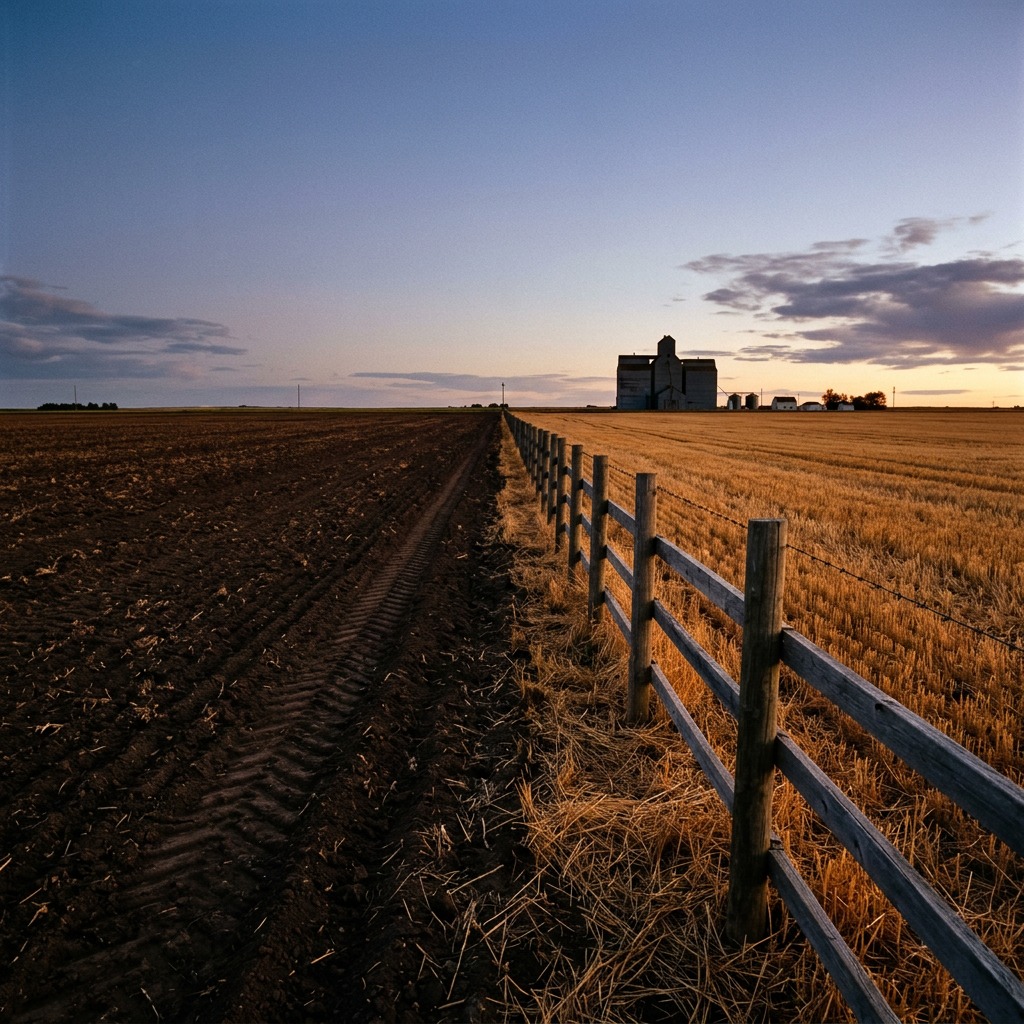
The Problem with Traditional Farmland Leasing
Before exploring how auction-based pricing works, it helps to understand what it replaces. Conventional farmland leasing in Canada has always relied heavily on informal channels: a neighbour makes an offer, an agent calls around, or a landowner accepts the first reasonable bid simply because they do not know what "reasonable" actually looks like in the current market.
Why Private Negotiations Fall Short
Private negotiations have a structural flaw: they are only as accurate as the information each party brings to the table. Most landowners and farmers in Canada do not have reliable access to real-time market data for their specific region, soil type, or crop potential. A few common consequences of this information gap include:
- Undervalued land: Landowners settle for rates below what active bidders would willingly pay.
- Overpriced listings: Farmers are asked to pay rates based on outdated local estimates that do not reflect current crop economics.
- Limited competition: Without multiple bidders, neither party knows whether the agreed rate reflects actual demand.
- Opaque terms: Lease conditions are often vague or unenforceable because agreements are not drawn up with legal precision.
- Relationship dependency: Access to quality farmland frequently depends on who you know rather than what you are willing to pay.
What Fair Pricing Actually Requires
Fair pricing in any market requires two things: transparency and competition. When multiple verified buyers compete openly for the same asset, the resulting price reflects genuine demand rather than negotiating leverage. This principle is well established in real estate, commodity trading, and equipment sales. It simply has not been applied broadly to farmland leasing in Canada until recently.
The Data Gap in Canadian Farmland Leasing
According to Farm Credit Canada's Farmland Values Report, farmland values across Canada have risen substantially in recent years, yet rental rate adjustments often lag behind those increases. This disconnect happens partly because rental rates are set in private conversations rather than through mechanisms that reflect live market conditions. When the leasing process moves online and into an open bidding format, that lag disappears.
How Online Farmland Rental Auctions Work
The mechanics of a farmland rental auction are straightforward once you understand the basic flow. A landowner lists their property, farmers place competitive bids, and the highest qualifying bid sets the rental rate for the lease term. Several important details shape how that process plays out in practice.
Listing and Verification
The process begins when a landowner submits their property to the platform. On a well-structured digital farmland rental platform, every listing goes through a verification step before it becomes visible to bidders. This means the property details, acreage, location, and land characteristics are confirmed rather than self-reported. Farmers browsing available listings can trust that what they see accurately represents what is being offered. This verification step is one of the clearest differences between an online auction platform and a simple classifieds-style listing site.
Competitive Bidding in Real Time
Once a listing is live, verified farmers can place bids during the auction window. Competitive farmland bidding works much like any open auction: each bid is visible, and participants can respond to new offers in real time. This transparency is what drives pricing accuracy. A farmer who genuinely values the land and wants to secure it will bid up to their actual limit, not an arbitrary number set through private negotiation. The same logic applies across regions. Whether you are looking at farmland rental in Ontario or exploring Saskatchewan cropland for rent, the bidding mechanism works the same way, letting regional demand determine regional rates.
How Bids Translate to Lease Rates
At the close of the auction, the winning bid becomes the basis for the lease rate. This rate is not a guess or a compromise. It reflects what a real, verified farmer in that market was willing to pay for that specific piece of land at that specific point in time. That is about as close to a true market rate as any pricing mechanism can get. It also gives landowners something private negotiation rarely does: documented proof that their rental rate was tested against actual market demand.
Safeguards That Make the Process Work
An auction is only as trustworthy as the participants in it. Without proper verification, open bidding could attract inflated offers from unqualified parties or expose landowners to tenants who cannot follow through on payment. Reputable online farmland leasing platforms address this through several built-in safeguards.
Verified Farmers and Verified Listings
The most important safeguard is the verification of both the land and the people bidding on it. Platforms that take this seriously review each farmer's credentials before granting them access to live auctions. This protects landowners from bad-faith bidders and ensures that the winning bid comes from someone who is genuinely qualified to farm the land. It also means the auction results are credible. When everyone bidding is verified, the winning rate reflects real agricultural demand, not speculative activity. This is a core reason why farmland auctions on dedicated platforms tend to produce more defensible pricing than informal off-market deals.
Automated Lease Generation
Once a winning bid is accepted, the next challenge is formalizing the agreement. Automated lease generation removes the ambiguity that plagues handshake deals. Landowners answer a set of structured questions about their land and lease terms, and the platform produces a customized, legally binding lease document. Both parties walk away with a written agreement that clearly defines the rental rate, the lease term, permitted use, and any other relevant conditions. The lease is generated from the auction outcome rather than renegotiated after the fact, which eliminates a common point of friction in traditional leasing.
Secure and Trackable Payments
Secure payment processing is another critical component of any functional online leasing platform. When payments are processed within the platform, both parties have a complete, timestamped record of every transaction. There are no cheques lost in the mail, no disputes over whether payment was received, and no ambiguity about amounts. As farmland rental rates across Canada continue to climb, having clean payment records becomes increasingly important for both sides of a lease agreement.
Why Auction-Based Pricing Produces Fairer Outcomes
Fairness in a rental rate does not mean the lowest price or the highest price. It means the price that reflects actual market conditions. Auction-based pricing achieves this by removing the two factors that most distort private negotiations: information asymmetry and limited competition.
Landowners Get Market-Tested Rates
When a landowner lists through a farmland leasing marketplace, they are not relying on a single offer or a neighbour's estimate of what their land is worth. They are letting multiple qualified farmers compete openly for the right to lease their acreage. The result is a rate they can be confident in, not because they negotiated hard, but because the market confirmed it. For landowners exploring how to generate passive income from farmland, this kind of price certainty is particularly valuable. It removes the guesswork from one of the most important variables in land asset management.
Farmers Get a Transparent Process
From a farmer's perspective, the auction model is equally beneficial. Rather than making a blind offer and hoping a landowner accepts, a farmer can see how other bids are developing and make an informed decision about what a piece of land is actually worth to their operation. This is especially relevant in competitive agricultural regions. Government of Canada data on agricultural land use shows that the total area of farmland available for lease is not growing, which means access to additional acreage is increasingly competitive. An open bidding process at least ensures that competition is transparent and fair, rather than dependent on who has the better relationship with a landowner.
Platform Design Reinforces Trust
The best online farmland leasing platforms are built with separate, dedicated portals for landowners and farmers. This design choice matters because it means each user sees an interface tailored to their specific role and needs, rather than a generic listing page. Landowners manage their listings, monitor bids, and review lease documents in one space. Farmers search available land, place bids, and track their payment history in another. Keeping these workflows distinct reduces confusion and reinforces the sense that both parties are being served by the platform rather than simply transacting on it.
Comparing Auction Platforms to Traditional Leasing Methods
Understanding why the auction model is more accurate requires a direct look at where traditional leasing falls short. The contrast is clearest when you examine how each approach handles three key variables: pricing, documentation, and trust.
Pricing Accuracy
Traditional private negotiation produces a rate that reflects the information and leverage of the two parties involved. Auction-based pricing produces a rate that reflects what the broader market of qualified farmers is willing to pay. These are fundamentally different things, and the second approach is more likely to produce a rate that holds up over time. Farmland rental rates in Canada are influenced by soil quality, crop type, regional demand, commodity prices, and input costs. An auction captures all of these factors simultaneously through the bidding behaviour of farmers who understand them from the inside.
Documentation and Legal Clarity
One of the persistent weaknesses of informal farmland leasing is that agreements are often poorly documented. Verbal arrangements or one-page handwritten leases leave both parties exposed when disagreements arise. Platforms that include automated lease generation close this gap by producing structured, legally binding documents as a standard part of the process. The lease is not an afterthought. It flows directly from the auction outcome and reflects the agreed terms in precise, enforceable language. Government of Alberta guidance on land rental agreements consistently emphasizes the importance of written, detailed lease terms, and digital platforms are well-positioned to meet that standard consistently.
Trust and Transparency Over Time
Private leasing arrangements often work fine until they do not. A change in farming conditions, a missed payment, or a disagreement over land use can quickly turn an informal arrangement into a difficult conflict. Platforms that handle the full leasing lifecycle, from bid to signed lease to payment record, give both parties a complete, documented history of the arrangement. That history provides a foundation for resolving disputes and for understanding landowner rights and tenant obligations in clear terms, rather than relying on memory or goodwill.
What to Look for in an Online Farmland Leasing Platform
Not all platforms that facilitate farmland rental online are built with the same depth. If you are evaluating your options, a few specific features separate a functional end-to-end platform from a basic listing service.
Features That Signal a Serious Platform
When comparing farmland rental platforms in Canada, the most important factors to assess are verification rigour, auction transparency, lease documentation, and payment management. Platforms that only handle the listing and leave everything else to the parties are not offering a meaningfully different experience from a classified ad. Look for the following:
- Verified listings and tenants: Confirmation that the land and bidders are real and accurately represented.
- Live auction visibility: Bidding activity that is visible to all participants in real time.
- Automated lease generation: Customized, legally binding agreements produced directly from the auction outcome.
- Integrated payment processing: Secure, trackable payments handled within the platform with full transaction records.
- Dedicated portals: Separate interfaces for landowners and farmers tailored to their specific workflows.
Why End-to-End Matters
A platform that handles the full leasing process is more valuable than one that handles only part of it. When a landowner has to negotiate the lease manually after an auction closes, or when a farmer has to send payment outside the platform, the benefits of the auction model are partially lost. Online farmland leasing platforms that are genuinely end-to-end reduce friction and risk at every stage, which is why platform design matters as much as the auction mechanism itself. Land4Rent is built around this principle, covering everything from verified listings and live bidding through to automated lease documents and processed payments in one place.
Conclusion
Online farmland auctions represent a meaningful shift in how rental rates are determined in Canada's agricultural leasing market. By replacing private negotiation with open, competitive bidding among verified participants, these platforms produce rates that reflect actual market demand rather than the limits of a two-party conversation. The addition of automated lease generation, integrated payment processing, and dedicated portals for each user type means the entire leasing experience is more transparent, more documented, and more equitable for everyone involved. If you are a landowner trying to understand what your land is worth, or a farmer looking for a fair shot at additional acreage, the auction model gives both sides something the traditional approach rarely does: a process they can trust.
Explore how Land4Rent connects landowners and farmers through verified, auction-based leasing.
Frequently Asked Questions (FAQs)
How does a farmland rental auction work?
A landowner lists their property on an online platform, and verified farmers place competitive bids during an open auction window. The highest qualifying bid sets the rental rate, which then forms the basis for a binding lease agreement.
What is the best platform to rent farmland in Canada?
The best platform is one that offers verified listings, live competitive bidding, automated lease generation, and integrated payment processing. Platforms that handle the full leasing lifecycle from listing to signed lease provide the most complete and trustworthy experience.
How do I make secure payments for farmland rental?
The most reliable approach is to use a platform that processes payments internally, providing a timestamped transaction record for both parties. This eliminates disputes over whether payments were made and creates a clear financial history for the lease.
Can farmers bid on farmland listings online?
Yes. On dedicated auction platforms, verified farmers can place bids on available farmland listings in real time. The bidding process is transparent, meaning participants can see competing offers as the auction progresses.
What are average farmland rental rates in Canada?
Rental rates vary significantly by province, soil quality, crop type, and regional demand. Farm Credit Canada tracks these rates annually, and their data consistently shows that rates in high-demand agricultural provinces like Ontario and Saskatchewan tend to be above the national average.
Is renting farmland profitable for landowners?
Yes. Leasing farmland can generate reliable passive income while the land continues to appreciate in value. Auction-based platforms help landowners maximize their returns by ensuring the rental rate reflects genuine market demand rather than a single negotiated offer.
How does Land4Rent differ from a private farmland listing?
A private listing typically involves a single offer and limited visibility, while Land4Rent uses competitive bidding among verified farmers to determine the rental rate. The auction model produces more accurate pricing and includes automated lease generation and secure payment handling that private listings do not offer.
What are the pros and cons of farmland auction platforms?
The main advantages are transparent pricing, verified participants, and end-to-end lease management. The primary consideration is that not all platforms are equally rigorous in their verification and documentation processes, so it is important to evaluate what each platform actually includes beyond the basic bidding function.
How do I find farmland for lease in Canada?
Online farmland leasing marketplaces are the most efficient way to browse available acreage by region, soil type, and acreage range. These platforms offer searchable listings with verified property details, making the search faster and more reliable than relying on personal networks or local classifieds.
What farmland is available for rent in Ontario and Saskatchewan?
Both Ontario and Saskatchewan have active farmland rental markets with listings ranging from small parcels to large-scale cropland. Digital leasing platforms that cover multiple provinces give farmers the broadest view of what is currently available across both regions.

.png)




.svg)


.svg)