%20(1).svg)

.svg)

Introduction
Farmland ownership in Canada has evolved beyond the simple acquisition of individual parcels. Today's landowners and institutional investors increasingly view their holdings through a strategic lens, treating multiple properties as an integrated farmland investment portfolio rather than disconnected assets. This shift reflects a growing recognition that portfolio-level thinking, borrowed from traditional finance but adapted to agricultural realities, can deliver more consistent rental income, better risk management, and stronger long-term returns. Whether you own three properties across Southern Ontario or manage dozens of parcels spanning Saskatchewan and Alberta, applying structured farmland portfolio management principles allows you to optimize performance across different geographies, soil classifications, and tenant relationships while preserving the underlying value of the land itself.
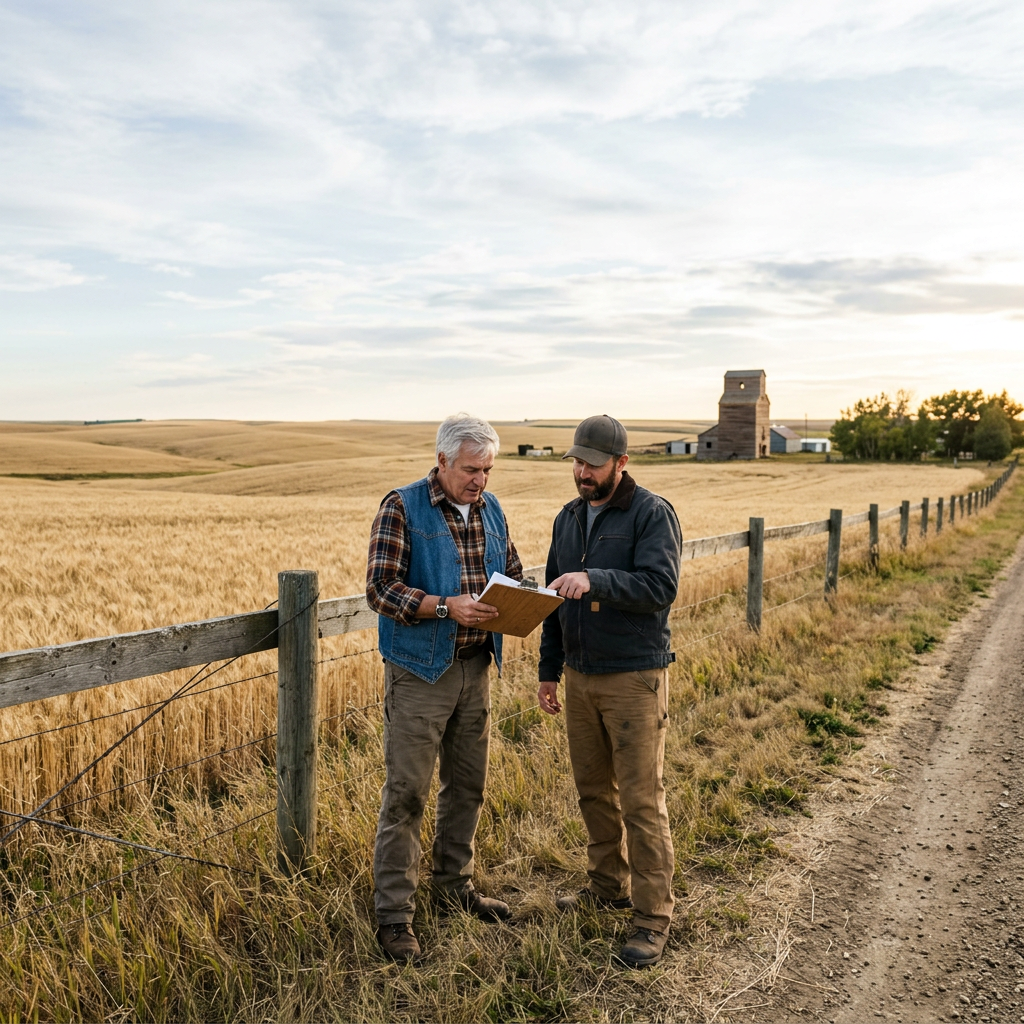
Why Portfolio Thinking Matters for Farmland Owners
Single-property ownership strategies worked well when farmland was primarily a family legacy asset. But as land values have climbed and rental markets have become more competitive, treating each parcel as an isolated decision no longer maximizes financial outcomes. A portfolio approach recognizes that farmland holdings interact with one another, creating opportunities for diversification, risk balancing, and capital reallocation that single-property management simply cannot capture.
The Limitations of Property-by-Property Management
Managing farmland one parcel at a time exposes owners to concentrated risk. A single tenant default, a localized drought, or a sudden drop in commodity prices affecting one region can disproportionately impact your total rental income. Without visibility into how your properties perform relative to one another, you miss patterns that reveal underperforming assets, overexposure to specific crop types, or geographic concentrations that amplify volatility. Portfolio management shifts focus from individual lease negotiations to system-level performance, allowing you to make informed decisions about which properties to hold, which to improve, and where to acquire next.
Financial Upside from Diversification
Diversification is not just a financial theory—it is a practical tool for smoothing income variability across your farmland holdings. By spreading properties across different soil zones, climate regions, and tenant profiles, you reduce the likelihood that a single adverse event will disrupt your entire rental stream. A poor growing season in Saskatchewan may coincide with strong yields in Ontario, balancing overall portfolio performance. Similarly, leasing to a mix of grain farmers, livestock operators, and specialty crop producers creates income stability that no single tenant relationship can provide. The result is more predictable cash flow and reduced year-over-year volatility in rental returns.
Capital Allocation and Growth Opportunities
Viewing your farmland as a portfolio enables smarter capital decisions. Instead of reinvesting rental income equally across all properties, you can direct resources toward parcels with the highest improvement potential or liquidate underperforming assets to acquire land in higher-demand markets. This dynamic reallocation—impossible without portfolio-level tracking—ensures that capital flows to opportunities with the best risk-adjusted returns rather than being distributed by habit or proximity. Over time, this strategic approach compounds into superior long-term portfolio performance.
Building a Diversified Farmland Portfolio
Effective agricultural portfolio diversification requires deliberate choices about which types of land to own, where those properties are located, and how they complement one another within your overall holdings. Diversification does not mean owning everything everywhere—it means constructing a portfolio where individual risks offset each other and no single variable determines your success.
Geographic Diversification Across Canadian Provinces
Canada's agricultural landscape varies dramatically from east to west. Ontario farmland benefits from proximity to major population centers and diverse cropping systems, while Saskatchewan offers some of the most productive grain-growing regions in the world, and Alberta combines ranching potential with irrigated cropland. Owning properties across multiple provinces insulates your portfolio from region-specific challenges like localized weather events, provincial policy changes, or shifts in transportation infrastructure. An Ontario farmland portfolio optimization strategy might emphasize high-value vegetable and cash crop leases near urban markets, while a Saskatchewan agricultural portfolio strategy could focus on large-scale grain production with longer lease terms and stable institutional tenants.
Soil Quality and Land Class Variation
Not all farmland produces equal returns. Class 1 and Class 2 soils command premium rental rates due to their productivity, but they also carry higher acquisition costs and attract more tenant competition. Including a mix of soil classes in your portfolio balances income potential with capital efficiency. Lower-class soils may generate modest rental income but appreciate steadily in value as surrounding infrastructure improves or land scarcity increases. A well-constructed portfolio holds enough high-quality land to anchor rental income while incorporating strategic parcels in emerging markets where value growth potential exceeds current yield.
Crop Type and Tenant Mix
Tenant diversification is as important as geographic spread. Leasing exclusively to grain farmers exposes your portfolio to commodity price swings in wheat, canola, or corn. Adding tenants who raise livestock, grow specialty crops, or operate organic systems creates income streams tied to different market dynamics. This tenant-level diversification also mitigates operational risk—if one farmer exits the industry or defaults on rent, your other leases continue unaffected. A balanced portfolio might include long-term leases with established grain operations, shorter flexible agreements with vegetable growers, and pasture leases with livestock producers, ensuring that no single agricultural sector determines your financial outcome.
Key Metrics for Tracking Farmland Portfolio Performance
Measuring portfolio performance requires more than tracking total rental income. Effective land portfolio performance metrics provide insight into how individual properties contribute to overall returns, where risks are concentrated, and which assets deserve additional capital or strategic attention.
Rental Yield and Cash-on-Cash Return
Rental yield expresses annual rental income as a percentage of the property's current market value. This metric allows direct comparison across properties with different acquisition costs and sizes. A parcel generating $15,000 annually on a $500,000 valuation delivers a 3% rental yield, while another producing $12,000 on a $300,000 valuation yields 4%. Cash-on-cash return refines this further by measuring income relative to the actual cash invested, accounting for leverage if mortgages or financing are involved. Tracking these metrics across your portfolio reveals which properties are performing above or below average and whether geographic or crop-type factors explain the variance.
Vacancy Rate and Tenant Turnover
Farmland leases typically span multiple years, but tenant turnover still occurs. Calculating your portfolio's average vacancy rate—the percentage of time properties sit unleased—identifies whether tenant retention is a systemic issue or isolated to specific parcels. High turnover may signal below-market rental pricing, difficult lease terms, or property conditions that deter quality tenants. Monitoring turnover alongside rental yield helps distinguish between properties generating strong income because of fair pricing and those underperforming due to structural tenant challenges.
Land Appreciation and Total Return
Rental income is only part of the equation. Farmland appreciation—the increase in land value over time—often represents the largest component of total return. Tracking land value appreciation across your portfolio requires periodic appraisals or benchmarking against regional land sales data. Combining rental yield with appreciation provides a clearer picture of total return on investment. A property with modest rental income but strong appreciation may outperform a high-yield parcel with stagnant land values. This metric guides decisions about whether to hold underperforming properties for long-term value growth or liquidate them to redeploy capital into higher-yielding assets.
How Do You Optimize Farmland Portfolio Returns?
Optimization starts with data. Collect performance metrics for every property, compare them against regional benchmarks, and identify outliers. Underperforming parcels may require rental rate adjustments, tenant upgrades, or capital improvements like drainage or soil amendments. Overperforming properties might justify reinvestment to sustain tenant satisfaction and prevent turnover. Portfolio-level analysis also reveals whether your holdings are geographically or operationally concentrated in ways that increase risk. Rebalancing—selling low-return assets and acquiring properties in underrepresented regions or crop types—is the ongoing process that keeps your portfolio aligned with market conditions and financial goals.
Tools and Platforms for Managing Multiple Properties
Effective portfolio management depends on infrastructure that centralizes lease data, automates income tracking, and provides visibility into performance across all holdings. The complexity of managing multiple farmland properties increases exponentially as your portfolio grows, making purpose-built tools essential.
Centralized Lease and Income Tracking
Spreadsheets break down quickly when you manage more than a handful of properties. A centralized platform designed for farmland portfolio tracking tools consolidates lease terms, rental payment schedules, tenant contact information, and property-specific notes into a single accessible system. This eliminates the risk of missed payments, forgotten renewal dates, or lost lease documents. Automated reminders ensure that lease expirations trigger proactive tenant outreach rather than last-minute scrambling. Income tracking becomes a real-time dashboard rather than a manual reconciliation exercise, giving you instant insight into which properties are current on rent and which require follow-up.
Competitive Pricing Through Market Transparency
Setting rental rates for multiple properties across different regions is challenging without market data. Traditional leasing relies on private negotiations that obscure true market demand, leaving landowners uncertain whether they are maximizing income or leaving money on the table. Platforms that facilitate competitive bidding bring transparency to the process, allowing verified farmers to compete for your land based on real supply and demand. This market-driven approach ensures that each property in your portfolio achieves rental rates aligned with current conditions rather than outdated benchmarks or unverified tenant claims. Land4Rent offers this competitive auction model alongside centralized lease management, providing both pricing discovery and operational infrastructure for diversified farmland holdings.
How to Manage Multiple Farmland Properties Efficiently?
Efficiency comes from standardization and automation. Use consistent lease templates across your portfolio to reduce legal complexity and administrative overhead. Automate rental payments through digital platforms that accept multiple payment methods and track transactions without manual invoicing. Centralize tenant communication so that you can manage relationships with dozens of farmers without losing track of individual conversations or commitments. The more routine tasks you automate, the more time you can dedicate to strategic decisions like property acquisition, tenant vetting, and portfolio rebalancing that directly impact financial performance.
Strategic Approaches to Portfolio Growth and Rebalancing
A static portfolio rarely delivers optimal long-term returns. Markets shift, land values change, and tenant needs evolve. Active portfolio management requires periodic rebalancing to maintain alignment with your financial goals and risk tolerance.
Acquiring Properties to Fill Portfolio Gaps
Portfolio analysis may reveal underexposure to specific regions, soil types, or tenant categories. If your holdings are concentrated in Saskatchewan grain country, adding properties in Ontario or Alberta introduces geographic diversification that reduces climate and commodity risk. If all your leases are short-term, acquiring properties suitable for multi-year agreements with established farmers adds income stability. Strategic acquisitions are not about expanding for the sake of size—they are about filling gaps that reduce portfolio-level risk while improving overall return consistency.
Divesting Underperforming Assets
Not every property deserves a permanent place in your portfolio. Parcels with chronic tenant turnover, below-market rental yields, or limited appreciation potential may be candidates for sale. Liquidating underperforming assets frees capital for reinvestment into higher-return opportunities and simplifies management overhead. The decision to divest should be data-driven, comparing each property's contribution to total portfolio performance against realistic improvement potential. If a parcel consistently underperforms despite tenant upgrades and capital investment, selling it and redeploying the proceeds often enhances long-term returns more effectively than holding indefinitely.
Reinvesting Rental Income for Compound Growth
Rental income can be extracted for personal use or reinvested to grow your portfolio. Reinvestment strategies include acquiring additional properties, funding capital improvements on existing parcels to increase rental rates, or paying down debt to improve cash flow. The optimal approach depends on your financial stage and portfolio maturity. Younger portfolios benefit from aggressive reinvestment to compound asset growth, while mature portfolios may prioritize stable income extraction. Tracking reinvestment decisions and their impact on portfolio performance over time reveals which strategies deliver the best risk-adjusted returns for your specific holdings.
Risk Management Within a Farmland Portfolio
Portfolio-level risk management goes beyond tenant selection and lease terms. It involves understanding how external factors, commodity prices, interest rates, climate patterns, and policy changes, interact with your holdings and taking proactive steps to mitigate exposure.
Hedging Geographic and Climate Risk
Climate variability is an inherent risk in agriculture. Droughts, floods, and extreme weather events can devastate crop yields in specific regions while leaving others unaffected. A geographically diversified portfolio hedges this risk by ensuring that adverse conditions in one area do not eliminate rental income across all properties. Pairing properties in drier prairie regions with parcels in more humid eastern zones creates natural balance. Similarly, owning land at different elevations or latitudes introduces climate diversity that reduces the likelihood of portfolio-wide weather-related income disruption.
Managing Tenant Credit and Default Risk
Tenant defaults are rare but damaging. Diversifying your tenant base across multiple farmers reduces the impact of any single default. If one tenant represents 40% of your total rental income, their failure to pay creates immediate financial strain. If that same tenant represents 8% of income within a 12-property portfolio, the impact is manageable. Conducting credit checks, verifying farming experience, and maintaining direct communication with all tenants are operational practices that reduce default risk. Monitoring tenant financial health during lease terms allows early identification of distress signals and proactive lease renegotiation before defaults occur.
What Is Farmland Portfolio Diversification?
Farmland portfolio diversification is the deliberate construction of land holdings that balance risk and return by varying property location, soil quality, tenant type, and crop focus. Unlike traditional diversification that spreads investment across asset classes, farmland diversification occurs within a single asset type land by selecting properties with different risk profiles and income characteristics. The goal is not to own every type of farmland but to build a portfolio where individual property risks offset each other, creating more stable aggregate performance than any single property could deliver.
Long-Term Portfolio Strategy and Succession Planning
Farmland portfolios are multi-generational assets. Effective long-term strategy considers not only current performance but also how the portfolio will transition to heirs, partners, or institutional buyers over time.
Structuring for Transferability
Estate planning for farmland portfolios requires clear legal structures. Holding properties in corporate entities, family trusts, or limited partnerships simplifies transfer and reduces tax liability when ownership changes. These structures also enable fractional ownership, allowing multiple heirs to hold portfolio interests without forcing property liquidation. Centralizing lease records, tenant relationships, and financial data within professional management platforms ensures that successors can assume control without operational disruption. A portfolio that exists only in the founder's memory or filing cabinets becomes an administrative nightmare during transition.
Balancing Income Needs With Capital Preservation
Long-term portfolio strategy balances extracting income today with preserving capital for future generations. Over-extracting rental income without reinvesting in property improvements or tenant relationships degrades portfolio value over time. Conversely, reinvesting all income while neglecting current financial needs creates personal liquidity challenges. A sustainable approach allocates rental income across three buckets: personal distribution, reinvestment for portfolio growth, and capital reserves for unexpected expenses like tenant defaults or property repairs. This three-way split adapts to life stage and portfolio maturity, ensuring that the portfolio serves both current and future ownership.
How Many Farmland Properties Should Be in a Portfolio?
There is no universal answer. Effective diversification can begin with as few as three to five properties if they span different geographies and tenant types. Beyond a certain point, often around 15 to 20 properties, additional parcels deliver diminishing diversification benefits unless they introduce genuinely new risk factors like different crop types or international holdings. The optimal portfolio size depends on available capital, management capacity, and risk tolerance. A hands-on owner-operator may manage 10 properties effectively, while an institutional investor with dedicated asset management resources can efficiently handle dozens. Size should be driven by strategic goals and operational realities, not arbitrary targets.
Conclusion
Conclusion
Treating farmland as a portfolio rather than a collection of individual properties transforms how you approach ownership, tenant relationships, and financial performance. By applying diversification principles across geography, soil type, and tenant mix, you create income stability that single-property strategies cannot match. Tracking performance metrics like rental yield, tenant turnover, and land appreciation provides the data foundation for informed decision-making, while centralized management tools eliminate operational complexity as your holdings grow. Whether you are building your first multi-property portfolio or managing institutional farmland assets across provinces, a structured portfolio approach delivers more consistent returns, better risk management, and stronger long-term capital preservation than property-by-property management ever could.
If you manage multiple farmland properties across Canada, Land4Rent provides the infrastructure to centralize lease management, discover competitive rental rates through live auctions, and track portfolio performance from a single platform.
Frequently Asked Questions (FAQs)
How to Build a Farmland Portfolio?
Start by acquiring properties in different geographic regions with varying soil quality and tenant types, ensuring that no single risk factor dominates your holdings. Use performance data to guide additional acquisitions and fill portfolio gaps.
How to Manage Multiple Farmland Properties?
Centralize lease agreements, rental payment tracking, and tenant communication on a digital platform designed for farmland management. Automate routine tasks and standardize lease terms to reduce administrative overhead as your portfolio grows.
How to Diversify Agricultural Land Holdings?
Spread properties across provinces, soil classes, and tenant profiles to balance income sources and reduce exposure to region-specific or crop-specific risks. Diversification should reflect your risk tolerance and capital availability.
What Metrics Track Farmland Portfolio Performance?
Key metrics include rental yield, cash-on-cash return, tenant turnover rate, vacancy rate, land appreciation, and total return. These provide insight into income generation, tenant stability, and long-term capital growth.
How to Optimize Farmland Portfolio Returns?
Analyze performance data to identify underperforming properties, adjust rental rates to market levels, improve tenant quality, and reallocate capital from low-return assets to higher-yield opportunities. Optimization is an ongoing process, not a one-time event.
How Many Farmland Properties Should Be in a Portfolio?
Effective diversification begins with three to five properties and scales based on management capacity and strategic goals. Beyond 15 to 20 properties, additional parcels provide diminishing diversification benefits unless they introduce new risk factors.
How to Track Farmland Rental Portfolio Income?
Use specialized portfolio management software that consolidates rental payments, lease schedules, and tenant records into a single dashboard. Automated tracking eliminates manual reconciliation and provides real-time visibility into cash flow.
What Is Farmland Portfolio Diversification?
It is the strategic selection of farmland properties with different geographic locations, soil qualities, tenant types, and crop focuses to reduce risk and stabilize returns. The goal is to ensure that adverse conditions affecting one property do not disrupt the entire portfolio.
Farmland Portfolio Management Canada?
Canadian farmland portfolio management involves navigating provincial regulations, understanding regional climate and soil variations, and leveraging platforms that support multi-property lease administration and tenant relationships across vast geographic distances.
Farmland Portfolio vs Single Property Investment?
A single property investment offers simplicity but exposes you to concentrated risk from tenant defaults, localized weather events, or commodity price swings. A portfolio spreads risk across multiple properties, creating more stable income and better long-term returns.



.svg)


.svg)