%20(1).svg)

.svg)

Introduction
For Canadian farmers, few decisions carry more weight than whether to lease or buy the land they work. It touches everything: how much capital you tie up, how flexible your operation can be, and whether you can realistically scale when the right opportunity comes along. With farmland for rent in Canada becoming an increasingly viable and strategic option, many operators are rethinking the assumption that ownership is always the goal.
This guide breaks down the real trade-offs between leasing and buying agricultural land in Canada. Whether you are a new farmer building your first operation or an established producer looking to expand, understanding these differences clearly is the first step toward making a decision that actually fits your situation.
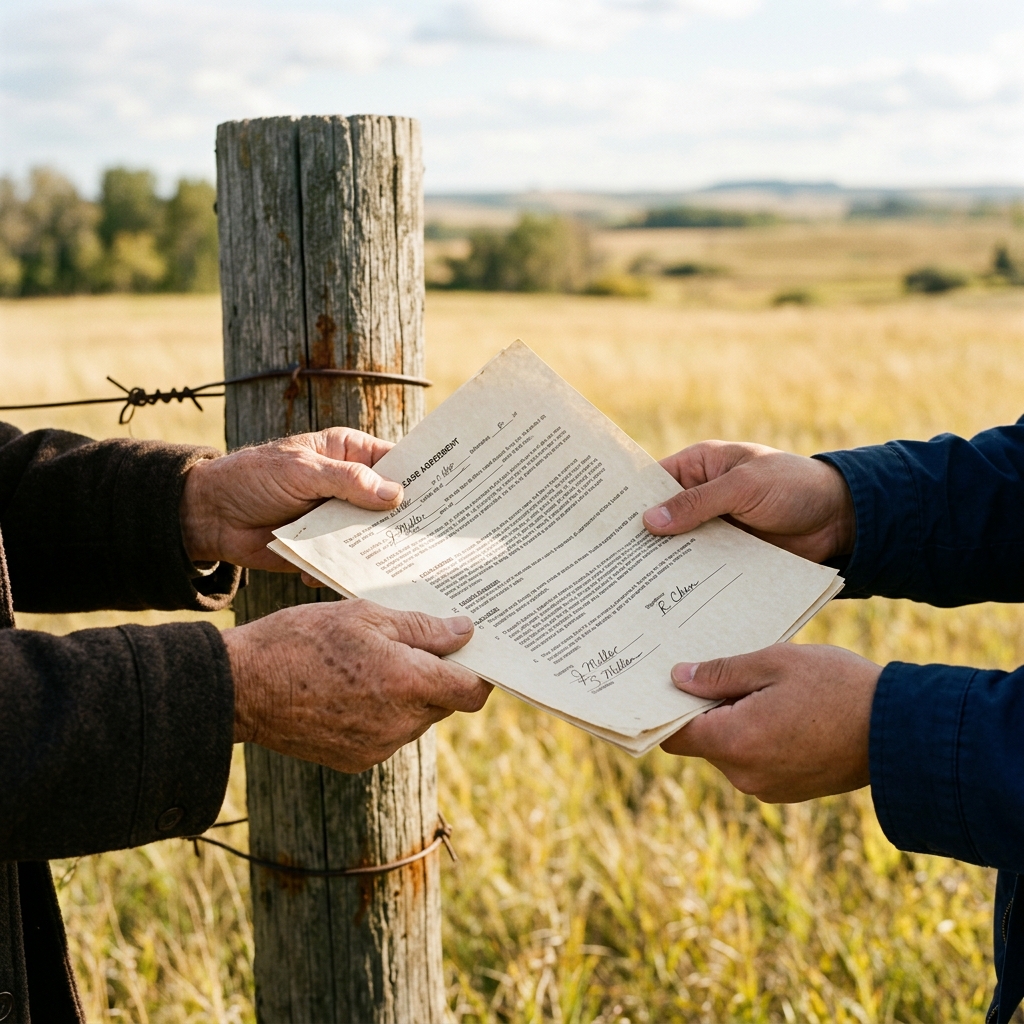
The Financial Reality of Buying Farmland in Canada
Purchasing farmland outright is a significant capital commitment. Prices have risen sharply across the country over the past decade, making entry points increasingly difficult for farmers who are not already land-wealthy. Before deciding to buy, it is worth understanding exactly what that commitment involves.
What Farmland Actually Costs Across Canada
Land values vary considerably by province, but the trend has been upward nearly everywhere. According to Farm Credit Canada's 2024 farmland values report, prices in Saskatchewan, Ontario, and Alberta have continued to climb year over year, with some regions posting double-digit percentage increases. For a farmer looking to acquire even a modest parcel, the purchase price alone can quickly reach seven figures. Add in financing costs, land transfer taxes, legal fees, and the ongoing carrying costs of ownership, and the full picture becomes sobering.
Capital Lock-In and Opportunity Cost
One of the most underappreciated costs of buying farmland is what economists call opportunity cost. Every dollar tied up in land equity is a dollar not available for equipment upgrades, input costs, or operational reserves. For farmers operating on thin margins, this capital lock-in can limit the ability to respond to market shifts, bad crop years, or sudden equipment failures.
Leasing, by contrast, keeps working capital in the business. Instead of a large down payment and decades of mortgage payments, a farmer paying annual rent retains liquidity that can be directed toward what actually grows yield and income. This is one of the core reasons why renting vs buying farmland in Canada has become a genuine strategic debate rather than a simple preference.
Financing Challenges for New and Expanding Farmers
Access to financing is not equal across all farmers. New entrants, younger operators, and those without existing land collateral often face steep barriers when applying for agricultural mortgages. Even established operators who want to expand quickly may find that lenders are cautious about additional land debt when commodity prices are uncertain. Leasing sidesteps these barriers entirely, allowing a farmer to access quality acreage without needing bank approval for a multi-million-dollar asset purchase.
The Case for Leasing Farmland in Canada
Leasing is not a fallback position. For many operators, it is a deliberate and financially sound choice that offers real advantages over ownership, especially in the current agricultural environment. Understanding those advantages requires looking beyond the simple comparison of rent versus mortgage payments.
Flexibility to Scale Without Long-Term Commitment
Agricultural conditions change. Commodity prices shift, family situations evolve, and the parcels best suited to your operation today may not be the same ones you need five years from now. A farmland lease agreement typically runs one to five years, giving farmers the ability to adjust their land base as their business changes. Buying, by contrast, locks you into a specific location and scale. Selling land is expensive, time-consuming, and subject to market timing. Leasing keeps your options open.
This flexibility is particularly valuable for farmers testing a new crop type, expanding into an unfamiliar region, or transitioning to a different production model. Accessing quality farmland to rent for a defined term allows operators to evaluate whether the land and location work for their model before making any permanent commitment.
Lower Upfront Costs and Better Cash Flow
The upfront cost difference between leasing and buying is not marginal, it is enormous. Buying a 500-acre parcel in Saskatchewan might require hundreds of thousands of dollars in equity plus financing. Leasing that same land costs the annual rental rate, with no down payment, no mortgage, and no title transfer expenses. For a farm business, that difference in initial outlay can represent years of operating capital.
Farmland rental rates in Canada vary significantly by province and soil quality, but even in high-value areas, annual lease costs are a fraction of what servicing a purchase loan would require. That gap in annual cash outflow can meaningfully improve a farm's financial position, particularly during low-yield or low-price years.
Access to More Land, More Quickly
Finding the right land to buy can take years. Listings are scarce, competition is intense, and private sales often never reach the open market. Leasing opens up a much wider pool of available acreage. Many landowners who would never consider selling are willing to rent, particularly if they are absentee owners, retirees, or investors who purchased land as an asset but have no intention of farming it themselves.
Platforms focused on agricultural land leasing have made this access even more direct. Rather than relying on word-of-mouth or local connections, farmers can now browse verified farmland listings across provinces and connect with landowners through a transparent, structured process. This kind of reach was simply not available to most farmers a decade ago.
When Buying Farmland Still Makes Sense
Leasing has clear advantages, but that does not mean ownership is the wrong choice in every situation. There are specific circumstances where purchasing land is the strategically superior decision, and it is worth being honest about those scenarios.
Long-Term Security and Generational Planning
For farmers building a multi-generational operation, ownership provides something leasing cannot: permanent security. A lease can expire, be contested, or be subject to a landlord's change of plans. Owned land stays with the family regardless of market conditions or a landowner's circumstances. For operations that invest heavily in soil improvement, drainage infrastructure, or permanent facilities, ownership also ensures you capture the full benefit of those investments over time.
It is also worth noting that direct farmland ownership carries different tax and estate planning considerations compared to leasing arrangements. Owning land as part of a farm corporation or family trust can offer long-term advantages that leasing simply does not replicate.
When Land Is Undervalued or Strategically Located
There are moments when buying is clearly the right call, particularly when land is priced below market value, when the parcel is adjacent to your existing operation, or when a specific location gives you a competitive advantage that cannot be replicated through leasing. In these cases, the long-term return on ownership can outpace the flexibility benefits of renting. The key is being able to distinguish between buying because it genuinely makes financial sense and doing so because ownership feels like the culturally expected outcome for a farming family.
Equity Building and Asset Appreciation
One argument for buying that carries real weight is land appreciation. Canadian farmland values have historically increased over time, meaning purchased land builds equity as a passive financial benefit alongside its productive use. For farmers who can afford the carrying costs, that appreciation compounds into a significant long-term asset. Leasing does not offer this benefit. Rent payments do not build equity. The trade-off is liquidity now versus asset growth over time, and the right answer depends entirely on a farmer's financial position and timeline.
How the Leasing Market Has Changed: Digital Platforms and Market Transparency
The farmland leasing market in Canada has traditionally operated through informal channels. Word-of-mouth, local real estate agents, and handshake agreements were the norm. That is changing quickly, and the shift has meaningful implications for both farmers and landowners.
The Rise of Online Farmland Marketplaces
Digital platforms have brought structure, transparency, and scale to what was once an opaque and fragmented market. Farmers can now search for cropland for rent in Canada through online marketplaces that list verified properties with clear pricing and documented terms. Landowners can reach a broader pool of qualified tenants without relying solely on local connections or real estate intermediaries.
This shift mirrors what happened in residential real estate with platforms like MLS, except that agricultural leasing is more specialized, requiring different tools, different verification standards, and different legal frameworks. Land4Rent is built specifically for this market, offering a platform where landowners and farmers can transact through a live auction system with verified listings and automated lease generation, replacing what used to be done over phone calls and coffee meetings with a structured digital process.
Competitive Bidding and Market-Rate Pricing
One of the most significant developments in agricultural leasing is the use of competitive farmland bidding to establish rental rates. Rather than a landlord setting an arbitrary figure or a tenant negotiating from a position of limited information, auction-based systems allow market forces to determine fair value. This benefits landowners by ensuring they receive competitive rates, and it benefits farmers by making pricing transparent and consistent across comparable parcels.
Understanding how farmland auctions work can give both parties a clearer sense of what to expect and how to prepare when entering this kind of transaction. The auction model removes much of the information asymmetry that has historically favored one side or the other depending on who knew more about local conditions.
Lease Agreement Standards and Legal Protections
A common concern among farmers considering leasing is the legal vulnerability of being a tenant rather than an owner. A well-drafted lease agreement addresses this directly. Modern platforms that include automated lease agreement tools allow both parties to produce clear, enforceable contracts that define term length, payment structure, permitted uses, renewal rights, and responsibilities for maintenance and inputs. This level of legal clarity was rarely present in informal verbal agreements, and it substantially reduces the risk of disputes.
Farmers who want to understand the legal dimensions of agricultural tenancy in more detail can review provincial resources, such as the guidance on renting farmland sustainably in Ontario, which outlines obligations and best practices for both landlords and tenants.
A Practical Framework: How to Decide What Is Right for Your Operation
The lease-versus-buy decision is not a universal equation. It depends on where you are in your farming career, what your financial position looks like, what your operation requires, and what your long-term goals are. The following framework can help you think through the decision clearly.
Questions That Drive the Decision
Before committing to either path, a farmer should honestly work through a set of core questions about their situation. These questions cut through general advice and force a realistic assessment of what the operation actually needs right now.
- Capital availability: Do you have the equity and financing access to purchase without compromising operating liquidity?
- Time horizon: Are you building a long-term, generational operation or managing a medium-term growth phase that may change?
- Land quality and location: Is the specific parcel unique enough that losing access to it would materially harm your operation?
- Soil improvement plans: Are you planning significant investments in drainage, irrigation, or organic certification that require long-term land tenure?
- Flexibility needs: Is your crop mix, production scale, or regional focus likely to shift in the next five to ten years?
- Market conditions: Are current land prices at a level that makes the return on investment realistic within your planning window?
The Role of a Hybrid Strategy
Many successful Canadian farm operations do not choose one path exclusively. A hybrid approach, where a farmer owns core parcels critical to the operation and leases additional acreage to manage scale, is increasingly common. This model captures the security benefits of ownership where it matters most while preserving the flexibility and capital efficiency of leasing for expansion acreage. Understanding how structured farmland leasing works can help operators incorporate leased land into their planning with the same rigour they apply to owned parcels.
For leasing to make financial sense, the returns generated from the rented land must exceed the lease cost by a meaningful margin. This is a straightforward calculation in principle, but it requires honest projections about yield, price, input costs, and risk. Reviewing current farmland rental rates in Canada and understanding what drives those numbers gives farmers a clearer baseline for assessing whether a given lease is financially sound before signing.
Conclusion
The decision to rent or buy farmland in Canada is rarely black and white. Buying offers security, equity growth, and permanence, but it demands significant capital and limits flexibility. Leasing preserves working capital, allows faster scaling, and provides access to land that would otherwise be out of reach, particularly as prices continue to rise across Saskatchewan, Ontario, and Alberta. For many operators, especially those in growth phases or navigating uncertain market conditions, a well-structured lease is not a compromise but a competitive advantage. Digital farmland leasing platforms have made leasing more transparent, more efficient, and more professionally managed than the informal arrangements that once defined this market. The smartest path forward starts with an honest assessment of your goals, your capital position, and what your operation genuinely needs over the next five to ten years.
Ready to explore what leasing could look like for your operation? Visit Land4Rent to browse verified listings, understand current market rates, and connect with landowners across Canada through a structured, transparent process.
Frequently Asked Questions (FAQs)
How do I rent farmland in Canada?
You can rent farmland in Canada by searching online agricultural leasing platforms, contacting local landowners directly, or working through a farm real estate agent. Digital marketplaces have made it easier to browse verified listings and connect with landowners without relying on local networks alone.
How does a farmland rental auction work?
In a farmland rental auction, landowners list their parcels and qualified farmers submit bids for the right to lease the land. The highest bid typically wins the lease, and the process ensures that rental rates are set by genuine market demand rather than private negotiation.
What is the average farmland rental rate in Canada?
Farmland rental rates in Canada vary widely by province and soil quality. Saskatchewan rates tend to be lower per acre than Ontario or British Columbia, but rates in all regions have trended upward in recent years alongside rising land values.
How can landowners find farmers to rent their land?
Landowners can find qualified farmer-tenants through online farmland leasing platforms, local agricultural associations, or farm credit networks. Listing on a verified platform is the fastest way to reach a broad pool of interested farmers.
What is a farmland lease agreement?
A farmland lease agreement is a legally binding contract between a landowner and a farmer-tenant that outlines the rental term, payment terms, permitted land uses, renewal conditions, and maintenance responsibilities. A well-drafted lease protects both parties and reduces the risk of disputes.
Can I lease agricultural land online in Canada?
Yes. Several platforms now allow Canadian farmers and landowners to complete the full leasing process online, including listing, bidding, lease generation, and payment. This approach offers greater transparency and efficiency compared to traditional informal arrangements.
What are the benefits of leasing farmland instead of selling?
Leasing allows landowners to generate ongoing rental income while retaining ownership of the asset and its long-term appreciation potential. It also keeps the land productive and in agricultural use without requiring the landowner to operate it themselves.
Is farmland leasing profitable for landowners?
Yes, farmland leasing can be a reliable source of passive income, particularly in regions with strong agricultural demand. The profitability depends on local rental rates, soil quality, and how well the lease is structured to reflect current market conditions.
What is the best farmland rental platform in Ontario?
The best platform for renting farmland in Ontario is one that offers verified listings, transparent pricing, and a structured lease process. Specialized agricultural leasing platforms designed for the Canadian market are generally better suited than general real estate sites for this purpose.
How do farmers find land to rent in Saskatchewan?
Farmers looking for farmland for rent in Saskatchewan can use online agricultural marketplaces, connect with local landowner networks, or work through provincial farm organizations. Digital platforms that aggregate listings across the province make the search significantly more efficient.

.png)


.svg)


.svg)