%20(1).svg)

.svg)

Introduction
Choosing between cash rent and flexible rent is one of the most consequential decisions a Canadian landowner can make when leasing agricultural land. Each model distributes risk, reward, and administrative effort differently, and the right choice depends on factors that vary across provinces, crop types, and individual financial goals. Yet many landowners default to cash rent simply because it is familiar, overlooking how flexible rent structures have evolved to address shifting commodity markets and yield variability. With farm lease rates climbing across Ontario, Saskatchewan, and Alberta, understanding both models in detail is no longer optional; it is a prerequisite for protecting and growing farmland rental income.

Understanding Cash Rent and Flexible Rent Farmland Agreements
Under a cash rent arrangement, the tenant pays a fixed dollar amount per acre for the right to farm the land, regardless of what happens with crop yields or commodity prices during the growing season. The landowner receives a predictable income stream, typically paid before or at the start of the lease term. This predictability is a major draw for landowners who treat their land as a passive investment or who rely on rental income for retirement or carrying costs. However, fixed rates also mean that in a year when grain prices surge or yields are exceptional, the landowner captures none of that upside. The farmland rental rates comparison across Prairie and Eastern Canadian markets shows a wide range of fixed cash rents, depending heavily on soil quality, region, and local competition among tenants.
Guaranteed Income: Cash rent delivers the same payment whether crop prices rise or fall
Zero Production Risk: Landowners bear no exposure to drought, frost, or poor harvests
Simple Administration: No need to track yields, verify bushel counts, or monitor commodity markets
Limited Upside: Fixed rates lock out any benefit from strong market or yield years
Rate Negotiation Pressure: Tenants may push for lower rates in uncertain years, creating renewal friction
How Flexible Rent Adjusts to Market Conditions
A flexible cash rent agreement typically includes a base rent plus an adjustment formula tied to crop yields, commodity prices, or both. The base rent gives the landowner a minimum guaranteed income, while the variable component allows the payment to increase when conditions are favourable. Formulas vary widely: some reference county or provincial average yields, others use actual field-level production data, and still others are indexed to harvest-time commodity prices from the agricultural lease terms benchmarks that both parties agree on before the season begins. The key advantage is that landowner returns are no longer capped in strong years, while the base rent protects against worst-case scenarios. For Saskatchewan farmland lease rates, where canola and wheat prices can swing significantly between years, this structure has gained meaningful traction among landowners who want more than a flat rate.
Comparing Risk, Returns, and Practical Trade-Offs
Selecting the best farmland leasing model requires weighing income stability against upside potential, along with practical considerations like administrative complexity, tenant relationships, and the regional crop mix. Both cash rent and flexible rent have clear strengths, and neither is universally superior. The decision ultimately hinges on a landowner's tolerance for variability and willingness to stay engaged with market conditions.
Income Stability vs. Revenue Potential
Cash rent delivers what many landowners value most: certainty. A fixed payment per acre eliminates guesswork and allows straightforward financial planning. For landowners who depend on their rental income to cover property taxes, mortgage obligations, or living expenses, that predictability is hard to beat. Ontario farmland rental rates, for instance, have been strong enough in recent years that locking in a competitive cash rent can feel like a safe, high-floor option.
Flexible rent, on the other hand, introduces variability in exchange for the chance to capture above-average returns. When commodity prices spike or yields exceed expectations, the variable component of a flexible rent farmland agreement can push total payments well beyond what a fixed rate would have generated. Research from university farm management programs shows that over multi-year periods, flexible arrangements tend to produce higher cumulative returns for landowners, particularly when the base rent is set at a reasonable floor. The trade-off is that in poor years, the total payment may be only marginally above the base, which can feel disappointing compared to a locked-in cash figure.
Administrative Complexity and Trust
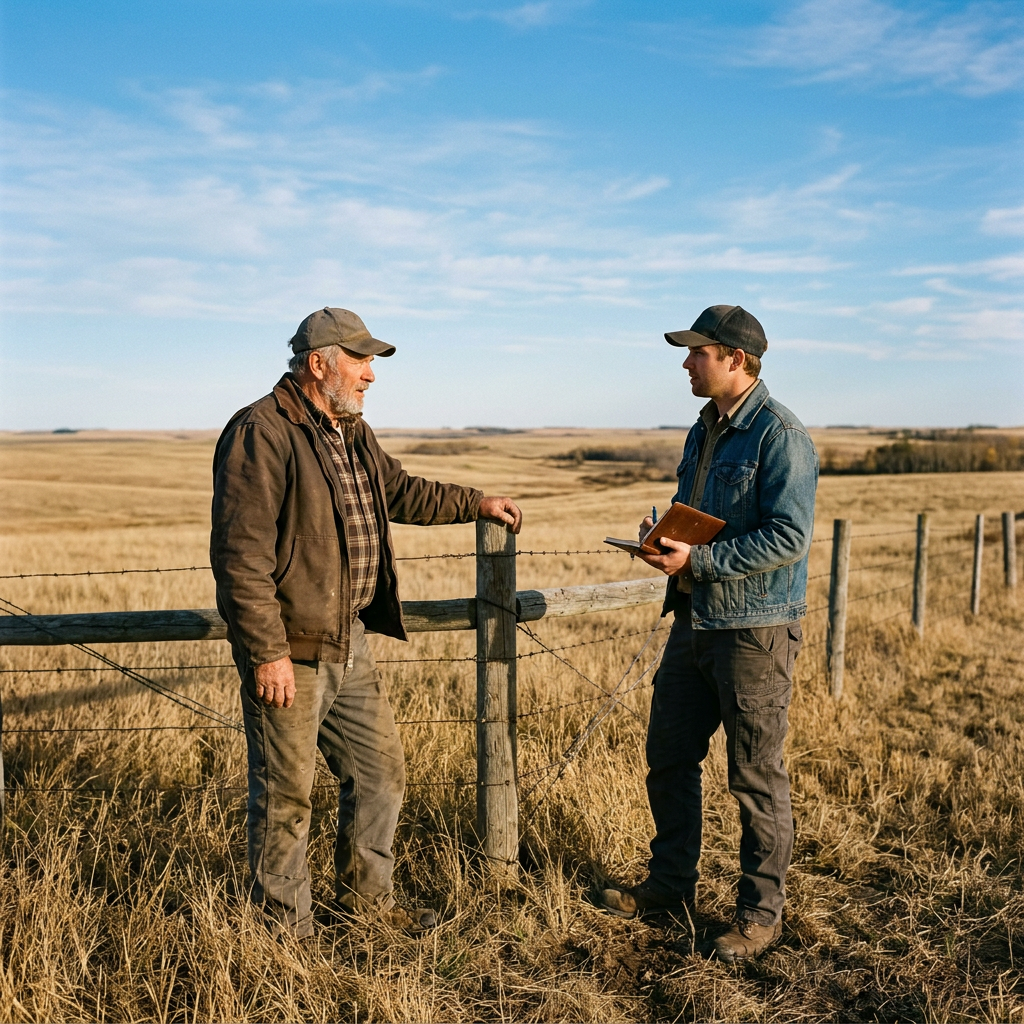
One of the most underappreciated differences between the two models is the administrative burden. Cash rent is simple: agree on a rate, sign the lease, collect the payment. There is no need to verify yields, inspect grain tickets, or debate which commodity price index applies. For landowners seeking passive income, this simplicity is a legitimate advantage.
Flexible rent demands more involvement. Both parties must agree upfront on the formula: which yields to reference (actual field vs. provincial average), which price point to use (harvest-time futures, spot price, or a weekly average), and how the bonus calculation works. Transparent documentation matters. When trust between landowner and tenant is strong and the terms are clearly defined, flexible agreements work smoothly. When either party feels the formula is opaque or the data is unverifiable, disputes can erode the relationship. Using standardized lease templates from provincial agriculture ministries can reduce ambiguity and build mutual confidence. Landowners exploring flexible models for the first time should invest time in agreeing on verifiable data sources before the growing season begins, rather than negotiating retroactively after harvest.
Choosing the Right Model for Your Situation
There is no single answer to whether cash rent or flexible rent is the better leasing model. The right choice depends on a combination of personal financial circumstances, regional market dynamics, and how involved a landowner wants to be in the leasing process. That said, a few guiding principles can help narrow the decision.
When Cash Rent Makes the Most Sense
Landowners who prioritize income predictability, who are not actively monitoring agricultural markets, or who lease land in regions with strong tenant demand and competitive per-acre rental rates may find cash rent the most practical option. If the primary goal is stable, hands-off income and the current market rate adequately reflects the land's productive value, a well-negotiated cash rent agreement delivers exactly that. This is especially true for landowners who have multiple parcels and lack the bandwidth to manage flexible formulas across several leases simultaneously.
When Flexible Rent Delivers More Value
Landowners with high-quality soil in productive regions, particularly in Saskatchewan and parts of Alberta where canola and specialty crop prices can swing dramatically, often find that flexible rent captures returns that a fixed rate would leave on the table. The same applies to landowners who are comfortable reviewing yield and price data or who farm part of their own acreage and already track these numbers. A flexible structure also tends to improve tenant retention. Farmers prefer it because their payment scales with their actual ability to pay, meaning they are less likely to walk away from a lease during a difficult year. Over a five- or ten-year span, this stability in the tenant relationship can be just as valuable as the higher per-acre returns. Land4Rent's auction-based platform offers landowners a way to establish competitive baseline rates through real-time bidding from verified farmers, which can serve as an effective starting point for either a pure cash rent deal or the base component of a flexible arrangement. Regardless of which model a landowner selects, ensuring the rate reflects genuine market demand rather than a handshake estimate is foundational to maximizing long-term landowner returns. Platforms like Land4Rent make that market transparency accessible, putting pricing power back in the hands of the people who own the land.
Conclusion
Cash rent and flexible rent each serve a legitimate purpose in the Canadian farmland leasing landscape. Cash rent provides certainty and simplicity, while flexible rent rewards landowners who are willing to share in the market's upside. The best approach depends on financial priorities, risk tolerance, regional conditions, and the strength of the landowner-tenant relationship. By understanding the mechanics and trade-offs of both farmland leasing models, landowners can structure agreements that protect their baseline income while positioning themselves to benefit when conditions are strong.
Explore Land4Rent's auction-based platform to see how competitive bidding from verified farmers can help you set a fair, market-driven rental rate for your land.
Frequently Asked Questions (FAQs)
What is cash rent in farmland leasing?
Cash rent is a fixed per-acre payment a tenant pays to a landowner for the right to farm the land, regardless of crop yields or commodity prices.
How does flexible rent work for landowners?
Flexible rent combines a guaranteed base payment with a variable component that adjusts to actual crop yields, commodity prices, or both, allowing total rent to increase in strong years.
What are the pros and cons of cash rent farming?
Cash rent offers income stability and minimal administration for landowners, but it caps upside potential in high-yield or high-price years and can create renewal friction when market conditions shift.
Which leasing model offers better income stability?
Cash rent provides more predictable year-to-year income, while flexible rent offers a guaranteed base with the potential for higher total returns over multi-year periods.
How are flexible farmland rental rates calculated?
Flexible rates are typically calculated using a base rent plus a bonus formula tied to provincial or field-level yields and a specified commodity price index agreed upon before the growing season.

.png)



.svg)


.svg)