%20(1).svg)

.svg)

Introduction
A farmland lease is not just a rental agreement. It is a financial instrument that shapes income, risk exposure, and land stewardship for years at a time. Canadian landowners who approach leasing without a clear strategy often find themselves locked into below-market rates, dealing with tenant disputes, or facing prolonged vacancies between agreements. Farmers, on the other hand, can find that poorly negotiated lease terms disrupt their ability to plan rotations, invest in soil improvements, or secure financing. The lease decisions made at the beginning of an agreement ripple through every season that follows.
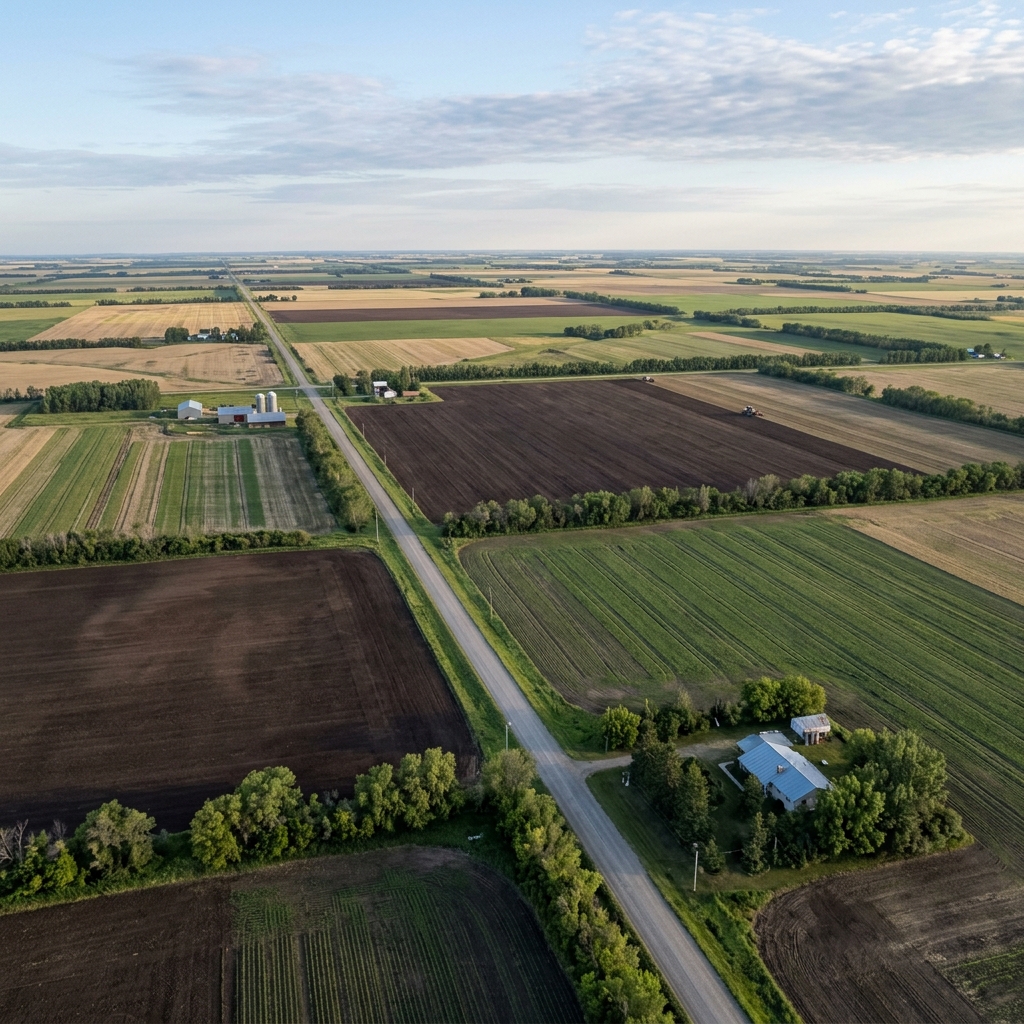
How Lease Structure Shapes Financial Outcomes
The structure of a farmland lease agreement determines not just what you earn or pay now, but how reliably that figure holds up when commodity prices shift, input costs climb, or land values rise. Getting the structure right from the start is one of the most consequential decisions either party will make.
Lease Duration and Its Effect on Predictability
One of the most direct levers on income stability is lease duration. Short-term arrangements offer flexibility, but they come with trade-offs that compound over time:
- Month-to-month leases: provide maximum exit flexibility but make it nearly impossible to plan seasonal inputs, secure financing, or build productive soil management practices.
- Single-year agreements: give landowners annual rate reset opportunities, but they introduce tenant turnover risk and administrative burden each fall.
- Multi-year farm leases: lock in a reliable tenant and predictable cash flow, making it easier for landowners to budget and for farmers to justify longer-term investments in the land.
- Lease terms with built-in rent adjustments: allow multi-year stability while protecting both parties against inflation and shifting farmland rental rates in Canada.
- Rolling renewal clauses: reduce the negotiation friction at the end of each term and help prevent income gaps when a lease expires.
Renewal Terms and the Income Gap Problem
Renewal terms are where many landowners quietly lose money. Without an automatic or notice-driven renewal clause, a lease expiry can leave land sitting unoccupied through a critical planting window. Comparing month-to-month versus multi-year farm leases consistently shows that landowners who build structured renewal terms into their agreements experience fewer income disruptions than those who renegotiate from scratch each cycle. A well-written renewal clause should specify notice periods, define conditions for rate adjustments, and include a mechanism for either party to flag concerns before the term ends.
Setting Rental Rates With Confidence
Rental rate decisions carry more long-term weight than most landowners anticipate. Set the rate too low, and you may hold that number for years under a multi-year lease. Set it without market reference points, and you risk either undervaluing your asset or pricing out qualified tenants before negotiations begin.
How Rental Rates Get Determined in Practice
Fixed-rate leases set by private negotiation or local custom have historically driven most farmland rental auction versus fixed-rate lease comparisons. The problem with purely negotiated rates is that they depend on the information available to both parties, and in many rural communities, comparable rental data is difficult to access. Farm Credit Canada's 2024 farmland rental rate data shows meaningful variation across provinces, with some regions seeing rates that have not moved in line with land value appreciation. Competitive bidding models, where verified farmers submit offers on listed properties, give landowners real market signals rather than relying on a single offer or local word-of-mouth.
Comparing Rental Rate Approaches Across Regions
Farmland for rent in Ontario trades at fundamentally different benchmarks than agricultural land lease opportunities in the prairie provinces, and rate-setting strategies need to reflect that regional reality. In Ontario, per-acre rates are often higher due to land scarcity and crop versatility, while Saskatchewan and Manitoba tend toward higher-volume, lower-per-acre arrangements tied to grain economics. Farmland rental auction bidding addresses this by letting the market set the number rather than having one party guess at what the other will accept. Landowners who benchmark against published regional data before listing are consistently better positioned when evaluating incoming offers.
Tenant Quality and Long-Term Land Care
A lease agreement is only as reliable as the tenant holding it. Selecting the right farmer is not just about ensuring rent is paid on time. It is about protecting the productive capacity of the land itself, which is the foundation of its long-term rental value.
What Tenant Vetting Actually Involves
Thorough tenant vetting covers financial reliability, farming experience, equipment capacity, and land stewardship history. A farmer who cannot handle the acreage they are leasing, or who has a history of leaving soil degraded or tile drainage neglected, creates a cost that outlasts the lease term. Farm Credit Canada's guidance on rental agreements notes that detailed tenant screening is one of the most underused protections available to landowners. Platforms that operate as a verified farmland rental resource for first-time lessees reduce this risk by confirming tenant credentials before the bidding process begins.
Aligning Tenant Goals With Lease Incentives
A lease structured to reward responsible stewardship produces better outcomes than one focused solely on rent collection. Clauses that address soil testing requirements, restrictions on subletting, or conditions around chemical application all function as alignment tools. When a farmer knows their lease renewal depends partly on how they manage the land, they have a direct financial reason to farm it well. Consistent farmland leasing structures that include these stewardship expectations have been shown to reduce tenant turnover and support more stable long-run income for landowners.
Protecting the Agreement Itself
Even a well-negotiated lease can fall apart if the underlying document is vague, missing critical clauses, or not written to hold up under provincial property law. The agreement is the last line of defence when a dispute arises, and it needs to be treated accordingly.
What a Legally Sound Farmland Lease Includes
A complete farm land lease agreement should clearly define the leased parcel by legal land description, state the rental rate and payment schedule, outline renewal and termination notice requirements, and address what happens in the event of crop failure, environmental damage, or a change in land ownership. Missing any one of these elements creates exposure. Legal guidance on navigating farm leases in Canada consistently points to vague termination provisions as one of the most common sources of costly disputes between landowners and tenants.
Using Technology to Automate Agreement Quality
Automated lease generation tools reduce the risk of missing important clauses by walking landowners through structured prompts that produce customized, legally informed documents. Key terms in Canadian farm commercial leases are more consistently captured when generated through a guided system than when drafted informally. Land4Rent's platform takes this approach, allowing landowners to generate lease documents through a question-based workflow that produces agreements aligned with the specifics of each listing, rather than relying on generic templates that may not reflect current provincial requirements.
Conclusion
Farmland lease decisions are compounding: the choices made at signing shape rental income, land quality, and financial reliability for every year the agreement runs and often beyond it. Lease duration, rental rate methodology, tenant vetting, and agreement quality each represent a distinct point where income stability is either built in or left exposed. Landowners who treat these decisions strategically rather than transactionally tend to see more consistent returns and fewer costly disruptions. For farmers, understanding how these terms affect your operating flexibility is equally important before you sign. Whether you are listing land or searching for acreage, approaching the process with clear criteria and documented expectations protects both the agreement and the relationship it creates.
Explore how Land4Rent helps landowners and farmers build structured, transparent lease agreements backed by competitive bidding and verified tenant access.
Frequently Asked Questions (FAQs)
What farmland lease terms protect long-term income?
Lease terms that protect long-term income typically include multi-year duration with built-in rent adjustment clauses, structured renewal provisions with clear notice periods, stewardship conditions tied to renewal eligibility, and a legally complete agreement that defines termination rights and payment obligations without ambiguity.
How are farmland rental prices determined?
Farmland rental prices are determined by a combination of regional land values, soil quality, crop productivity potential, local supply and demand for acreage, and the negotiating method used, whether private negotiation, published benchmarks, or competitive bidding through an auction-based platform.
What is included in a farmland lease agreement?
A complete farmland lease agreement should include the legal land description of the leased parcel, the agreed rental rate and payment schedule, renewal and termination notice requirements, permitted and restricted land uses, and provisions covering what happens in the event of a natural disaster, crop failure, or ownership change.
How to negotiate farmland lease terms effectively?
Effective farmland lease negotiation starts with researching comparable regional rental rates before entering discussions, then clearly defining expectations around lease duration, renewal conditions, stewardship responsibilities, and payment timing so that both parties have a shared, documented understanding of the agreement before signing.
Is farmland leasing better than owning in Canada?
Whether leasing or owning is better depends on the individual's capital position and goals: leasing offers farmers lower upfront costs and greater operational flexibility, while ownership builds equity over time, but for landowners already holding land, optimizing lease terms is the most direct path to generating reliable annual income from an existing asset.

.png)


.svg)


.svg)