%20(1).svg)

.svg)

Introduction
A farm lease agreement is far more than a handshake and a rent amount. It is the legal document that defines every aspect of the relationship between a landowner and a tenant farmer, from who cuts the fences to what happens when a crop fails. In Canada, where agricultural land spans diverse provinces, soil types, and farming systems, a poorly written lease can quickly become an expensive problem for both sides.
Whether you are leasing cropland in Ontario for the first time or renegotiating a long-term agricultural lease on Saskatchewan pasture, knowing exactly what belongs in your agreement is not optional. This guide walks through every essential component of a Canadian farmland lease agreement, explains why each clause matters, and helps both landowners and farmers enter the process with clarity and confidence.
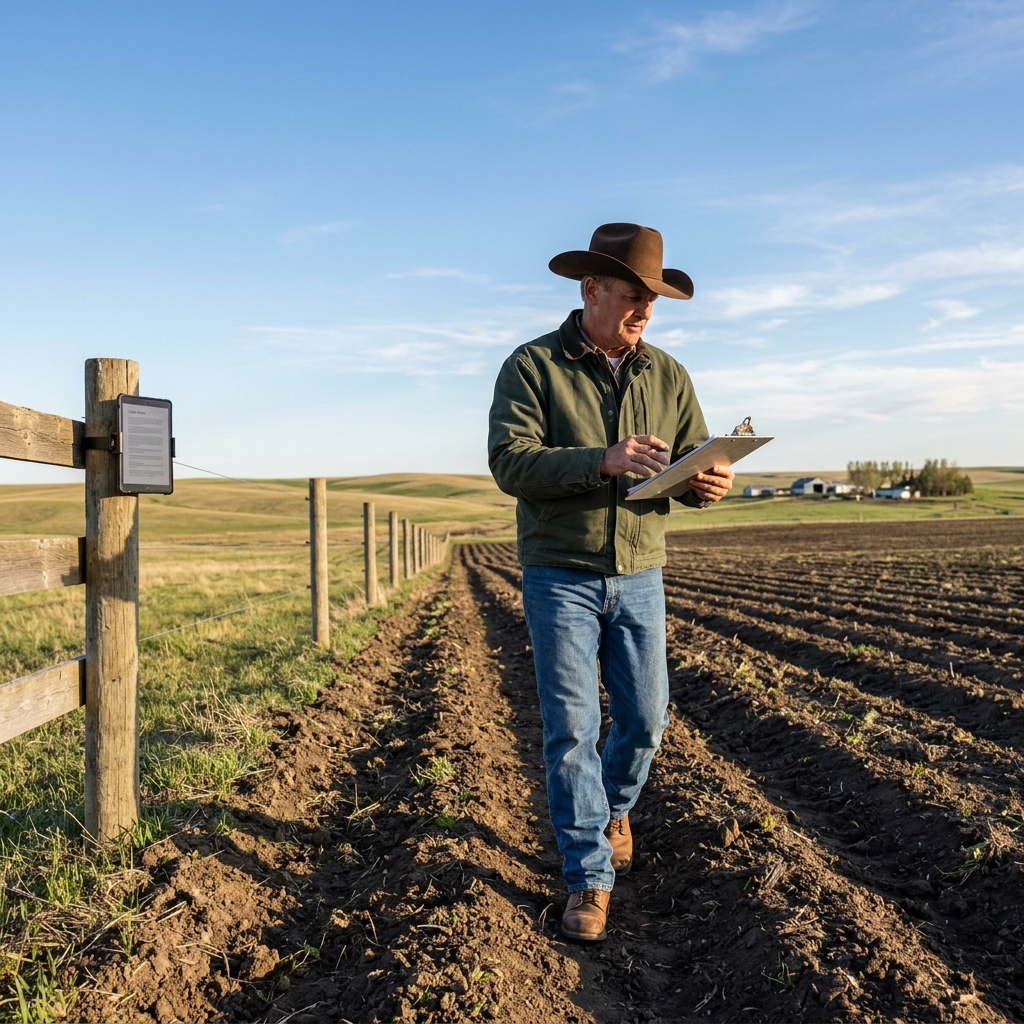
Laying the Groundwork: Parties, Property, and Purpose
Laying the Groundwork: Parties, Property, and Purpose
Before any payment terms or land-use conditions can be discussed, a lease must clearly establish who is involved, what land is being leased, and for what purpose. These foundational elements prevent disputes from the very start and ensure the document is legally enforceable in any Canadian province.
Identifying the Parties and the Land
Every agricultural land lease contract must open with full legal identification of both parties. This includes the full legal names of the landowner and tenant farmer, their mailing addresses, and their contact information. If either party is a corporation, the registered business name and number must be included. The land description should reference the legal land title, including lot and concession numbers, the municipality, and the province. Attaching a survey map or aerial photograph as an appendix adds an extra layer of clarity that can resolve boundary disputes later.
- Landowner details: Full legal name, address, and contact information, including any corporate registration if applicable
- Tenant details: Full legal name, farming operation name if applicable, and primary contact information
- Legal land description: Title reference, township, range, meridian, and total acreage being leased
- Permitted use: Clearly stated agricultural purpose, such as grain cropping, hay production, or livestock grazing
- Exclusions: Any portions of the land not included in the lease, such as a home quarter or a woodlot
Defining the Lease Term
The lease term is one of the most consequential decisions in any farmland lease negotiation. A short-term farmland lease of one to three years offers flexibility, which appeals to landowners who may want to reassess rental rates or reclaim land for personal use. However, tenant farmers often argue, correctly, that short terms discourage investment in the land. A farmer will not tile drain a field or invest in soil health on a one-year deal.
A long-term agricultural lease of five years or more gives farmers the planning horizon they need to make meaningful improvements and production commitments. The agreement should state the exact start and end dates, specify whether the lease automatically renews, and define the notice period required if either party intends to terminate or renegotiate. In many provinces, lease terms can also affect property tax classifications and government program eligibility, so both parties should understand the implications before signing.
Commencement and Possession Date
The commencement date and the date of possession are not always the same, and conflating the two creates confusion. The commencement date is when the legal obligations under the lease begin. The possession date is when the tenant actually takes physical access to the land. For cropland, possession typically aligns with the spring planting season. For pasture leases, it aligns with turnout dates. Specifying both dates precisely eliminates scheduling disputes and protects the tenant's ability to prepare the land before the growing season begins.
Farmland Lease Payments: Structures, Schedules, and Adjustments
Farmland Lease Payments: Structures, Schedules, and Adjustments
How rent is calculated, structured, and paid is often the most negotiated portion of any lease. Canadian farmland lease payments can take several forms, and the structure chosen will affect everything from the landowner's income predictability to the farmer's cash flow during a difficult crop year.
Cash Rent Versus Crop Share
The most common debate in Canadian farmland leasing is cash rent vs. crop share lease arrangements. Under a cash rent model, the tenant pays a fixed dollar amount per acre regardless of what the land produces. This gives the landowner stable income and removes them from production risk entirely. Under a crop share arrangement, the landowner receives a percentage of the harvested crop, typically between 20 and 35 percent depending on the province, input contributions, and soil productivity. Crop share ties the landowner's return to market prices and yields, which can work in their favour in a strong year but creates unpredictability in poor ones.
There is no universally correct answer. The right structure depends on the landowner's income needs, the tenant's financial position, and the regional norms. In high-productivity areas of Saskatchewan and Manitoba, cash rent arrangements are increasingly common. In regions with variable yields or where the landowner wants to remain invested in the operation, crop share remains relevant. The lease must specify the chosen model in unambiguous terms, including the exact rent rate per acre, the crop share percentage if applicable, and how inputs are divided.
Payment Schedule and Late Payment Provisions
A farmland lease agreement template that omits payment timing is incomplete. The lease must specify when rent is due, whether that is a lump sum before seeding, split into pre-seeding and post-harvest installments, or paid on a monthly basis. Each approach has cash flow implications for both parties. Many Canadian landowners prefer pre-seeding payment because it confirms the tenant's financial commitment before the growing season begins. The lease should also define what constitutes a late payment, what penalty or interest applies, and at what point non-payment triggers a default and potential lease termination.
Rent Review and Escalation Clauses
On multi-year leases, static rent figures can become misaligned with market conditions. Farmland lease rates by province in Canada have shifted significantly over the past decade, driven by commodity prices, land values, and demand for acres. Including a rent review clause that allows periodic renegotiation, tied to a published index or agreed-upon market assessment, protects both parties from being locked into rates that no longer reflect reality. The clause should specify the review frequency, the method for determining fair market rent, and how disputes about the new rate will be handled.
Land Use, Obligations, and Environmental Responsibilities
Land Use, Obligations, and Environmental Responsibilities
What the tenant can and cannot do with the land is the heart of any farmland lease terms and conditions. These clauses protect the landowner's asset, ensure the tenant has the operational freedom they need, and establish shared expectations around stewardship and sustainability.
Permitted Use and Prohibited Activities
The lease must clearly define what agricultural activities are permitted. If the land is leased for grain cropping, does that include all annual crops or are perennial crops like alfalfa restricted because of the difficulty of breaking the stand at lease end? Can the tenant apply anhydrous ammonia or other inputs that may affect soil chemistry? Are there restrictions on tillage practices? Each of these questions should be addressed explicitly rather than left to assumption. Prohibited activities might include subleasing without written consent, installing permanent structures, extracting gravel or other materials, or altering drainage infrastructure without approval.
Maintenance and Repair Responsibilities
Fence maintenance, tile drain upkeep, weed control, and building maintenance are all areas where landowners and tenants routinely disagree when responsibilities are not written down. A well-structured lease assigns each maintenance obligation to a specific party. Typically, the tenant is responsible for day-to-day upkeep such as weed control and fence repairs under a certain dollar threshold, while the landowner handles major capital repairs. Whatever the arrangement, the lease must be specific. Vague language like "the tenant shall maintain the property in good condition" is not sufficient and will not hold up in a dispute.
Environmental Obligations and Land Stewardship
Canadian landowners have increasing reasons to formalize environmental expectations within their leases. Provisions covering soil conservation practices, restrictions on certain chemical applications near waterways, and obligations around endangered species habitat protection are becoming standard in modern agricultural land lease contracts. Some provinces have legislation that affects what can be applied to land near wetlands or riparian zones, and the lease should acknowledge those requirements explicitly. Including a clause that obligates the tenant to comply with all applicable environmental regulations shifts legal liability appropriately and sets a clear standard for land stewardship.
Improvements, Insurance, and Liability Protections
Improvements to leased farmland, whether a new grain bin, a drainage tile installation, or a field approach upgrade, create immediate questions about ownership, cost responsibility, and what happens at lease end. Alongside improvements, insurance and liability provisions ensure neither party is left financially exposed by events outside their control.
Tenant Improvements and Ownership at Lease End
If a tenant installs a grain bin or tiles a wet area, does that improvement belong to the landowner at the end of the lease? Does the tenant have the right to remove it? Is the tenant compensated for the residual value? These are not hypothetical questions. They come up at every lease renewal cycle. The lease should address what happens to tenant improvements at termination, who bears the cost of installation, and whether pre-approval from the landowner is required before work begins. Some leases include a compensation schedule that reimburses the tenant for unamortized improvement value, which encourages investment without creating ambiguity about ownership.
Insurance Requirements
Both parties should carry appropriate insurance, and the lease should require proof of coverage. The tenant should hold general liability insurance that covers third-party injuries or damage arising from farming operations on the leased land. The landowner should maintain property insurance on any buildings or infrastructure included in the lease. The lease should specify minimum coverage amounts, require each party to name the other as an additional insured where applicable, and establish who is responsible for insuring any tenant-installed equipment or structures.
Liability and Indemnification Clauses
An indemnification clause defines who is responsible if something goes wrong. If a visitor is injured on the leased land during a farming operation, is the tenant liable? If a chemical spill contaminates a neighbouring property, who bears the cost of remediation? A well-drafted liability clause protects the landowner from claims arising from the tenant's operations and protects the tenant from claims related to pre-existing conditions on the land. Both parties benefit from having these allocations written clearly before any incident occurs.
Termination, Dispute Resolution, and Legal Compliance
Even the strongest landlord-tenant relationships can break down. How the lease handles termination, disputes, and compliance with provincial law determines how disruptive a breakdown will be. These provisions should be drafted with care, because they are the ones that matter most when the relationship is under stress.
Termination Rights and Notice Requirements
The lease must specify under what circumstances either party can terminate early and what notice is required. Common termination triggers include non-payment of rent, material breach of lease conditions, insolvency of either party, or sale of the land. Notice periods for non-renewal at the end of a lease term should align with provincial legislation, which varies across Canada. In Ontario, for example, agricultural tenancy provisions under the Farm Practices Protection Act and related regulations may affect notice requirements. The lease should reference applicable provincial law and specify whether verbal notice is accepted or whether written notice is required.
Dispute Resolution Mechanisms
Disputes between landowners and farmers rarely benefit from going directly to court. The lease should include a structured dispute resolution process that starts with good-faith negotiation, escalates to mediation if negotiation fails, and reserves litigation as a last resort. Some leases specify a named mediator or refer disputes to the provincial agricultural dispute resolution body. Including this process in the lease reduces the cost and emotional toll of disagreements and often results in faster, more practical outcomes than legal proceedings.
Governing Law and Compliance with Provincial Legislation
Canada does not have a single national farmland leasing law. Each province governs agricultural tenancy differently, and a lease that is enforceable in Alberta may contain provisions that conflict with Ontario law. The lease must identify the governing province explicitly and confirm that all clauses comply with local legislation. This is particularly important for provisions around lease termination, rent increases, and tenant rights. Both parties are encouraged to have the agreement reviewed by a lawyer familiar with agricultural law in the relevant province before signing.
Conclusion
A complete Canadian farmland lease agreement is not a formality. It is a working document that protects both parties, sets clear expectations, and creates the foundation for a productive long-term relationship between landowners and farmers. From the legal description of the land to the dispute resolution process, every clause serves a purpose, and every gap creates risk. Landowners and tenant farmers who take the time to get their agreements right before planting season will avoid the kinds of costly disputes that arise when expectations go unspoken. Platforms like Land4Rent support this process by offering automated lease generation tools that help Canadian landowners produce customized, legally grounded agreements without starting from scratch.
Ready to lease farmland with confidence? Visit Land4Rent to list your property, connect with verified tenant farmers, and generate a lease agreement built for the Canadian agricultural market.
Frequently Asked Questions (FAQs)
What should be included in a farmland lease agreement?
A complete farmland lease should include the legal identification of both parties, a precise land description, lease term and dates, rent structure and payment schedule, land-use permissions and restrictions, maintenance responsibilities, insurance requirements, and termination and dispute resolution provisions.
How long should a farmland lease be?
Lease length depends on the goals of both parties. Short-term leases of one to three years offer flexibility, while long-term leases of five or more years give tenant farmers the planning horizon needed to invest in soil health and productivity.
How to calculate farmland lease payments?
Farmland lease payments are typically calculated on a per-acre basis, using local market rates, soil productivity ratings, and current commodity prices as benchmarks. A farmland lease calculator or a comparative market analysis from a local agrologist can help establish a fair rate.
How to terminate a farmland lease?
Lease termination must follow the notice requirements outlined in the agreement and comply with the governing province's agricultural tenancy legislation. Common grounds for early termination include non-payment of rent, material breach of conditions, or sale of the property, all of which should be defined in the lease itself.
What questions to ask when leasing farmland?
Key questions include: What is the soil classification and productivity history? Are there existing drainage issues or environmental restrictions? Who is responsible for maintenance and repairs? What inputs has the land received in recent years? And what are the rent review terms on multi-year leases?
What is the average farmland lease rate in Canada?
Farmland lease rates vary significantly by province and land quality. Saskatchewan cash rent averages tend to be lower per acre than Ontario or British Columbia, reflecting differences in land values and crop types. Rates are best confirmed through provincial agricultural ministry data or competitive bidding on verified listing platforms.
What is a cash rent farmland lease?
A cash rent farmland lease is an arrangement where the tenant pays a fixed dollar amount per acre, regardless of yield or commodity prices. It gives the landowner predictable income and removes production risk from the rental equation entirely.
How do farmland lease auctions work?
Farmland lease auctions allow landowners to list their property and receive competitive bids from multiple tenant farmers, with rental rates determined by genuine market demand rather than private negotiation. Land4Rent operates a live online auction system where verified farmers bid on listed properties in real time.
Farmland lease rates by province in Canada: how do they differ?
Lease rates vary based on land productivity, provincial land values, crop type, and local demand for acres. Ontario and British Columbia tend to have higher per-acre rates due to land scarcity and high-value crops, while prairie provinces like Saskatchewan and Manitoba typically reflect broader commodity-driven markets.
Cash rent vs. crop share lease: which is better?
Neither structure is universally better. Cash rent offers income stability for landowners and simplicity for both parties, while crop share ties returns to actual production and can benefit landowners when yields and prices are strong. The right choice depends on the landowner's risk tolerance, the tenant's financial position, and regional farming norms.



.svg)


.svg)