%20(1).svg)

.svg)

Introduction
If you own agricultural land in Canada and have not revisited your lease terms recently, there is a real chance you are not getting what your land is worth. Farmland lease rates across the country vary dramatically, sometimes by hundreds of dollars per acre, depending on a combination of factors that most landowners have never been walked through. Understanding what actually drives those differences is the first step toward making confident, well-informed leasing decisions.
What Drives Farmland Lease Rate Variation
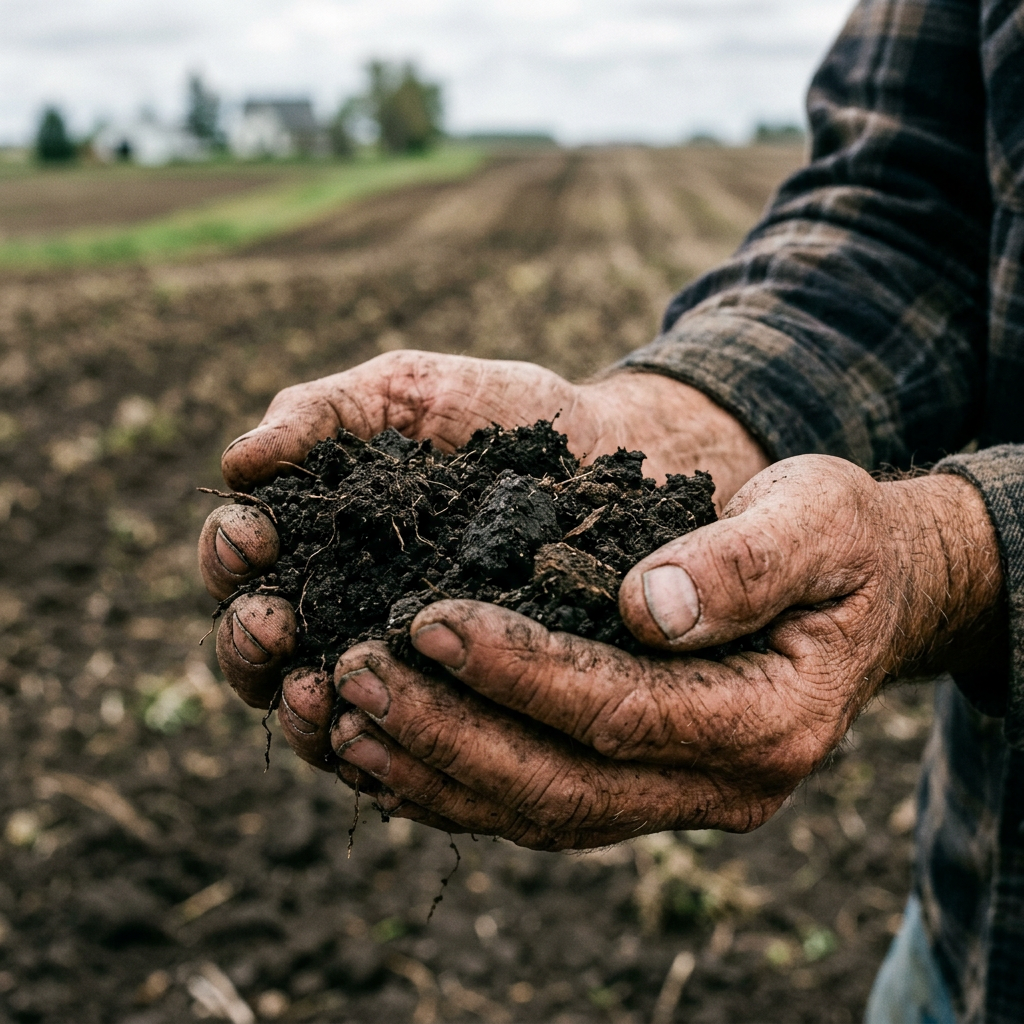
Agricultural land is not a uniform commodity. Two fields in the same county can command very different rents based on what grows there, who wants to farm it, and how easily a farmer can move grain to market. The variables that set agricultural land lease rates are more layered than most landowners initially expect.
Soil Quality, Crop Type, and Yield Potential
The single biggest driver of per-acre rental value is what the land can reliably produce. Farmers are renting productive capacity first and geography second. Higher-rated soils that support wheat, canola, or corn will consistently attract stronger bids than lighter soils better suited to forage or grazing. Before setting or accepting any lease rate, landowners should understand where their land sits on the soil quality spectrum and what crop rotations it can realistically support.
- Soil classification: Higher-rated soils (Class 1 to 3 in Canada's classification system) command premium rents because they support higher-value crop rotations.
- Crop suitability: Land capable of growing canola or soybeans typically rents for more than comparable acreage restricted to lower-value crops.
- Drainage and tillability: Well-drained, easily worked fields reduce input costs for farmers, who will pay more for that operational advantage.
- Yield history: Documented yield records give farmers confidence, and that confidence translates into higher bids.
- Proximity to infrastructure: Fields near grain elevators, highways, or processing facilities reduce hauling costs and are priced accordingly.
Lease Structure Matters as Much as Location
The way a lease is structured has a direct bearing on what a landowner receives. Cash rent vs crop share lease arrangements carry very different risk and reward profiles for both parties. A cash rent lease provides predictable income regardless of harvest outcomes, which many landowners prefer. A crop share arrangement ties the landlord's income to commodity prices and actual yield, which can pay out higher in a strong year but offers no floor in a poor one. Understanding which structure suits your land and your financial goals is foundational before any negotiation begins.
How Regional Differences Shape Farm Lease Rates
Canada's agricultural geography is remarkably diverse, and farm lease rates reflect that reality. What is considered a fair rate in one province can look either generous or exploitative just a few hundred kilometres away. Regional demand, land scarcity, and the dominant crop economy all play a role in setting what the farmland rental rates look like on the ground.
The Prairie Provinces: Volume, Competition, and Wide Ranges
Saskatchewan farmland lease rates are shaped by scale. The province has vast cultivated acreage, and per-acre rents have historically been lower than in eastern Canada, but that gap has been narrowing. According to Farm Credit Canada's 2024 farmland rental rate data, Prairie provinces have seen consistent upward pressure on cash rents as farmland values have increased and competition for quality acres has intensified. In Saskatchewan, Class 1 cropland in high-demand areas can now fetch considerably more than the provincial average suggests, and landowners relying on outdated benchmarks risk underpricing significantly.
Alberta farmland rental rates follow a similar upward trend but are further complicated by the province's mix of irrigated cropland, dryland grain acres, and rangeland. Irrigated parcels near the Bow River corridor command some of the highest rents in western Canada, while dryland pasture in the north can sit at a fraction of that figure. Landowners in Alberta need to benchmark against their specific land class and region, not provincial averages.
Ontario and Eastern Canada: Higher Rents, Tighter Supply
Ontario farmland lease rates per acre are among the highest in the country, driven by strong demand for corn, soybean, and winter wheat acres in a province where available agricultural land is genuinely scarce. Competition for good ground in southwestern Ontario is intense, and farmers operating large equipment on tight rotations will pay a premium to secure productive acres near their existing operations. Landowners in Ontario who have not renegotiated leases in five or more years may be collecting rents well below current market-based farm rental rates.
Cropland Versus Pasture: Understanding the Gap
Across every province, pasture and hay land consistently rents at lower rates than cultivated cropland. The difference is not arbitrary. Cultivated fields produce higher-value outputs, require more capital investment from farmers, and are tied to commodity markets that justify higher per-acre bids. Pasture rents are often expressed in animal unit months rather than straight per-acre figures, which makes comparisons across land types genuinely difficult without the right benchmarks.
Why Private Negotiations Often Lead to Underpriced Land
Many Canadian farmland leases are still set through private negotiation between a landowner and a single farmer, often someone with an existing relationship or a long history on the land. That familiarity is valuable, but it creates a structural disadvantage for landowners who lack current market data. Without competitive pressure, there is no mechanism to surface what the land would actually fetch if multiple qualified farmers were bidding on it.
The Case for Competitive, Transparent Pricing
Online auction platforms have changed the calculus for landowners who want to know what their land is genuinely worth. When multiple farmers compete openly for the same acreage, the resulting rent reflects real market demand rather than one party's negotiating position. Farmland rental auctions are particularly effective at surfacing value on high-quality parcels where demand is strong but landowners have no visibility into how many farmers are interested. The auction process also removes the social discomfort of renegotiating with a long-standing tenant by letting the market set the rate instead.
How Digital Platforms Are Reshaping Farmland Leasing
The shift toward digital farmland leasing platforms has given landowners access to tools and data that were previously available only to large institutional land managers. Platforms like Land4Rent allow landowners to list verified properties, receive bids from vetted farmers, and generate legally binding lease agreements, all without requiring deep industry expertise on the landowner's part. For landowners who inherited land or manage it from a distance, that kind of structured process removes a great deal of guesswork. The range of lease structures available, from fixed cash rents to flexible crop-share formulas, can also be matched to the right land type and tenant relationship through these platforms.
Conclusion
Farmland lease rates in Canada do not follow a single logic. They are shaped by soil class, crop potential, regional demand, lease structure, and the presence or absence of competitive bidding. Landowners who rely on historical rates or informal comparisons are often working with incomplete information, and that gap has real financial consequences. Whether you hold land in the Prairie provinces or in Ontario's high-demand crop belt, the path to a fair rate starts with understanding what actually drives value in your specific region and land class. Bringing that land to a competitive, transparent market is the most reliable way to close the gap between what you are receiving and what your land is genuinely worth.
If you are ready to find out what your farmland could be earning, list your land on Land4Rent and let the market tell you what it is worth.
Frequently Asked Questions (FAQs)
How are farmland lease rates determined in Canada?
Farmland lease rates are determined by a combination of soil quality, crop yield potential, regional demand, proximity to infrastructure, and whether the rate is set through private negotiation or a competitive bidding process.
Why are farmland rental rates increasing across Canada?
Farmland rental rates have been rising because land values have increased significantly, competition among farmers for quality acres has intensified, and input cost pressures are pushing operators to consolidate productive acreage wherever possible.
What is the difference between cropland and pasture lease rates?
Cropland consistently rents at higher per-acre rates than pasture because it produces higher-value outputs, supports more intensive farming operations, and is tied to commodity markets that justify stronger bids from farmers.
How do lease rates differ by province in Canada?
Lease rates vary significantly by province, with Ontario typically commanding the highest per-acre rents due to tight land supply and strong row crop demand, while Saskatchewan and Alberta rates vary widely based on land class, irrigation access, and local competition.
Is a cash rent lease or a crop share lease better for landowners?
Cash rent leases offer predictable income regardless of harvest outcomes, while crop share leases tie the landowner's return to commodity prices and yields, which can be more profitable in strong years but carry greater income risk overall.



.svg)


.svg)