%20(1).svg)

.svg)

Introduction
Leasing farmland is one of the most consequential decisions a Canadian landowner can make, and yet many never fully complete the process. Not because the opportunity isn't there, but because doubt creeps in at specific moments and never quite gets resolved. Farmland leasing concerns are real, practical, and worth naming directly: Who will be farming my land? Are these lease terms actually protecting me? Am I setting the right rental rate? This guide walks through each hesitation point in order, from the moment you consider listing your property to the day a lease is signed, and explains what you can do about each one.
The First Hurdle: Deciding to List At All
Before a landowner ever creates a listing, they face a quieter obstacle: the fear that putting their land out there exposes them to unknown risks. This reluctance often stems from a lack of clarity about what the leasing process actually involves, and who they might end up dealing with.
What Landowners Worry About Before They Start
Most landowners haven't gone through a formal leasing process before, or they've had a past experience that left them cautious. The concerns that hold people back at this stage tend to cluster around a few familiar themes:
- Unknown tenants: Leasing to someone unfamiliar feels risky when you have no way to assess their farming practices or financial reliability.
- Unclear market rates: Without a benchmark, landowners worry they'll underprice their land or price themselves out of the market entirely.
- Legal exposure: Many assume that drafting a lease requires a lawyer and significant upfront cost, which discourages them from starting at all.
- Loss of control: There's a persistent concern that once land is leased, the landowner loses say over what happens on it.
Why These Concerns Are Valid but Solvable
Each of these hesitations reflects a real gap, either in information or in the process. The good news is that none of them require a landowner to simply "trust and hope." Farmland leasing has evolved considerably, and structured platforms now address these gaps systematically rather than leaving landowners to figure things out alone. The key is knowing that solutions exist before anxiety sets in and stalls the process entirely.
The Tenant Problem: Finding Reliable Farmers to Lease Land
Once a landowner decides to move forward, the next major friction point is finding reliable farmers to lease land to. This is where many private negotiations break down, because informal channels rarely give you enough information to make a confident decision.
The Verification Gap in Private Arrangements
When a landowner relies on word-of-mouth or local connections, they're often evaluating tenants based on reputation alone. There's no formal process, no documentation review, and no way to independently confirm that the farmer has the capacity and track record to manage additional acreage responsibly. Landowner rights in agricultural leasing include the right to thoroughly vet any potential tenant, but exercising that right requires a framework most private arrangements don't provide. The risks of leasing farmland to unknown tenants are not hypothetical: poor land stewardship, missed payments, and lease disputes are documented outcomes when tenant screening is skipped.
What a Verified Tenant Pool Changes
Platforms that pre-screen farmer applicants shift the dynamic entirely. When every farmer in the pool has been verified before they're allowed to bid or inquire, the landowner isn't doing that investigative work alone. Digital farmland leasing platforms built around verified participants give landowners something that private negotiations rarely offer: a baseline of trust before any conversation even begins. This doesn't eliminate all risk, but it removes the most avoidable one.
The Rate Problem: Knowing What Your Land Is Worth
Rental rate uncertainty is one of the most persistent sources of hesitation in farmland leasing. Landowners who don't have a reliable benchmark often second-guess their asking price right up to the moment they need to commit to a number.
Why Private Rate-Setting Feels Like Guesswork
Farmland rental rates per acre vary significantly across provinces. In Ontario, Alberta, and Saskatchewan, rates reflect a combination of soil quality, crop type, local demand, and historical averages. When a landowner sets a rate through private negotiation, they're working with incomplete information. Rental rate benchmarks published by Farm Credit Canada provide some reference, but they're provincial averages, not property-specific valuations. The gap between a regional average and what your land should actually command leaves room for significant under- or over-pricing.
How Competitive Bidding Solves the Rate Problem
The most reliable way to establish a fair rental rate is to let qualified farmers bid against each other in a transparent process. Live auction bidding removes the guesswork by replacing a single negotiated number with a market-driven result. Landowners can set a reserve and watch real demand determine the actual rate. This approach directly addresses the anxiety of not knowing whether you've left money on the table or priced yourself out of a deal.
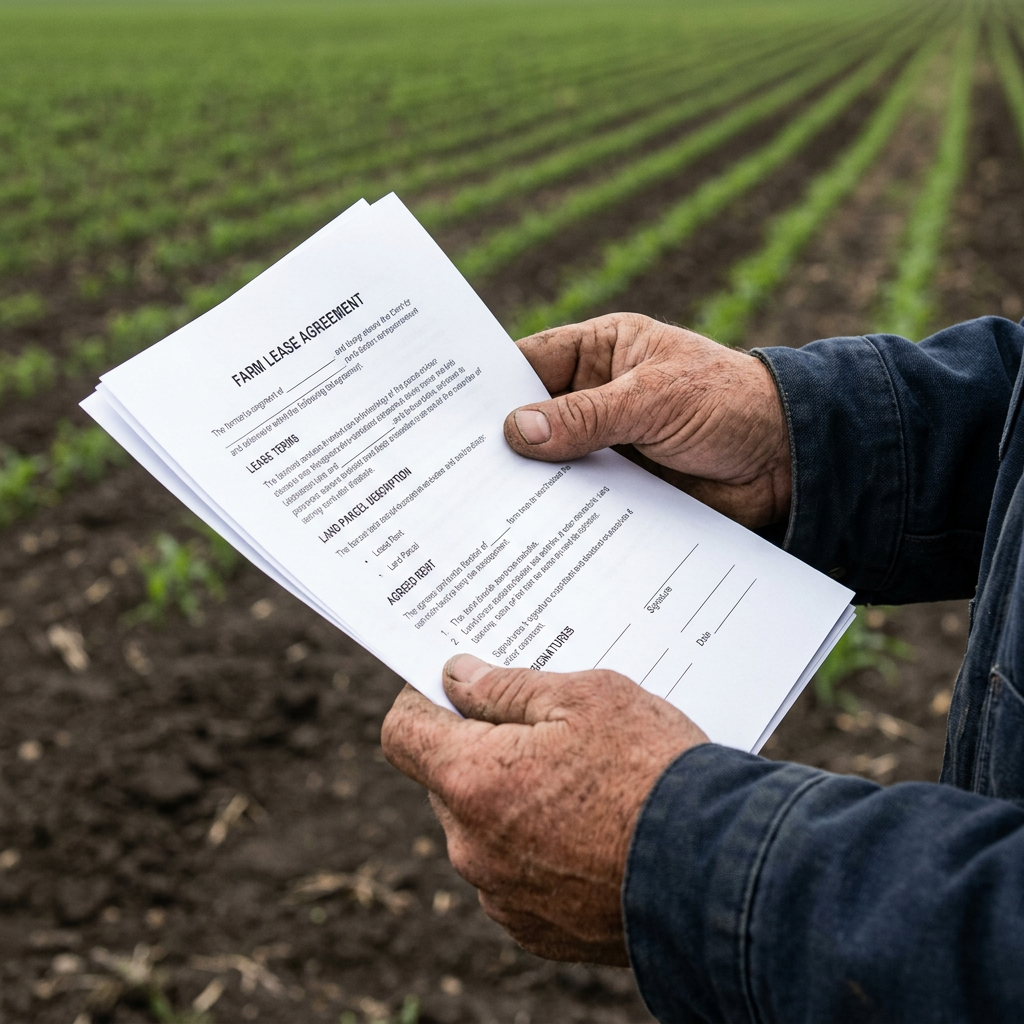
The Lease Problem: Terms That Actually Protect You
Even after a tenant is identified and a rate is agreed upon, many landowners hesitate at the lease stage. A poorly constructed lease is one of the biggest farmland leasing risks for landowners, and the fear of signing something that doesn't hold up is well-founded.
What Weak Lease Terms Look Like
Common problems in informal lease agreements include vague land-use language, no provisions for damage or soil degradation, unclear renewal or termination clauses, and nothing in writing about payment timing. Farmland lease terms and conditions need to cover these specifics clearly if the agreement is going to protect both parties. Agricultural lease documentation standards from Farm Credit Canada highlight why written agreements with explicit terms are essential, yet many landowner-farmer arrangements still rely on handshakes or simple one-page documents that leave too much open to interpretation.
How Standardized Lease Generation Reduces Risk
Automated lease generation tools that prompt landowners through a structured set of questions can produce a customized, legally binding farmland lease agreement without requiring a lawyer for every transaction. Alberta farmland lease agreements, for example, have specific provincial considerations that a standardized but configurable template can incorporate. The result is a document that reflects the specific property, the agreed rate, and the terms both parties actually negotiated rather than a generic contract with gaps.
The Payment Problem: Ensuring You Get Paid
The final hesitation point is often the simplest but the most emotionally loaded: payment security. Landowners who've had late payments or disputes in the past carry that anxiety into every new arrangement.
Why Payment Tracking Matters More Than People Expect
A signed lease that includes payment terms is only as effective as the mechanism enforcing those terms. Without a trackable payment system, a landowner relying on a cheque in the mail has no real-time visibility into whether payment is coming, late, or in dispute. Online farmland leasing vs private negotiation comes down to this: digital platforms process payments within a secure, documented environment where both parties can see transaction history. Ontario's sustainable land rental guidelines also emphasize that transparent record-keeping protects landowners in any future dispute over payment history.
Putting It Together: End-to-End Confidence
The pros and cons of leasing farmland in Canada tip firmly in favour of leasing when each step of the process is handled through a structured system rather than informal agreement. Land4Rent was built specifically to address each of these hesitation points in sequence: verified tenants, competitive rate-setting, automated lease generation, and tracked payments all within one platform. When every component works together, the anxiety that stops landowners from moving forward loses its grip.
Conclusion
The hesitations most landowners feel are not irrational. They reflect genuine gaps in the traditional approach to farmland leasing in Canada, where trust, rate transparency, legal protection, and payment security have historically been left to chance. The good news is that each hesitation point has a concrete resolution: tenant verification addresses the trust gap, competitive bidding addresses the rate gap, structured lease tools address the legal gap, and secure payment systems address the collection gap. Landowners who understand where doubt typically enters the process are far better positioned to move through it without stalling at each stage.
Ready to list your farmland with confidence? Start with Land4Rent and move from listing to signed lease with every step covered.
Frequently Asked Questions (FAQs)
What are the main concerns when leasing farmland?
Most landowners cite tenant reliability, setting a fair rental rate, drafting protective lease terms, and ensuring consistent payment as the four concerns that most often delay or derail the leasing process.
What are the risks of leasing farmland to unknown tenants?
Leasing to an unverified tenant carries risks that include poor land stewardship, missed or late payments, and difficulty enforcing lease terms if a dispute arises without documented screening.
How can landowners protect their land during a lease?
Landowners can protect themselves by using a written lease with explicit land-use conditions, requiring a verified tenant, setting clear payment terms, and choosing a platform that documents all transactions.
What are farmland rental rates per acre in Ontario vs Alberta?
Rental rates vary significantly between provinces based on soil class, crop type, and regional demand, which is why using competitive bidding or current provincial benchmarks is essential for accurate rate-setting.
Is online farmland leasing safe and transparent in Canada?
Yes, when the platform verifies both landowners and farmers, uses a documented payment system, and produces legally binding lease agreements, online leasing offers more transparency and auditability than most private arrangements.


.png)



.svg)


.svg)