%20(1).svg)

.svg)

Introduction
A farm land lease agreement is one of the most consequential documents in Canadian agriculture, yet countless landowners and farmers still operate on handshake deals or vague written terms that unravel the moment a dispute surfaces. When disagreements arise over payment schedules, land use, crop responsibilities, or end-of-lease conditions, a poorly drafted lease offers little protection to either party. Getting the documentation right from the start is not just good practice, it is the foundation of a secure and productive farming relationship. This guide walks you through every clause your farm lease contract needs to be enforceable, practical, and built to last.
Why Written Land Lease Contracts Are Non-Negotiable
Verbal agreements may feel convenient, especially between neighbours or family members who trust each other, but they create serious legal exposure. Courts across Canadian provinces consistently favour documented terms over disputed recollections, and without a written lease, proving what was agreed upon becomes nearly impossible.
The Real Risk of Going Without a Written Lease
A verbal farmland lease agreement leaves both sides vulnerable in ways that only become obvious after something goes wrong. Consider what is at stake when weighing the pros and cons of a farmland lease agreement vs a verbal agreement:
- No enforceable payment terms: Without a written schedule, late or missed rent payments are nearly impossible to pursue legally.
- Unclear land use boundaries: Who can grow what, where, and when becomes a source of conflict without explicit written terms.
- No exit conditions: End-of-lease responsibilities like soil restoration, crop removal, or equipment retrieval go undocumented.
- Liability gaps: Environmental damage, crop failure disputes, and third-party incidents fall into grey areas with no written allocation of responsibility.
- Lease renewal confusion: Both parties may have entirely different assumptions about whether the arrangement continues after the season ends.
What Canadian Law Expects from a Farm Lease
While agricultural leasing is governed at the provincial level, the legal expectations across provinces like Ontario and Alberta share common ground. A legally binding farm lease agreement in Canada must clearly identify both parties, describe the land, specify the term, and set out the compensation structure. Provinces like Alberta farmland lease regulations and Ontario guidelines each carry additional requirements, so understanding provincial nuances matters before you sign anything.
What Should Be Included in a Farm Lease Contract
A solid lease is more than a rent receipt with a signature. Every clause serves a purpose, and missing even one of the core elements can create a loophole that undermines the entire agreement. Here is how to build a contract that holds up.
The Core Clauses Every Lease Must Contain
Understanding what should be included in a farm lease contract starts with the foundational terms that define the relationship. The legal description of the land must be precise, referencing the parcel number, acreage, and any attached maps or surveys. The lease term needs a clear start and end date, along with explicit language about renewal conditions. Rent amount, payment frequency, accepted payment methods, and late payment consequences must all be written out without ambiguity. Writing a farm lease agreement with these sections fully addressed removes the most common causes of landlord-tenant disputes before they start.
Land Use, Improvements, and Responsibilities
Beyond the basics, a well-drafted ground lease agreement for agricultural land should specify exactly what the tenant is permitted to grow or raise, what structures they may build or modify, and who bears the cost of any improvements. Landowner rights around soil health and environmental stewardship are increasingly important, particularly as farmland lease Ontario guidelines continue to evolve around sustainable land use. Including clauses that address soil amendments, chemical use, drainage responsibilities, and end-of-lease restoration sets clear expectations that protect both the land and the landlord.
Dispute Resolution and Early Termination
No lease should be silent on what happens when things go wrong. A termination clause should spell out the notice period required by either party, valid grounds for early exit, and any financial penalties or forfeitures that apply. Alberta farmland lease agreements, for example, often include specific provisions around crop year timing, since terminating mid-season can have serious consequences for a farmer's livelihood. Adding a mediation or arbitration clause as the first step in dispute resolution keeps conflicts out of court and reduces costs for both sides.
How to Create and Manage Your Farm Lease Agreement Efficiently
Land lease agreements in Canada can be complicated to draft from scratch, particularly for landowners who are not legal professionals. The good news is that technology has made it significantly easier to produce airtight lease documentation without hiring a lawyer for every transaction.
Using Templates and Digital Tools
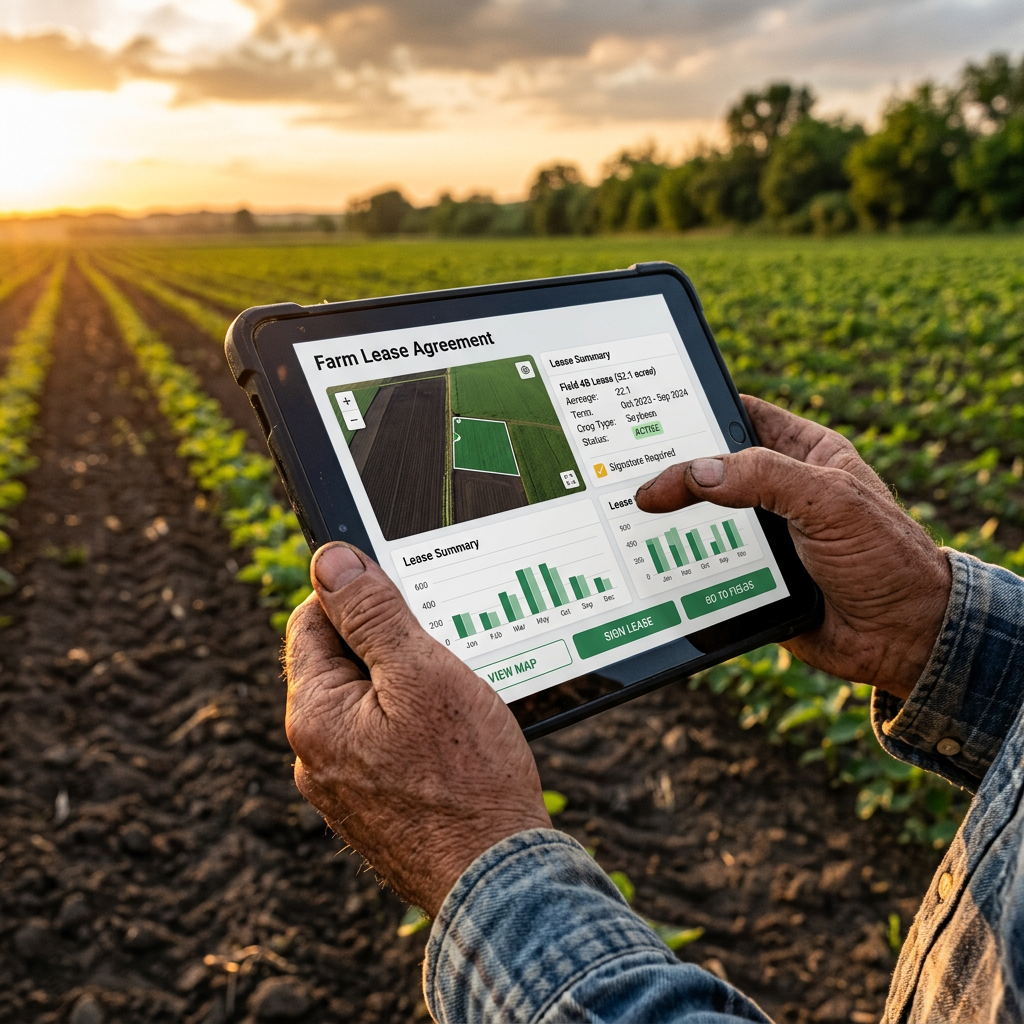
A reliable farmland lease agreement template gives you a tested structure to build from, reducing the risk of omitting critical clauses. The best way to lease farm land in Canada today combines a solid template with province-specific adjustments and a clear signing process. Digital farmland leasing platforms now offer automated lease agreement generation, where landowners answer a short series of questions and receive a customized, legally grounded lease document ready for review and signature. This approach is faster than starting from a blank document and more consistent than relying on informal drafts.
Keeping Records and Tracking Payments
Secure farm rental payments and proper documentation go hand-in-hand. Every payment made under a lease should be trackable, timestamped, and linked to the specific lease term it covers. Platforms like Land4Rent manage lease agreements and payment processing within the same system, giving both landowners and farmers a complete transaction record that can serve as evidence if a dispute ever arises. Tracking farmland leases in Canada through a centralized platform also simplifies year-end accounting and renewal planning considerably.
Common Mistakes That Invalidate Farm Leases
Even landowners who take the time to draft a written lease sometimes undermine its enforceability through avoidable errors. Awareness of these pitfalls is part of getting land lease contracts right.
Vague Language and Missing Details
Language like "rent will be paid at a reasonable time" or "the tenant will maintain the land appropriately" is legally meaningless. Courts need specific, measurable terms to enforce. Every obligation should name who is responsible, what the standard is, and when it must be completed. The legal contracts that survive court scrutiny are the ones where both parties could read each clause independently and agree on exactly what they requires.
Skipping Signatures or Witnesses
A lease document that is not properly executed is not legally binding, regardless of how well it is written. Both parties must sign, and in many provinces, a witness or notarization may be required depending on the lease term length. Always check your provincial requirements before finalizing and storing the agreement. Keeping signed copies accessible to both the landowner and the farmer is equally important, as lost documents create unnecessary complications later.
Conclusion
A farm land lease agreement that holds up in court is not an accident, it is the result of deliberate drafting, complete clauses, and proper execution. Whether you are a landowner protecting a multi-generational asset or a farmer securing the land you depend on, the time invested in getting the documentation right pays back many times over. Address every core clause, use province-appropriate language, and keep every signed document and payment record organized and accessible. Land4Rent offers a streamlined way to generate legally grounded lease agreements and manage payments in one place, removing the guesswork for both sides of the transaction.
Ready to create a lease that protects both you and your land? Visit Land4Rent and get started today.
Frequently Asked Questions (FAQs)
What is a land lease agreement?
A land lease agreement is a legally binding contract between a landowner and a tenant that sets out the terms under which the tenant may use a piece of land in exchange for rent payments over a defined period.
Can a farmer rent land without a written lease?
A farmer can rent land without a written lease, but doing so leaves both parties legally exposed if a dispute arises over payment, land use, or end-of-lease conditions, since verbal agreements are extremely difficult to enforce in court.
What is a ground lease in Canada?
A ground lease in Canada is a long-term land rental arrangement where the tenant leases only the land itself, often retaining the right to build or improve on it, while the landowner retains ownership of the underlying property throughout the lease term.
How do I get a legally binding farm lease agreement?
You can get a legally binding farm lease agreement by using a province-specific template, ensuring all core clauses are included, and having both parties sign the document with any witnessing requirements met under your provincial legislation.
What is a fair farmland rental rate in Canada?
A fair farmland rental rate in Canada varies by province, soil quality, and local demand, but competitive rates are most accurately determined through market-based approaches such as live rental auctions that reflect what verified farmers are genuinely willing to pay.

.png)



.svg)


.svg)