%20(1).svg)

.svg)

Introduction
When Canadian landowners and farmers sit down to negotiate a farmland lease, the conversation typically centers on rental rates, payment terms, and lease duration. Soil health rarely makes the agenda, and that omission can quietly erode the most valuable asset on the table: the land itself. Without clear expectations around soil quality, a lease can leave the landowner absorbing years of degradation they did not agree to, while the tenant faces accusations they cannot fairly dispute. Across Ontario, Alberta, and Saskatchewan, more landowners are recognizing that the condition of their soil at the end of a lease matters just as much as the rent they collect during it. A single lease cycle without soil management standards can reduce organic matter levels enough to lower yields by 10 to 15 percent on the next rotation.
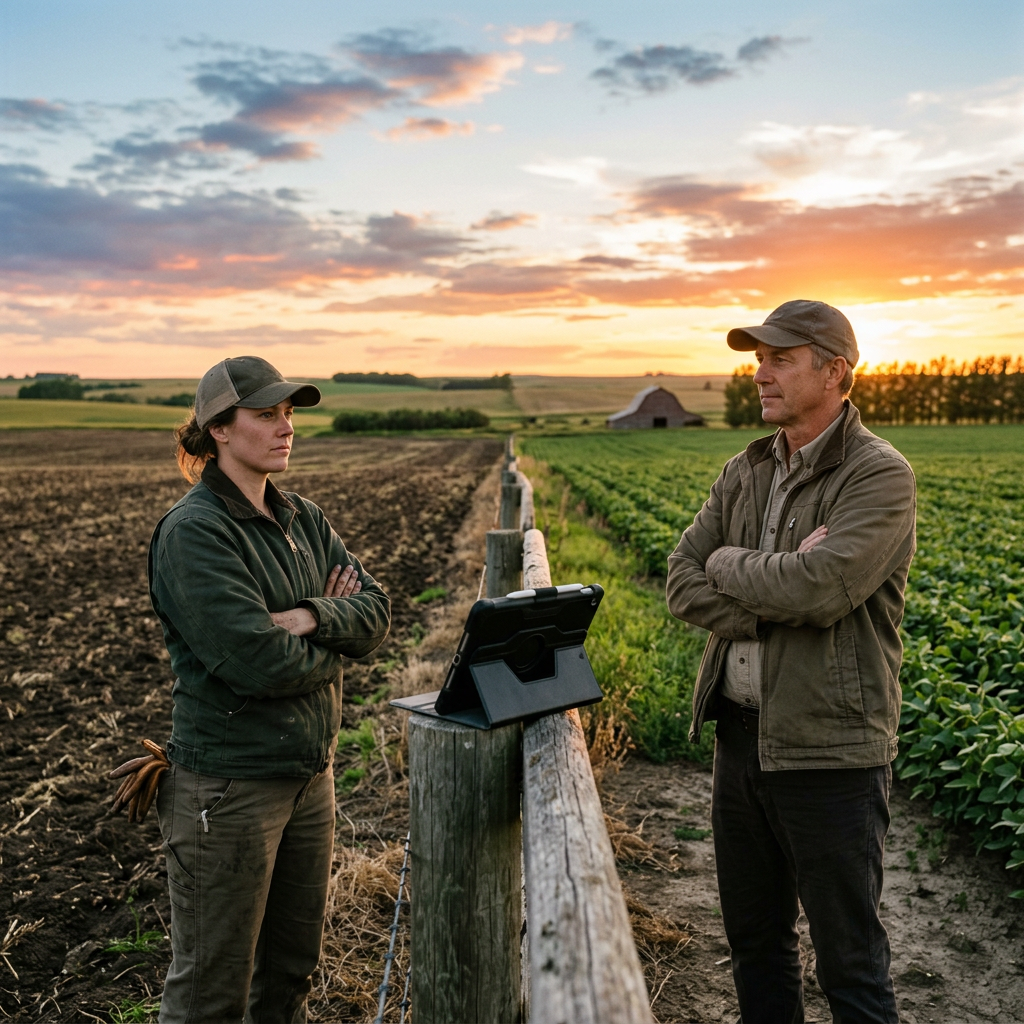
How Soil Quality Shapes the Value of Every Farmland Lease
Soil is not a static backdrop to a lease agreement. It is a productive asset whose condition fluctuates based on how the land is farmed each season. When a landowner signs a multi-year farmland lease without establishing baseline soil quality expectations, they are handing over control of their land's future productivity and, by extension, the rental income it can generate once the current lease ends. The financial implications are direct: degraded soil produces lower yields, and lower yields mean lower demand and weaker competitive rental bids in future lease cycles.
Why Soil Health Directly Affects Rental Rates
Farmland rental rates in Canada reflect what a tenant expects to earn from the land, minus their input costs and a margin for risk. Soil fertility is the single largest variable in that calculation. Fields with strong organic matter content, balanced nutrient profiles, and good structure consistently attract higher bids because tenants can project better yields with fewer corrective inputs. In Saskatchewan, for example, land with documented soil health records can command premiums of $10 to $20 per acre over comparable parcels with unknown soil status.
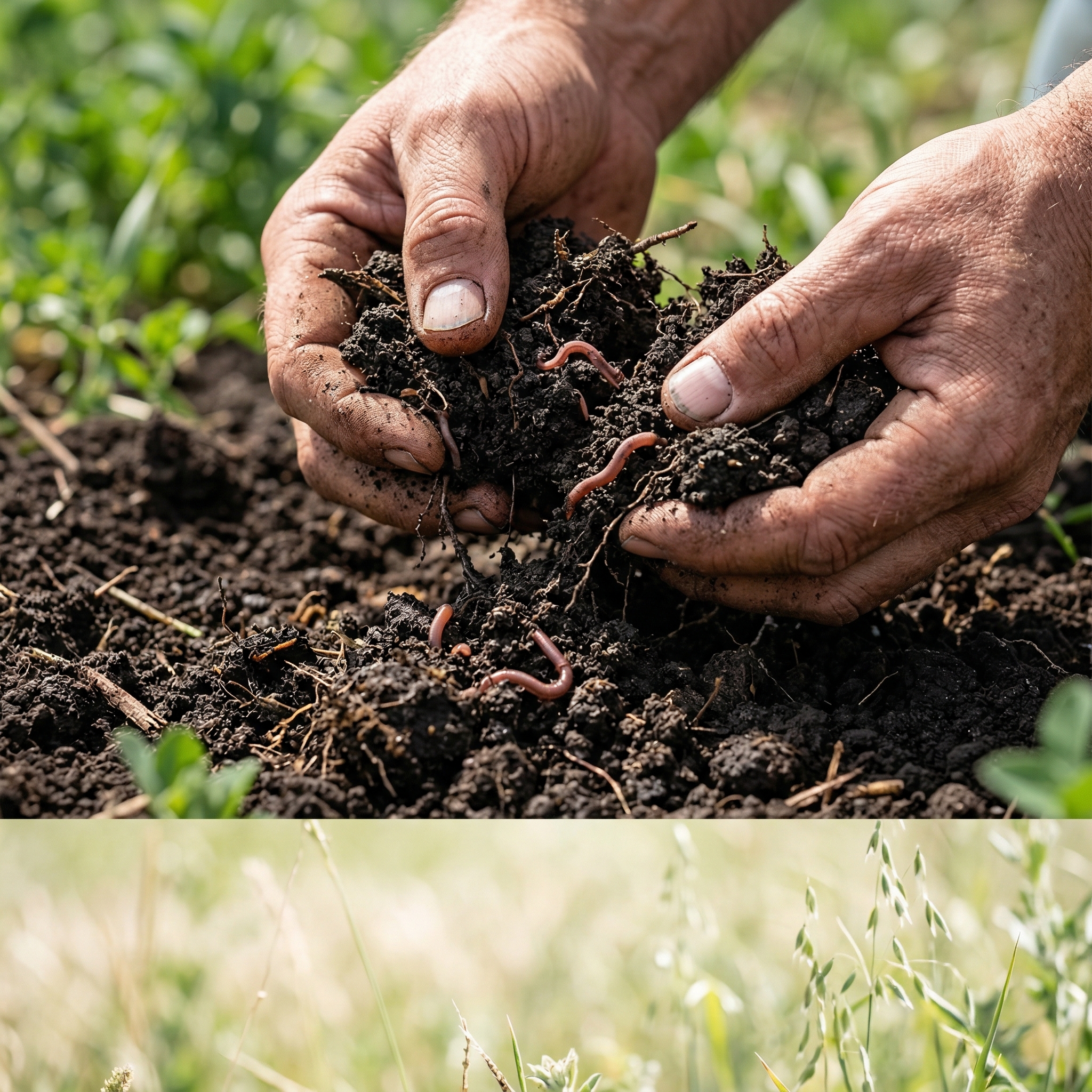
Organic matter levels: Higher organic matter improves water retention and nutrient cycling, both of which reduce a tenant's input costs
Soil structure: Well-structured soil resists compaction and allows root penetration, supporting stronger crop establishment
Nutrient balance: A documented nutrient profile lets tenants plan fertilizer applications precisely, avoiding both waste and deficiency
Erosion history: Fields with visible erosion or thin topsoil signal higher risk and lower yield potential to prospective tenants
Drainage capacity: Poor internal drainage drives up management costs and limits crop rotation options
The Hidden Cost of Ignoring Soil in Lease Negotiations
Most farmland leases in Canada are structured as cash rent agreements, where the tenant pays a fixed annual rate regardless of yield outcomes. This structure inadvertently incentivizes short-term extraction. A tenant who knows the lease ends in three years has little financial motivation to invest in practices that build soil quality over a five- to ten-year horizon. Without lease language that addresses soil management, the landowner bears the full cost of any degradation that occurs. According to Agriculture and Agri-Food Canada's soil health research, restoring depleted organic matter on Canadian cropland can take a decade or more of active intervention, making prevention far more cost-effective than remediation.
Building Soil Health Into a Farmland Lease Agreement
Addressing soil management in a lease does not require either party to become an agronomist. It requires agreement on a handful of measurable expectations, a baseline reference point, and clear language about who is responsible for what. The goal is not to micromanage farming decisions but to establish guardrails that protect both the landowner's asset and the tenant's ability to farm profitably.
Soil Testing as the Foundation of Every Lease
A soil test conducted before the lease begins creates an objective record of the land's condition at the point of transfer. This baseline protects both parties. For the landowner, it documents what was handed over. For the tenant, it proves they did not inherit existing problems. Standard tests measure pH, phosphorus, potassium, organic matter, and micronutrient levels, and they cost between $15 and $50 per sample depending on the lab and the depth of analysis.
Ontario's agricultural soil health strategy highlights baseline testing as one of the most effective tools for managing soil on leased land. The same principle applies in Alberta and Saskatchewan, where provincial extension services recommend soil sampling at the start and end of every lease term. Landowners who want to evaluate soil quality before leasing should plan for at least one composite sample per quarter section, taken at a consistent depth of six inches. Including an end-of-lease test requirement in the agreement gives both parties an objective comparison point if disputes arise.
Lease Clauses That Protect Soil Quality
Effective soil clauses do not dictate every agronomic decision. Instead, they set boundaries around the practices most likely to cause long-term harm. A well-drafted lease might require the tenant to maintain a crop rotation that includes at least one soil-building crop every three years, to avoid continuous monoculture of nutrient-depleting crops, or to implement cover crops on fields left fallow over winter. These requirements are not unusual. Provincial guidance in tenant soil responsibilities increasingly recognizes them as standard good practice.
Some landowners go further by including clauses that restrict tillage intensity, require residue management, or mandate minimum stubble heights after harvest to reduce wind erosion. In Alberta, where chinook winds can strip unprotected topsoil rapidly, these provisions carry real financial weight. The key is to make each requirement specific and measurable. A clause that says "the tenant shall maintain soil health" is unenforceable. A clause that says "the tenant shall maintain a minimum of 30 percent surface residue cover through the winter months" gives both parties something concrete to reference. Landowners drafting these provisions should also review how farm lease agreements hold up in court to ensure enforceability.
Sustainable Practices That Serve Both Landowner and Tenant
Soil health clauses work best when they align with practices that also benefit the farming tenant. The most effective lease discussions frame sustainable soil management not as a burden on the tenant, but as a shared investment that improves yields during the lease term while preserving the asset for the landowner's long-term benefit.
Crop Rotation and Cover Crops as Lease Standards
Crop rotation is one of the most reliable tools for maintaining soil fertility on leased land. Alternating between cereal grains, oilseeds, and pulse crops prevents the nutrient mining that occurs with continuous cropping of a single species. In Saskatchewan, canola-wheat-pulse rotations have become standard partly because they maintain nitrogen cycling and break disease cycles in the soil. A lease that requires rotation is simply codifying what most competent tenants already practice.
Cover crops represent a more nuanced conversation. Planting cover crops after harvest, particularly nitrogen-fixing species like crimson clover or winter peas, builds organic matter and prevents erosion during vulnerable shoulder seasons. However, cover crops also cost the tenant money without generating direct revenue. According to Agriculture Canada's soil organic matter indicators, the long-term return on organic matter accumulation through cover cropping is well-documented, but the short-term cost falls on whoever pays for the seed and management. Some leases address this by splitting cover crop costs, offering a small rent reduction in exchange for cover crop adoption, or extending lease terms to give the tenant time to realize the yield benefits. Land4Rent has observed that leases incorporating these shared-cost models tend to attract higher-quality tenants who plan to farm the land responsibly over multiple seasons.
Recognizing and Preventing Soil Degradation During a Lease
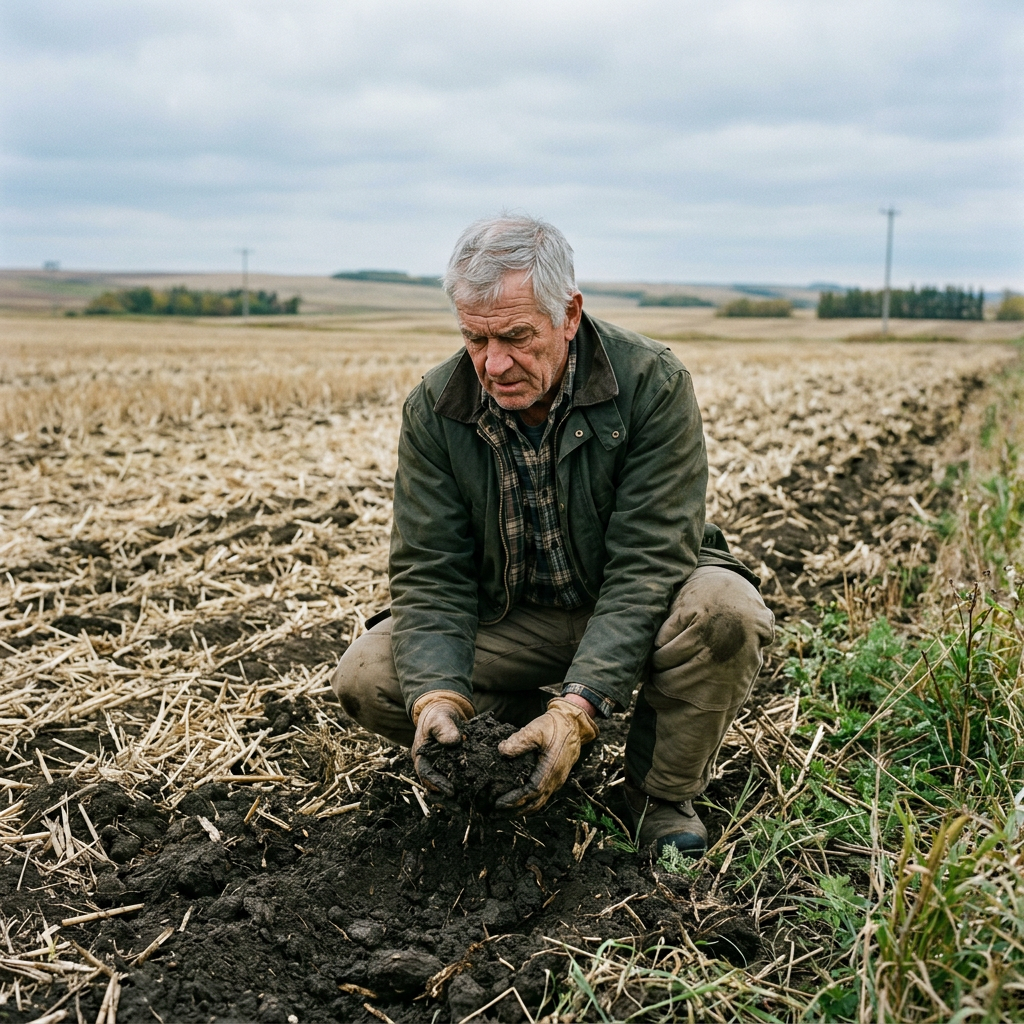
Not every soil problem is visible from the road. Compaction from heavy equipment, nutrient depletion from aggressive cropping, and erosion from inadequate residue management can all occur gradually over a lease term without obvious surface indicators. Landowners who are not actively farming the land themselves need mechanisms to monitor soil condition. Annual or biannual soil health assessments written into the lease give the landowner visibility without requiring constant field visits.
The signs of soil degradation on rented farmland often include declining yields reported by the tenant, visible water ponding in previously well-drained areas, exposed subsoil in field margins, and increasing weed pressure from compacted or depleted ground. When these indicators appear mid-lease, having a soil clause in the agreement gives the landowner standing to require corrective action. Without that clause, the conversation becomes a dispute rather than a contractual obligation. Platforms like Land4Rent streamline the lease creation process with customizable agreements that can incorporate soil management provisions, giving landowners a practical starting point for these important details.
Proactive landowners often pair lease-based soil protections with periodic conversations with their tenants about field performance. These check-ins, combined with proven soil management practices, help both parties stay aligned and prevent small issues from escalating into costly end-of-lease disagreements. The strongest landlord-tenant relationships in Canadian agriculture are built on shared accountability for the land itself.
Conclusion
Soil health is not a side note in a farmland lease; it is the foundation that determines whether the arrangement works for both parties over the long term. Landowners who establish baseline soil tests, include specific management clauses, and build in monitoring mechanisms protect the productivity and value of their most important asset. Tenants who engage with these expectations signal their commitment to responsible farming and position themselves as preferred renters in future negotiations. The conversation about soil belongs at the very start of every lease discussion, not as an afterthought once the damage is already done.
Start listing your farmland or browsing available parcels on Land4Rent to connect with verified tenants and landowners who take soil stewardship seriously.
Frequently Asked Questions (FAQs)
Why is soil health important in a farmland lease?
Soil health directly determines the land's productivity and long-term value, making it essential for both landowners and tenants to address before signing any lease agreement.
How can landlords protect soil quality when leasing farmland?
Landlords can require baseline and end-of-lease soil testing, include crop rotation requirements, and add specific clauses restricting practices known to cause degradation.
What soil clauses should be in a farm lease agreement?
Effective clauses typically address minimum crop rotation standards, residue management requirements, cover crop expectations, and mandatory soil testing at the beginning and end of the lease term.
How does soil degradation affect farmland lease value?
Degraded soil produces lower yields, which reduces tenant demand and weakens the rental rates a landowner can achieve in future lease cycles.
What are the best practices for soil management during a farm lease?
Maintaining diverse crop rotations, minimizing tillage where appropriate, managing crop residue, planting cover crops during fallow periods, and conducting regular soil tests are all considered standard best practices.

.png)


.svg)


.svg)