%20(1).svg)

.svg)

Introduction
A land lease agreement is only as strong as the details it contains, and in Canada's agricultural sector, missing clauses are surprisingly common. Landowners and farmers routinely sign farm lease agreements that seem sufficient on the surface but fail to address the scenarios that matter most: what happens when soil is degraded, who controls subleasing, or how disputes get resolved without going to court. These gaps do not just create uncertainty, they create liability. The clauses most often overlooked are also the ones that become the most expensive to negotiate after the fact.
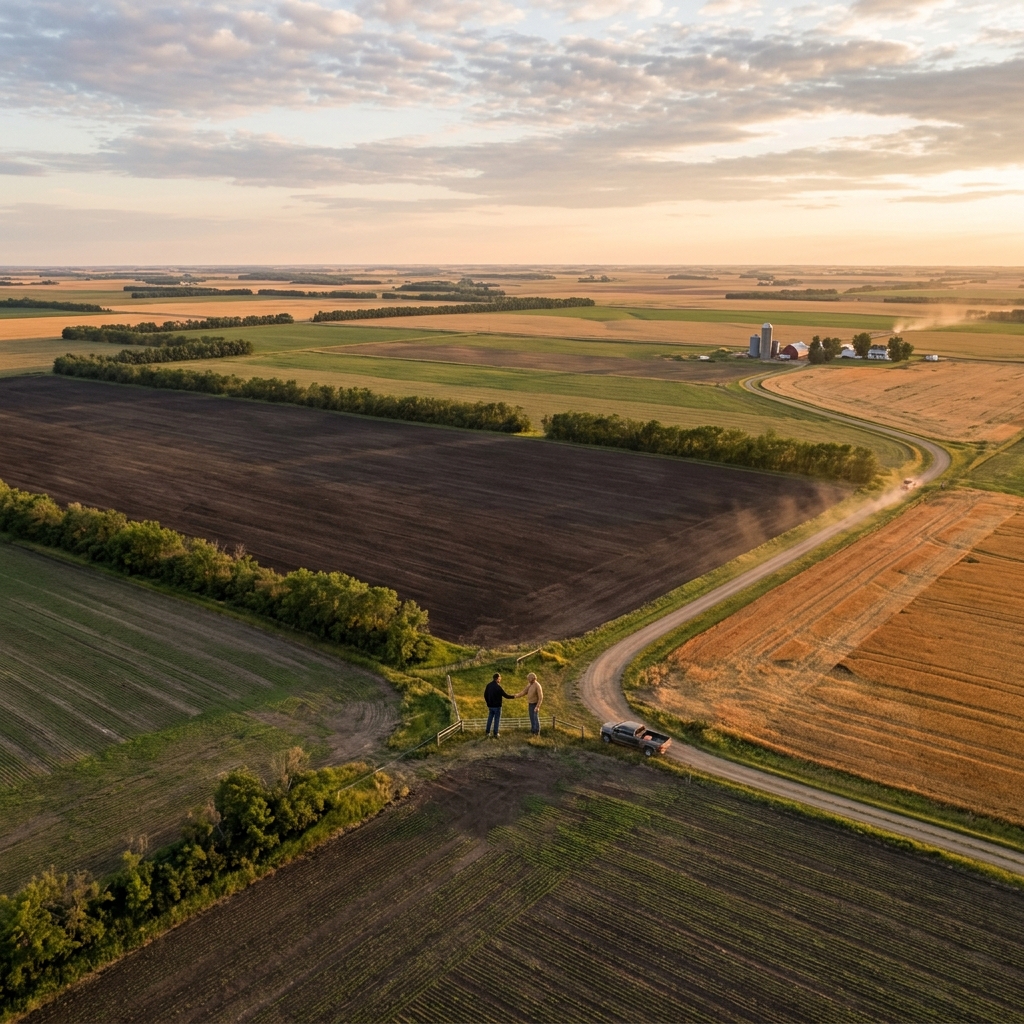
What Farm Leases Routinely Leave Out
Most agricultural land lease templates are built around the basics: rent amount, payment schedule, and the names of both parties. That foundation matters, but it rarely reflects the operational complexity of a working farm. Soil management obligations, access rights, permitted land use, and end-of-term conditions are the clauses that determine whether a lease actually protects either party, and they are the ones most likely to be missing or vaguely worded.
Soil Health and Land Stewardship Responsibilities
Soil degradation is one of the most financially damaging outcomes a landowner can face, yet many farm lease agreements never mention it. Without explicit language around tillage practices, crop rotation requirements, chemical application limits, and erosion control, a tenant farmer has no contractual obligation to maintain the land's productive capacity. When the lease ends, the landowner may inherit compacted soil, depleted nutrients, or drainage problems with no legal basis for recourse. A well-drafted lease should specify exactly what stewardship standards the tenant must meet and how compliance is documented, with guidance from resources like soil management duties for farmland tenants providing a useful benchmark.
- Crop rotation requirements: specify which crops may or may not be grown in consecutive seasons to protect soil biology
- Tillage restrictions: outline acceptable tillage methods, particularly where soil structure or water retention is a concern
- Chemical and fertilizer limits: define acceptable inputs to prevent over-application that depletes long-term fertility
- Erosion control obligations: require specific practices such as cover cropping or buffer strips where applicable
- End-of-term soil assessment: establish a baseline inspection at lease start and a final assessment at exit to document any changes
Subletting and Assignment Restrictions
A landowner who assumes the tenant farming their land is the same person every season may be surprised to discover the operation has been partially or fully subleased to a third party. Without a clear prohibition or approval process written into the farm lease agreement, tenants in most Canadian provinces retain more flexibility than landowners realize. The lease should explicitly state whether subletting is permitted, under what conditions it may be approved, and what consequences apply if it occurs without consent. This protects the landowner's ability to vet who is actually working the land and limits liability exposure from unknown operators.
Terms That Determine Long-Term Stability
Beyond soil and subleasing, a long-term land lease agreement needs to address what happens at the end of a lease term, how rent adjusts over time, and what rights each party holds if circumstances change. These provisions are frequently either absent or written so vaguely that they are unenforceable when tested.
Renewal Clauses and Right of First Refusal
Lease renewal terms are among the most commonly disputed areas in Canadian farm leases. Without a clearly defined renewal process, tenants who have invested in improving drainage, fencing, or irrigation on leased land have no guaranteed path to continue farming it. Equally, landowners without a right-of-refusal clause may find a tenant assumes automatic renewal when none was intended. A solid agricultural land lease should specify the notice period required for renewal or non-renewal, whether a right of first refusal applies, how the rental rate is recalculated at renewal, and whether any tenant improvements affect future lease terms.
For farmland in provinces like Alberta, where land values have shifted significantly, rent adjustment mechanisms tied to market indices or CPI protect both parties from stale pricing. Reviewing the FCC's land rental agreement guidance during drafting can help landowners structure renewal terms that reflect current market conditions.
Permitted Use and Infrastructure Clauses
A land lease contract that says "for agricultural purposes" without further definition leaves both parties exposed. Farmers need clarity on whether they can erect seasonal structures, install grain bins, or run livestock on cropping land. Landowners need to know whether a tenant can make physical changes to the property without approval and who owns those improvements at lease end. The permitted use section should go beyond broad categories and define the specific activities, structures, and modifications that are acceptable, as well as the process for requesting exceptions. This is especially relevant for farm lease agreements that span mixed-use parcels where some portions may have different zoning or conservation restrictions.
Protecting Both Parties When Things Go Wrong
Even the best-managed leases encounter problems. Crops fail, payment disputes arise, relationships break down, or land changes ownership mid-term. A lease that does not account for these scenarios forces both parties into expensive, time-consuming processes that could have been prevented with a few well-drafted clauses.
Dispute Resolution Processes
Most land lease agreements skip directly from the main terms to the signature block without establishing any process for resolving disagreements. This means a rent dispute or a breach-of-stewardship claim immediately defaults to litigation, which is slow, costly, and disproportionate for many farm lease conflicts. A practical dispute resolution clause names a preferred method, whether mediation, arbitration, or a provincial agricultural dispute service like Alberta's Rural Dispute Resolution program, defines the timeline for raising and responding to grievances, and clarifies which party bears costs in different outcomes. Provinces like Manitoba and BC maintain resources specifically designed for farmland leasing disputes that can be referenced directly in the agreement.
Early Termination and Force Majeure Conditions
What happens if a landowner needs to sell mid-lease, or a tenant faces a catastrophic crop failure? Without early termination provisions, both scenarios can result in lengthy legal negotiations over compensation, notice requirements, and continuation rights. A farm lease agreement should define acceptable grounds for early termination by either party, the notice period required, any penalties or compensation owed, and how force majeure events such as drought, flooding, or disease outbreaks are handled. Referencing provincial agricultural lease guidance during drafting helps ensure these clauses align with local legislation and are enforceable when needed.
Insurance, Liability, and Tax Obligations
Liability language is another frequent omission in farm lease agreements, particularly around who carries insurance for equipment, structures, and third-party injury on leased land. The landowner's legal exposure does not automatically transfer to the tenant just because the land is leased, meaning a gap in the lease can leave both parties underprotected. Tax responsibilities for improvements and property-related costs should also be addressed explicitly, particularly in situations where capital upgrades increase assessed land value during the lease term. Clear allocation of these responsibilities from the start prevents disputes that often surface at renewal or exit.
Land4Rent addresses this drafting challenge directly by offering automated lease agreement generation, where landowners answer a structured set of questions that produce customized, legally grounded lease terms covering the clauses most agreements miss. This removes much of the guesswork for landowners who are not legal professionals but still need contracts that hold up under pressure. For farmers and landowners looking to understand what comprehensive farm lease agreements should include before signing, reviewing tenant soil responsibilities in farmland leases is a practical starting point for identifying gaps specific to land stewardship.
Conclusion
A land lease agreement that only covers the basics is not complete, it is a starting point with unaddressed risk. Soil stewardship, subletting restrictions, renewal terms, dispute resolution, early termination conditions, and liability allocation are the clauses that determine whether a lease genuinely protects both parties when circumstances change. Reviewing any existing or planned farm lease agreement against these specific gaps is the most practical step a landowner or farmer can take before signing. Working with platforms and resources built specifically for agricultural leasing, such as Land4Rent's farmland leasing tools, significantly reduces the chance of discovering a missing clause after a dispute has already started.
Ready to create a lease agreement that actually covers the details that matter? Visit Land4Rent to generate a customized, legally grounded farm lease agreement through their streamlined online platform.
Frequently Asked Questions (FAQs)
What should be included in a land lease agreement?
A complete land lease agreement should include the lease term, rent amount and payment schedule, permitted land use, soil stewardship obligations, subletting restrictions, renewal and termination conditions, insurance and liability allocation, and a dispute resolution process.
What makes a valid land lease contract?
A valid land lease contract requires mutual consent from both parties, clearly defined terms, an identified property, a stated rental amount, and proper signatures, with written documentation being strongly recommended over verbal arrangements in all Canadian provinces.
How long should a farm lease agreement be?
Farm lease agreement length varies by operation type, but agreements typically range from one to five years, with longer terms of ten or more years common when tenants are making significant capital investments in the land, such as drainage or irrigation infrastructure.
Is a verbal farm lease agreement binding?
In some Canadian provinces, a verbal farm lease agreement can be legally binding for short terms, but it is extremely difficult to enforce specific obligations, such as soil stewardship or subletting restrictions, without a written record that both parties have signed.
How do land lease agreements work in Ontario and Alberta?
In both Ontario and Alberta, land lease agreements are governed by provincial landlord and tenant legislation adapted for agricultural use, meaning lease terms, renewal rights, and dispute resolution processes may differ from standard residential leases and should be drafted with those provincial frameworks in mind.

.png)




.svg)


.svg)