%20(1).svg)

.svg)

Introduction
A land lease agreement is not just paperwork you file away after signing. It is the legal foundation that defines what each party can and cannot do with the land, what happens when things go wrong, and who bears the cost of any damage or dispute. Canadian landowners who treat a lease as a formality often discover, too late, that a vague or incomplete document leaves them exposed in ways they never anticipated. Understanding what a well-structured lease genuinely protects you from is not an academic exercise — it is one of the most financially consequential decisions you will make as a landowner or tenant farmer.
The Real Risks a Weak Lease Leaves Unaddressed
The Real Risks a Weak Lease Leaves Unaddressed
Most disputes between landowners and tenant farmers do not start with bad intentions. They start with ambiguity. When a lease fails to define responsibilities clearly, both parties fill in the blanks with their own assumptions, and those assumptions rarely match.
Land Degradation and Soil Damage
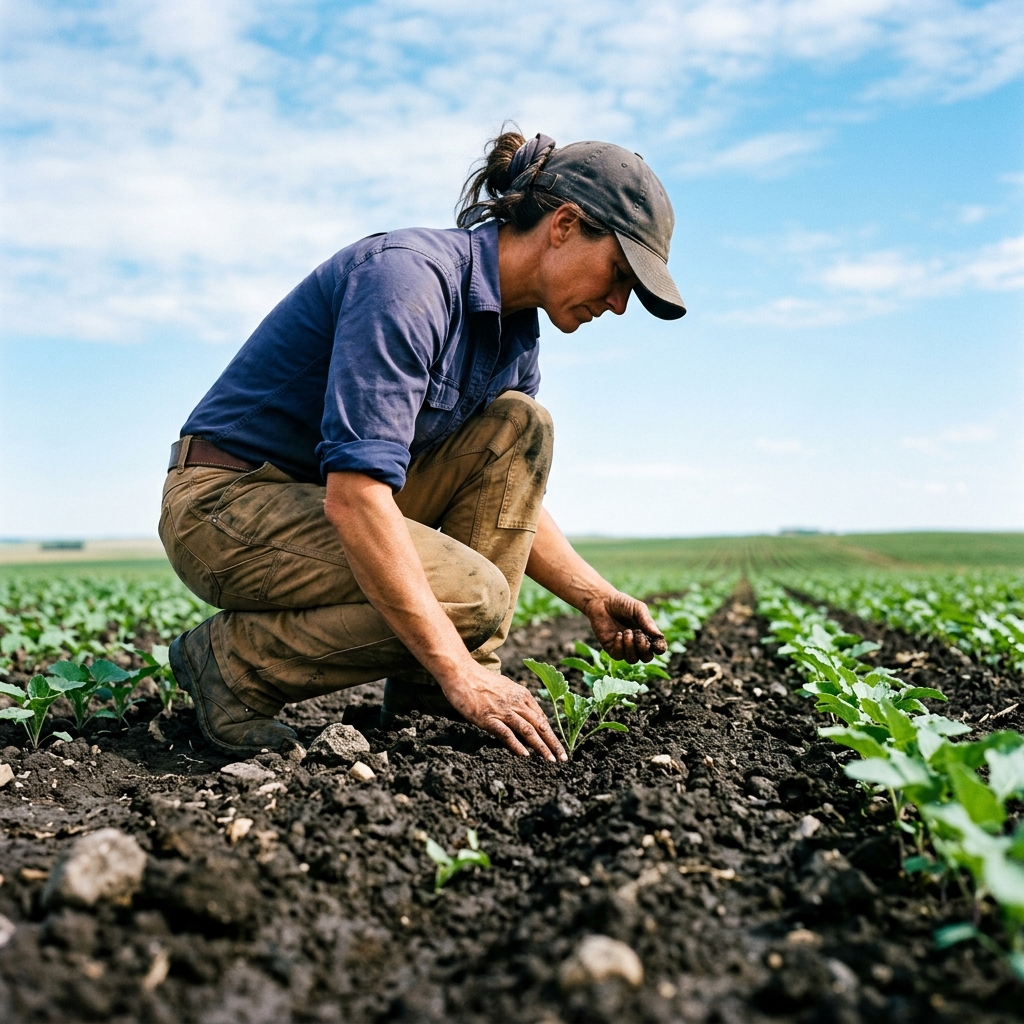
One of the most financially damaging outcomes of a poorly written lease is land degradation that goes unaddressed until the lease ends. Without explicit language covering tenant soil responsibilities, a farmer may over-apply fertilizer, strip the land through intensive cropping, or fail to manage drainage, leaving the landowner with costly remediation work and reduced land value.
- Soil testing requirements: A strong lease specifies baseline and exit soil tests so any degradation is documented and attributable.
- Crop rotation clauses: Preventing monoculture practices that deplete nutrients and increase erosion risk over time.
- Chemical application limits: Restricting the types and volumes of pesticides or herbicides that can be applied without written approval.
- Drainage and surface water obligations: Clarifying who maintains tile drains, ditches, and waterways to prevent flooding or erosion damage.
Unauthorized Use and Land Access
A landowner's rights to control what happens on their property do not disappear once a lease is signed, but they do depend heavily on what the lease actually says. Without precise language about permitted uses, a tenant could sublease portions of the land, allow third-party equipment on site, store non-agricultural materials, or make structural changes to fencing and outbuildings. A strong farmland lease agreement Canada specifies permitted activities explicitly, leaving no room for interpretation.
Clauses That Distinguish a Strong Lease from a Generic One
Clauses That Distinguish a Strong Lease from a Generic One
Not all leases are created equal. The difference between a generic template and a legally binding farm lease agreement often comes down to a handful of critical clauses that are routinely omitted from standard forms.
Payment Terms and Default Consequences
Rent amount, payment schedule, accepted payment methods, and late payment penalties should all be spelled out clearly in the key terms of any lease. Vague language like "rent due at harvest" creates room for disputes that are difficult to resolve without litigation. A strong lease defines the exact date rent is due, the grace period if any, the penalty rate for late payments, and the conditions under which the landowner may pursue default proceedings. This protects both parties from a breakdown in the financial relationship.
Lease Renewal, Termination, and Notice Requirements
One of the most frequently contested areas in short term farm lease vs long term farm lease situations is what happens at the end of the lease term. Without clear notice requirements, a tenant may assume the lease auto-renews while the landowner has already made other plans. A strong lease specifies the notice period required by each party, the conditions under which the lease can be terminated early, and any right of first refusal the tenant may or may not hold for renewal. This prevents costly overlap scenarios and protects the landowner's ability to re-market the property on their own timeline.
Liability, Insurance, and Indemnification
If a tenant's employee is injured on the property, or if a chemical spill contaminates a neighboring field, who is liable? A lease that does not address insurance obligations and indemnification clauses leaves the landowner financially exposed. A farm lease agreement that holds up in court requires the tenant to carry adequate liability insurance, names the landowner as an additional insured where appropriate, and clearly assigns responsibility for environmental incidents and third-party claims. These provisions are not boilerplate — they are shields against potentially ruinous costs.
Regional Considerations Across Canadian Provinces
Regional Considerations Across Canadian Provinces
Canadian farmland leasing is not governed by a single national framework. Essential lease sections vary in their legal weight depending on which province the land sits in, and assuming that a lease drafted for one province is equally valid in another is a common and costly mistake.
Ontario and Saskatchewan: Different Rules, Different Risks
A farm lease agreement Ontario operates under a different legislative backdrop than a land lease agreement Saskatchewan, particularly regarding tenant protections, notice periods, and dispute resolution processes. In Ontario, the guidelines for drafting a farm lease from the provincial government provide a useful starting reference, but they do not replace professional legal input tailored to your specific situation. Saskatchewan's approach to farmland tenure has its own nuances, especially for multi-year arrangements and Crown land considerations. A lease that accounts for local legislation is far more enforceable than one that does not.
Customization Over Templates
A customized lease agreement farmland is not a luxury — it is a practical necessity. Generic templates often miss province-specific requirements around notice periods, permitted land use categories, and subletting restrictions. Land4Rent addresses this through its automated lease generation system, where landowners answer a targeted set of questions and receive a customized, legally binding lease document rather than a one-size-fits-all form. This approach closes the gaps that generic templates routinely leave open.
How Proper Lease Language Prevents Costly Disputes
Disputes between landowners and tenant farmers can escalate quickly, particularly when the issue involves land condition, unpaid rent, or unauthorized modifications. What often determines the outcome is not who is right in principle, but what the lease actually says.
Documentation and Enforceability
A well-drafted lease creates a paper trail that protects both parties if the relationship deteriorates. Consistent farmland leasing practices — including written amendments, signed acknowledgments of lease terms, and documented inspections — reduce the likelihood of a dispute reaching arbitration or court. If it does reach that stage, a detailed lease with clear language about obligations and consequences is far more likely to produce a fair resolution than a vague agreement that leaves everything open to interpretation.
Protecting the Farmer's Interests Too
A strong lease is not only a tool for landowners. Tenant farmers benefit equally from precise language that secures their right to work the land undisturbed, protects any improvements they have made, and guarantees reasonable notice before any lease changes. Leasing farmland on clearly defined terms gives farmers the confidence to invest in the land and plan multi-season operations, knowing their tenure is protected. The Alberta government's farmland leasing resources are a useful reference for understanding how tenant rights are structured in that province specifically.
Conclusion
Conclusion
A strong land lease agreement is a financial asset in its own right. It prevents land degradation, closes liability gaps, defines payment consequences, and protects both parties from the kind of ambiguity that turns manageable disagreements into expensive legal disputes. Cutting corners on lease language is not a time-saving decision — it is a risk transfer, and the risk lands squarely on whoever holds the less protected position. Whether you are leasing farmland for the first time or reviewing an existing arrangement, the quality of your lease document deserves the same attention as the quality of the land itself. The Farm Credit Canada guide on structuring farm leases provides additional grounding for anyone building or reviewing their approach. Platforms like Land4Rent's legal contracts resource hub offer practical tools and guidance to help landowners and farmers move from a generic document to one that actually does its job.
Ready to generate a customized, legally binding farmland lease? Visit Land4Rent and protect your land, your investment, and your peace of mind.
Frequently Asked Questions (FAQs)
What should be included in a lease agreement?
A complete lease agreement should include rent amount and payment terms, permitted land uses, soil management obligations, insurance requirements, lease duration and renewal conditions, and clear termination and notice provisions.
Is a farm lease agreement legally binding in Canada?
Yes, a farm lease agreement is legally binding in Canada provided it meets the standard requirements of contract law, including offer, acceptance, consideration, and the signatures of both parties.
What are the rights of a tenant in a farm lease?
A tenant in a farm lease generally has the right to quiet enjoyment of the land, reasonable notice before lease termination, protection of any approved improvements, and access to the land for the full duration of the agreed term.
How long is a typical farm lease agreement?
Farm leases in Canada most commonly run for one to five years, though multi-year arrangements of ten years or more are used when tenants are making significant infrastructure investments or when long-term land management planning is a priority.
What is the difference between a commercial lease and a farm lease?
A farm lease is specifically designed for agricultural land use and typically includes clauses around soil health, crop management, environmental stewardship, and seasonal payment schedules that are not found in standard commercial lease agreements.



.svg)


.svg)