%20(1).svg)

.svg)

Introduction
Most disputes in farm lease agreements do not stem from disagreements over rental rates. They stem from ambiguity about who handles what on the land. Operational responsibilities, including soil management, input costs, equipment use, and maintenance obligations, are frequently assumed rather than written down. When both a landowner and a tenant farmer operate on different assumptions for an entire growing season, the financial consequences can be significant. Across Ontario and the Prairie provinces, the gap between a productive farmland rental agreement and a problematic one almost always comes down to how clearly those operational duties are defined at the outset.
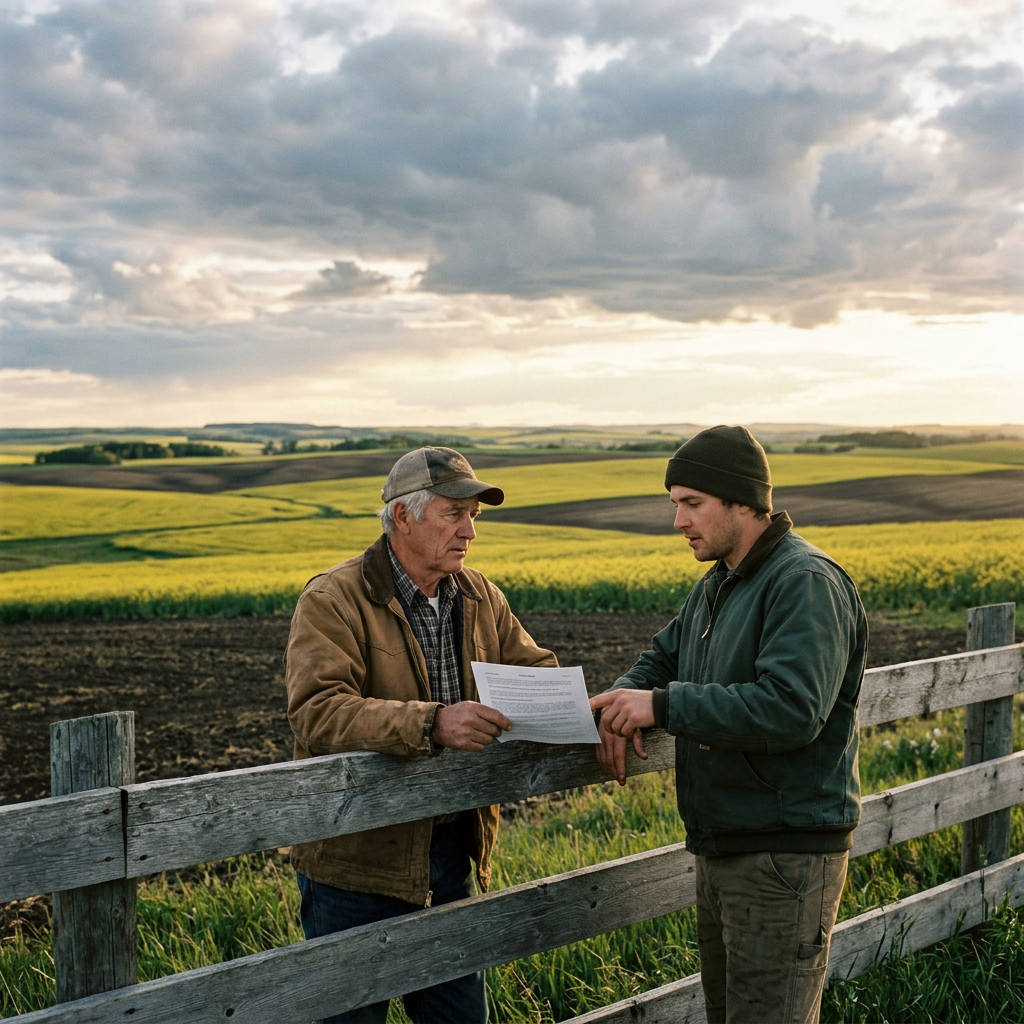
Why Operational Clarity Is the Foundation of a Strong Farm Lease
A farm lease contract is more than a financial transaction. It is an operating agreement that governs how a piece of land will be used, maintained, and returned. When the document only addresses rent and term length, it leaves the most important day-to-day decisions open to interpretation, and interpretation is where conflict begins.
Common Gaps That Lead to Costly Disputes
Lease disputes rarely start with dramatic disagreements. They build slowly as small operational ambiguities accumulate over months or years. Knowing where these gaps typically appear helps both parties address critical details before they become problems.
Soil management duties: Without specifying who is responsible for soil testing, fertility programs, or erosion control, tenants may skip costly but necessary conservation practices.
Input cost allocation: Seed, fertilizer, and herbicide costs are often assumed to fall entirely on the tenant, but flexible farm lease structures may split these differently.
Equipment and infrastructure maintenance: Fences, drainage tile, access roads, and bins degrade over time, and silence in the lease about who repairs what creates friction.
Crop rotation and land-use restrictions: Landowners who want to protect long-term soil health need explicit terms governing what can and cannot be planted season to season.
Insurance and liability: Insurance coverage responsibilities for property damage, environmental incidents, or third-party injuries are often overlooked entirely.
The Financial Impact of Undefined Responsibilities
When operational duties are left vague, the financial fallout extends well beyond a single disagreement. A tenant who neglects soil fertility because the lease does not require it can reduce the productive capacity of the land for years, which directly affects the landowner's rental income and long-term returns. Research across Prairie markets consistently shows that land with documented soil degradation commands lower rental rates at renewal, sometimes by 10 to 15 percent compared to well-maintained parcels in the same region.
On the tenant side, unclear terms around infrastructure maintenance can result in unexpected costs mid-season. A farmer who assumes the landowner will repair drainage tile, only to discover otherwise after spring flooding damages a crop, faces losses that no handshake agreement can recover. These are precisely the scenarios that a well-structured agriculture lease agreement prevents.
Building Operational Responsibilities Into Your Lease
Defining operational responsibilities does not require legal jargon or a 50-page document. It requires specificity. The goal is to assign every recurring decision and cost to one party or the other, in writing, so that the farming operation runs without ambiguity throughout the entire lease term.
Key Clauses That Protect Both Parties
A reliable farm lease agreement template should address operational responsibilities across several core areas. Soil stewardship is arguably the most important. Clauses should specify minimum soil testing frequency, required conservation practices, and any restrictions on tillage intensity. Agriculture Canada's soil management guidelines provide a useful benchmark for establishing these expectations.
Input cost responsibilities deserve equal attention, particularly where lease structures vary. Under a cash rent lease agreement, the tenant typically bears all input costs in exchange for keeping all crop revenue. Under a crop share arrangement, costs and revenue are split according to negotiated percentages. The distinction matters enormously. A Saskatchewan farm lease contract structured as crop share requires far more detailed operational clauses than a straightforward cash rent arrangement, because every agronomic decision affects both parties' bottom lines. Provincial resources like Manitoba's crop share lease guidelines offer templates that spell out these shared responsibilities clearly.
Matching Lease Structure to Operational Reality
The best farm lease terms reflect the actual farming operation, not a generic template pulled from the internet. A landowner leasing irrigated land in southern Alberta faces a completely different set of operational questions than one leasing dryland acres in southeastern Saskatchewan. Water management, energy costs for pumping, and equipment access all need to be addressed specifically. Similarly, farmland lease arrangements in Ontario often involve soil management duties tied to provincial conservation strategies, which may not apply in the same way to Prairie operations.
This is where the choice between a farm lease vs crop share lease becomes more than a financial decision. It becomes an operational one. Crop share leases require ongoing communication and joint decision-making throughout the growing season. Cash rent leases give the tenant more autonomy but place the full burden of operational risk on their shoulders. Neither structure is inherently better. The right choice depends on how involved the landowner wants to be and how much operational flexibility the tenant needs. What matters is that the lease document reflects whichever structure is chosen with specific, enforceable terms.
Platforms like Land4Rent address this challenge directly by generating customized lease agreements based on the specific details of each arrangement. Rather than starting from a blank page, landowners answer targeted questions about their property and expectations, and the platform produces a document with operational responsibilities already built in. This approach reduces the risk of missing critical clauses that a generic template might overlook.
Negotiating and Reviewing Operational Terms
Writing operational clauses into a lease is the first step. Negotiating them effectively and reviewing them at appropriate intervals is what keeps the agreement functional over multiple seasons.
How to Approach the Conversation
Negotiating operational responsibilities in a farm rental agreement works best when both parties come to the table with specific expectations rather than vague goodwill. Landowners should arrive with a clear understanding of what land condition they expect at lease end, what conservation practices they require, and what infrastructure they are willing to maintain. Tenants should be prepared to outline their planned crop rotation, their equipment capabilities, and any operational constraints they foresee.
The negotiation does not need to be adversarial. In fact, the most productive leasing relationships start when expectations are defined early. When both sides understand exactly what they are agreeing to, the lease becomes a collaborative framework rather than a source of tension. It also simplifies renewal discussions because there is an objective baseline to evaluate performance against.
Periodic Review and Lease Renewal
Operational realities change. Input prices shift, new agronomic practices emerge, and weather patterns force adaptation. A farmland rental agreement that worked perfectly three years ago may need adjustments. Building a review mechanism into the lease, such as an annual operational check-in or a formal review at each renewal period, keeps the document aligned with conditions on the ground.
For landowners managing multiple parcels, this review process is especially important. Tracking key terms in farm leases across different tenants and properties can become complex. Using a platform that centralizes lease generation, payment tracking, and documentation, as Land4Rent does, reduces the administrative burden and ensures consistency across agreements. When every lease follows a structured process, operational gaps are far less likely to slip through unnoticed.
Conclusion
Farm lease agreements deliver the best outcomes for landowners and tenants when operational responsibilities are defined with precision rather than left to assumption. From soil management and input costs to equipment maintenance and crop decisions, every recurring obligation belongs in writing. The lease structure, whether cash rent or crop share, determines which operational details need the most attention, but no structure works well without clarity. Canadian landowners and farmers who invest the time to negotiate and document these terms upfront protect their income, their land, and their working relationship for the long term.
Visit Land4Rent to generate a customized farm lease agreement that covers the operational details that matter most to your farmland and your bottom line.
Frequently Asked Questions (FAQs)
What operational responsibilities should be in a farm lease agreement?
A farm lease agreement should include clauses covering soil management, crop rotation restrictions, input cost allocation, infrastructure maintenance, insurance requirements, and any environmental compliance obligations relevant to the property.
What happens when operational duties are unclear in a farmland rental agreement?
Unclear operational duties typically lead to neglected maintenance, soil degradation, unexpected costs for one or both parties, and disputes that can result in early lease termination or legal action.
How is a cash rent lease different from a crop share lease?
A cash rent lease requires the tenant to pay a fixed rental amount and bear all operational costs and crop revenue risk, while a crop share lease splits both costs and revenue between the landowner and tenant according to agreed percentages.
How do you negotiate operational responsibilities in a farm rental agreement?
Both parties should arrive with specific expectations about land condition, conservation practices, crop plans, and maintenance duties, then negotiate each point individually before committing any terms to the written agreement.
Which farm lease agreement structure works best for Canadian landowners?
The best structure depends on the landowner's desired level of involvement and risk tolerance, with cash rent offering simplicity and predictable income while crop share provides potential upside tied to crop performance.


.png)



.svg)


.svg)