%20(1).svg)

.svg)

Introduction
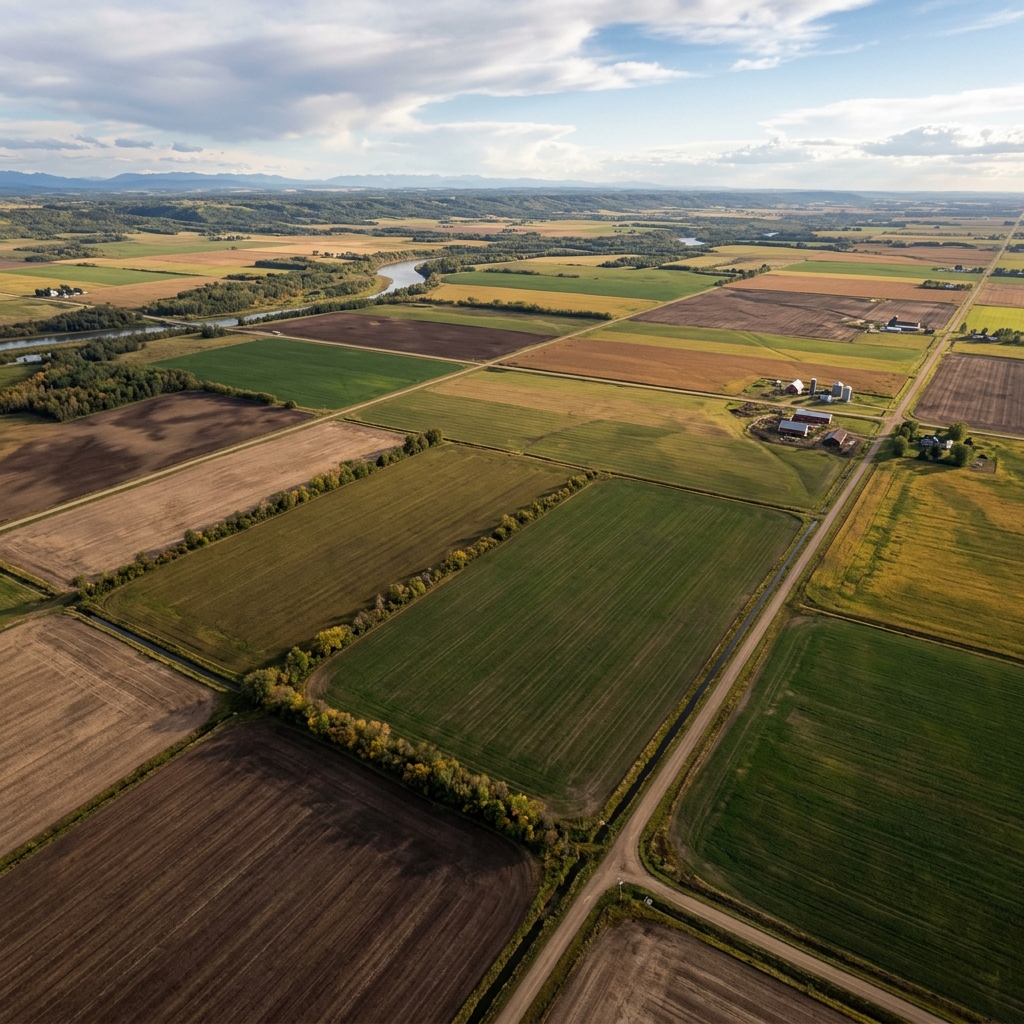
When landowners and farmers evaluate a farmland lease opportunity, location often dominates the conversation. Soil class, proximity to markets, regional commodity prices: these factors feel concrete and measurable. But in practice, the land lease terms embedded in a signed agreement carry more weight on long-term outcomes than the postal code of the parcel. A well-structured farmland lease agreement on average acreage can outperform a loosely written one on prime land, and the gap widens every year the lease runs.
Why the Location-First Assumption Falls Short
The instinct to prioritize location is understandable. Productive acres in southern Ontario or central Alberta carry obvious appeal, and regional comparables make it easy to anchor expectations to geography. But location is a fixed input. Once a lease is signed, neither party can change where the land sits. What both parties can shape, negotiate, and refine are the terms governing how the land is used, compensated for, and managed over time.
Location Sets the Ceiling, Terms Determine Whether You Reach It
Consider two scenarios: a high-productivity parcel leased under a vague, year-to-year handshake arrangement, and a mid-grade parcel secured under a structured five-year lease with clear rent escalation clauses, defined soil responsibilities, and a documented renewal process. The first arrangement might generate high income initially, but it exposes the landowner to annual uncertainty, tenant turnover, and deferred land maintenance. The second creates a predictable revenue stream and a motivated tenant who has reason to treat the land as a long-term asset. Over a ten-year horizon, the difference in realized outcomes is rarely about soil productivity ratings:
- Payment structure: Fixed cash rent, flexible cash rent, or crop share agreements each distribute risk differently and should reflect the parties' financial positions and risk tolerance.
- Lease duration: Multi-year leases with defined renewal terms give tenants the confidence to invest in the land and give landowners income stability that short-term arrangements cannot match.
- Soil and input obligations: Clauses that specify who is responsible for soil testing, tile maintenance, and input stewardship directly affect land value over time, regardless of starting soil quality.
- Escalation provisions: Rent adjustment mechanisms tied to crop prices or regional benchmarks protect landowners against inflation without requiring a full renegotiation every season.
- Dispute resolution language: Clear mediation or arbitration pathways reduce the risk that a disagreement over a drainage issue or crop damage claim escalates into a costly legal dispute.
The Risk of Assuming Location Does the Work
Landowners who assume that strong land quality attracts responsible tenants and takes care of itself often skip the drafting work that protects that value. The result is agreements that fail in small details, not big ones: a missing termination notice period, no language covering weed control obligations, or a renewal clause that defaults to month-to-month without either party noticing. These gaps are rarely discovered until something goes wrong, and by then the cost of fixing them is measured in legal fees, damaged land, or lost tenants. According to Farm Credit Canada, farmland rental agreements that lack written terms consistently generate more disputes and less predictable income than documented agreements, regardless of land quality.
The Lease Clauses That Actually Drive Outcomes
Breaking down what separates high-performing leases from problematic ones comes down to a handful of specific clause categories. Each one addresses a real operational tension in the landlord-tenant relationship, and each one is fully within the drafting parties' control.
Payment Structure and Rent Adjustment Mechanisms
The payment structure choice in a farmland rental agreement, Canada-wide, is one of the most consequential drafting decisions either party will make. Fixed cash rent offers simplicity and income certainty for the landowner, but it transfers all commodity price risk to the tenant and can create friction in years of poor harvest. Flexible cash rent, where a base rate adjusts upward or downward based on crop yield or commodity prices, distributes that risk more equitably and tends to support longer, more stable tenancies. A well-structured rent provision also includes an escalation clause tied to a transparent index, such as Statistics Canada's farmland rental rate data or regional benchmark surveys, so neither party needs to renegotiate from scratch each year. Without these mechanisms, even a lease on high-quality agricultural land in Alberta or Ontario can erode into an adversarial annual renegotiation that pushes good tenants out.
Tenant Responsibilities and Land Stewardship Clauses
Stewardship language is where many leases leave the most value on the table. A lease that is silent on soil testing frequency, tile drain maintenance, fertilizer application minimums, or weed and pest management essentially gives the tenant a blank slate. That blank slate may be filled responsibly or not, depending entirely on the individual farmer. Explicit clauses that define stewardship expectations in specific terms shift the relationship from hope to accountability. For example, requiring soil tests at the start and end of a lease term creates a documented baseline that protects both parties: the landowner has evidence of any degradation, and the tenant has evidence they maintained or improved soil health. The Ontario government's guidance on sustainable land rental recommends including explicit stewardship obligations as a standard component of any agricultural land lease, recognizing that land quality is a long-term asset that requires active protection.
Getting Lease Structure Right From the Start
The drafting stage is where most leasing outcomes are determined. Errors, omissions, and vague language written into a lease in year one can generate compounding problems across a five or ten-year tenancy. Approaching lease structure with the same diligence given to crop planning or equipment purchasing pays measurable dividends.
Renewal, Termination, and Transition Provisions
Renewal clauses are among the most overlooked components in a land lease negotiation, and among the most consequential. A lease that automatically renews without notice requirements puts both parties in an ambiguous position each fall. A lease with a clearly defined renewal window, say 90 days' written notice before expiry, gives the landowner time to re-evaluate terms and the tenant time to make planting decisions without uncertainty. Termination provisions deserve equal attention: under what conditions can either party exit the agreement early, and what notice period applies? Leases that omit termination language often default to provincial legislation, which may not reflect either party's actual intentions. Understanding how lease term requirements differ across Canadian provinces is essential before finalizing any agreement, since provincial rules on notice periods and renewal default conditions vary considerably between Ontario, Alberta, Saskatchewan, and Manitoba.
Dispute Resolution and Liability Allocation
No lease survives contact with reality perfectly intact. Drainage disputes, crop damage claims, access disagreements, and boundary questions arise in even the most cooperative tenancies. The difference between a dispute that resolves quickly and one that ends in litigation often comes down to whether the lease contains a clear dispute resolution pathway. A tiered approach works well in practice: direct negotiation first, followed by a named mediator or mediation service, with binding arbitration as a backstop. Defining dispute expectations early in the agreement signals good faith on both sides and removes the ambiguity that turns minor disagreements into major conflicts. Liability allocation clauses, particularly around equipment damage, chemical drift, and environmental compliance, are equally important and should be reviewed by an agricultural lawyer before execution. Resources like Farm Commons offer detailed guidance on structuring these provisions to protect both landowners and farming tenants.
Using Platforms and Tools to Strengthen Agreement Quality
Farmers and landowners working through Land4Rent benefit from a structured lease generation process that addresses many of these clause categories automatically, reducing the risk of accidental omissions. Beyond digital tools, conducting a thorough review of essential lease sections before signing remains non-negotiable. A checklist-driven review that covers payment terms, duration, stewardship, dispute resolution, and liability ensures that nothing critical is left to assumption. For leases covering significant acreage or long durations, independent legal review adds another layer of protection that the drafting process alone cannot guarantee.
Conclusion
Location influences what a parcel of farmland can produce, but land lease terms determine what the parties actually receive from that potential. Landowners who invest in drafting rigorous lease agreements, with clear payment structures, defined stewardship obligations, workable renewal and termination clauses, and explicit dispute resolution pathways, protect their income and their land regardless of whether the acreage is in prime grain country or a mid-tier growing region. For farmers, negotiating these same provisions means the difference between a tenancy that supports long-term investment and one that creates annual uncertainty. The best agricultural land lease is not the one on the best land; it is the one with the best terms. Understanding what determines long-term leasing success starts with recognizing that agreements, not acreage, are where outcomes are made.
Ready to structure a farmland lease that protects your interests from day one? Explore Land4Rent's lease tools and verified listings to get started.
Frequently Asked Questions (FAQs)
What are land lease terms, and why do they matter?
Land lease terms are the contractual provisions that govern how farmland is used, compensated for, and managed throughout a tenancy, and they directly determine income stability, land stewardship quality, and the ease of resolving disputes between parties.
How do lease terms affect farmland outcomes over time?
Lease terms shape nearly every operational outcome in a tenancy, from how rent adjusts with commodity prices to who bears responsibility for soil degradation, meaning a well-drafted agreement can generate stronger long-term returns than a vague one on higher-quality land.
What makes a good farmland lease agreement?
A strong farmland lease agreement clearly defines payment structure, lease duration, renewal and termination conditions, tenant stewardship responsibilities, and a dispute resolution pathway, leaving as little as possible open to interpretation.
What land lease terms should farmers negotiate before signing?
Farmers should prioritize negotiating rent adjustment mechanisms, multi-year lease duration with defined renewal windows, explicit clarity on who is responsible for inputs and land maintenance, and a fair termination notice period that aligns with seasonal planting timelines.
How to review a land lease agreement in Canada?
Reviewing a Canadian land lease agreement effectively means working through a structured checklist that covers payment terms, duration, stewardship obligations, renewal and exit clauses, liability allocation, and dispute resolution, followed by independent legal review for any lease covering significant acreage or a multi-year term.

.png)



.svg)


.svg)