%20(1).svg)

.svg)

Introduction
Many Canadian landowners treat farmland rental income as a fixed number, something determined by location and left alone. But in practice, two parcels with nearly identical soil ratings in the same county can generate dramatically different returns depending on how they are priced, leased, and managed. The variables that drive land rental income are far more numerous and controllable than most owners realize. Understanding those variables is the first step toward making sure your land is actually earning what the market can support.
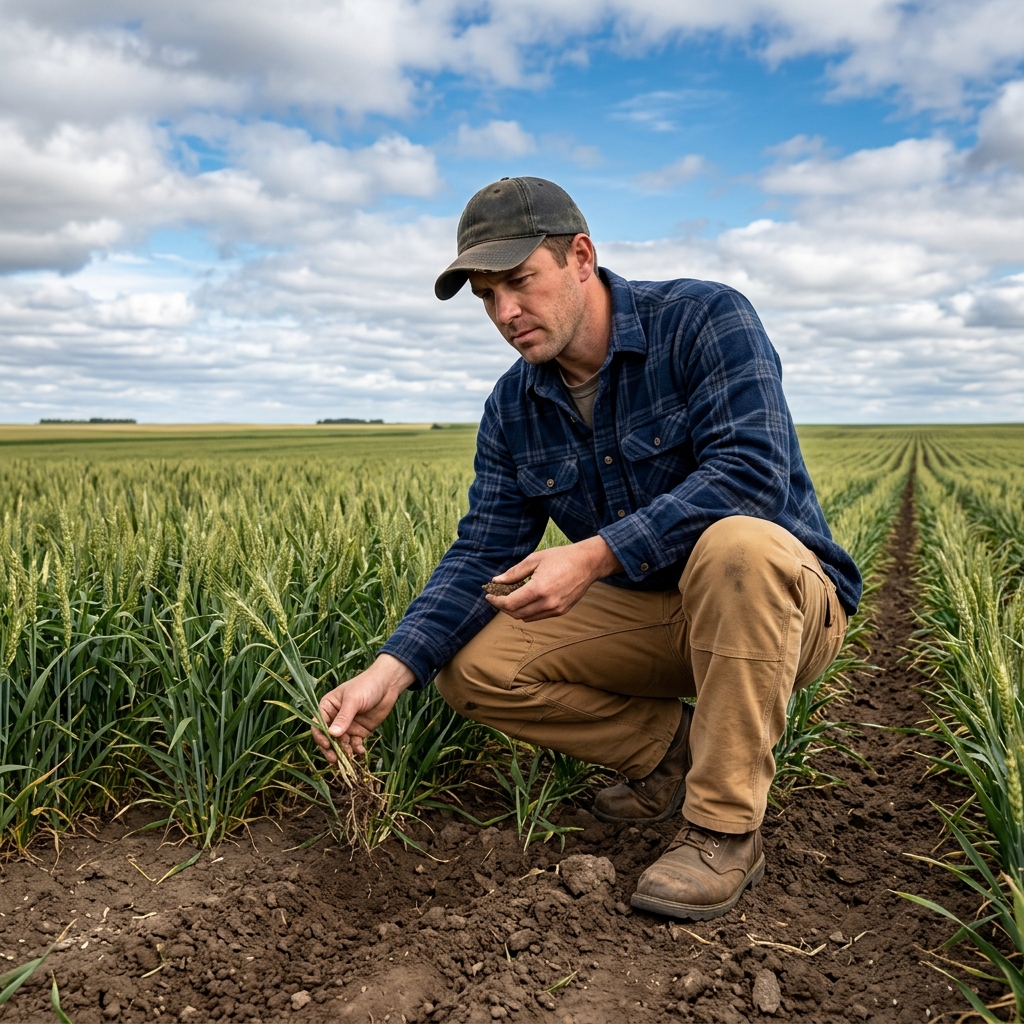
The Hidden Drivers of Farmland Rental Income
When owners think about what shapes their returns, they typically focus on soil class and location. Those factors matter, but they are largely fixed. The variables that actually shift income from year to year are the ones most owners overlook entirely.
How Lease Structure Shapes Your Annual Return
The structure of a lease agreement has a measurable impact on how much income a parcel generates. Lease term length, rent escalation clauses, and whether the rate is fixed or tied to commodity prices all play a role in determining your actual return over time. Many owners sign long-term agreements for the sake of simplicity and end up locked into below-market rates when land values rise.
- Fixed-rate multi-year leases: Provide predictability but may lag behind rising farmland rental market rates Canada if not reviewed regularly.
- Short-term or annual leases: Allow rate adjustments to reflect current demand but can introduce tenant uncertainty.
- Flex or crop-share leases: Tie returns to commodity performance, which can mean higher upside in strong years.
- Escalation clauses: Built-in annual increases protect income without requiring renegotiation each cycle.
- Renewal terms: Automatic renewals without rate reviews are one of the most common reasons owners underperform the market.
The Difference Between Negotiated and Competitive Rates
Private negotiation between a landowner and a single tenant tends to anchor the final rate to what the tenant is willing to offer, not what the market will actually bear. Farmland rental auctions change that dynamic entirely. When multiple verified farmers bid competitively on the same parcel, the rate reflects genuine market demand rather than one party's negotiating position. The difference in outcomes between these two approaches can be substantial, especially in high-demand regions where qualified tenants are actively looking for additional acreage.
Regional Demand and Provincial Income Gaps
Canada's agricultural land market is not uniform. Farmland rental income per acre Canada-wide can vary by a factor of three or more, depending on which province you are in, what crops the region supports, and how competitive the local tenant pool happens to be at any given time.
Ontario vs. Saskatchewan: A Study in Contrast
Saskatchewan farmland rental per acre rates have climbed steadily as grain demand and farmland values have risen across the prairies, but they still tend to sit below what prime farmland rental income Ontario parcels command. Ontario's shorter supply of available agricultural land, combined with higher land values and more intensive cropping systems, pushes competitive rental rates upward. Alberta sits between the two in many regions, with Alberta farmland leasing rates shaped by irrigation access, proximity to processing facilities, and livestock density in a given area. According to Statistics Canada agricultural data, regional variation in farmland rental rates across provinces has widened meaningfully over the past decade, reflecting uneven growth in tenant demand and land productivity.
How Tenant Quality Affects Long-Term Returns
A high rate from an unreliable tenant is not actually better income. Late payments, poor land stewardship, and disputes over lease terms all carry real costs that erode the headline rental figure. Accurate land data and verified tenant profiles help landowners avoid situations where chasing a marginally higher rate leads to a worse outcome overall. The quality of the tenant relationship is one of the most underrated factors in whether farmland rental income actually delivers on its potential.
Timing, Market Cycles, and What Owners Can Control
Farmland rental rates do not move in isolation. They respond to commodity prices, input costs, competition for land among expanding farm operations, and broader shifts in the agricultural economy. Owners who re-enter the market at the right time, with the right listing approach, consistently outperform those who simply renew existing arrangements by default.
Lease Timing and Renewal Windows
Listing land during a period of high commodity prices or strong regional demand will attract more competitive bids than listing during a downturn. Many owners miss this window because they are locked into automatic renewals or because they do not actively monitor what comparable parcels are renting for in their area. Understanding lease term trade-offs is essential to timing re-listings strategically. According to the Ontario Ministry of Agriculture, Food and Rural Affairs guidance, landowners benefit from regularly reviewing current rental benchmarks rather than relying on historical rates as a proxy for current value.
How Platforms Close the Information Gap
One of the most practical ways to maximize returns on farmland is simply to have better information than the next owner. Land4Rent uses a live auction model where verified farmers bid in real time, which means the rental rate reflects actual current demand rather than a landlord's estimate or a tenant's offer. That market signal is genuinely difficult to replicate through private channels, especially for owners who are not actively transacting on a regular basis. The platform also handles lease agreement generation and payment processing, which removes a significant amount of administrative friction that often causes owners to accept lower offers just to avoid the paperwork.
Selling vs. Leasing: The Income Comparison Most Owners Avoid
The question of selling vs. leasing farmland in Canada comes up whenever owners feel their returns are underwhelming. Selling offers a lump sum, but it permanently removes the income stream and the long-term appreciation potential of holding productive agricultural land. Farmland market trends in Canada have historically shown strong appreciation over multi-decade periods, which means leasing while retaining ownership often outperforms a sale when measured over a 20 to 30-year horizon. The real issue in most cases is not that leasing underperforms selling, but that the lease itself is structured or priced in a way that makes the comparison look worse than it should. According to Agriculture and Agri-Food Canada, Canadian farmland values have risen sharply over the past decade, reinforcing the long-term case for retaining ownership while optimizing lease returns.
Conclusion
Land rental income varies because of a layered set of factors that go well beyond soil quality or geography. Lease structure, tenant quality, regional demand, market timing, and the method used to set the rate all have a measurable impact on what a parcel actually earns in any given year. Owners who understand and actively manage these variables consistently outperform those who treat their rental income as a fixed assumption. If your current returns do not reflect what your land should be generating, the issue is almost certainly one of the controllable variables covered here. Review your lease terms, benchmark your rate against current market conditions, and consider whether your listing approach is capturing genuine competitive demand.
If you want to see what your land would earn through competitive bidding, list your parcel on Land4Rent and let verified farmers set the market rate.
Frequently Asked Questions (FAQs)
How much rental income can I earn from farmland in Canada?
Rental income varies widely depending on province, soil class, and lease structure, but Canadian landowners typically earn anywhere from $50 to over $300 per acre annually, depending on regional demand and how competitively the land is listed.
What factors cause land rental income to fluctuate?
The most significant factors include commodity price cycles, regional tenant competition, lease term length, whether rates are set through private negotiation or competitive bidding, and how frequently the rental rate is reviewed against current market benchmarks.
Is it profitable to rent out agricultural land in Canada?
Yes, renting out agricultural land in Canada can be highly profitable over the long term, particularly when the lease is structured correctly, the rate reflects current market demand, and the landowner retains ownership to benefit from ongoing land appreciation.
How do farmland rental rates compare across Ontario and Saskatchewan?
Ontario typically commands higher per-acre rental rates than Saskatchewan due to shorter land supply, higher land values, and more intensive cropping systems, though Saskatchewan rates have risen steadily alongside grain demand and expanding farm operations.
How do online farmland rental platforms help landowners earn more?
Online platforms that use competitive bidding replace private negotiation with market-driven pricing, ensuring rental rates reflect actual current demand from verified tenants rather than a single tenant's offer or an owner's estimate.

.png)



.svg)


.svg)