%20(1).svg)

.svg)

Introduction
A land lease agreement is the single most important document a Canadian landowner can have in place before a farmer sets foot on their property. Yet many agreements in use today are either too vague, pulled from outdated templates, or worse, purely verbal arrangements that offer little legal protection. When a multi-year lease goes sideways, a weak agreement is rarely fixable after the fact. Understanding what a strong farmland lease actually contains, and why each component matters, is the starting point for protecting your rental income over the long term.
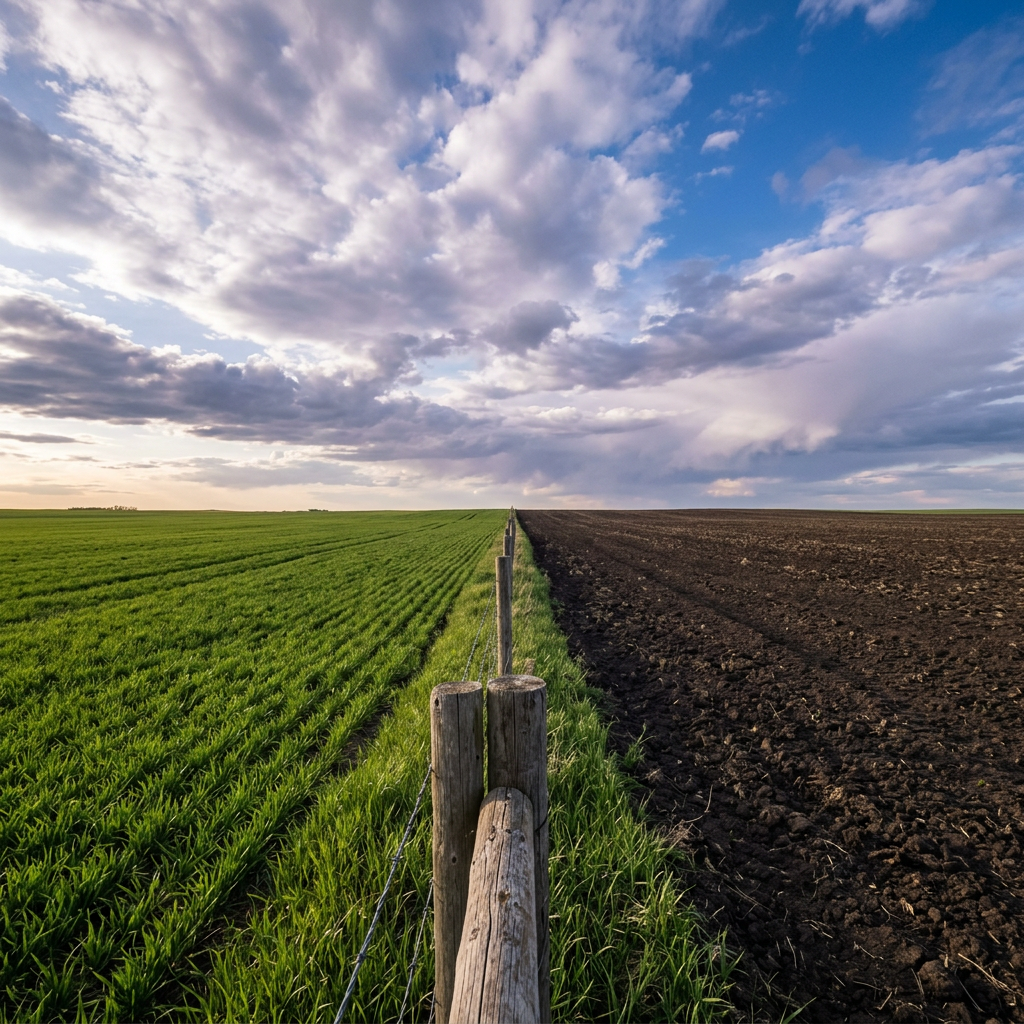
What Makes a Farmland Lease Agreement Legally Sound
A legally binding farm lease agreement is not simply a document that both parties sign. It is a carefully structured contract that anticipates realistic risks, defines each party's obligations, and establishes enforceable remedies if something goes wrong. The quality of the drafting determines whether a landowner is protected or exposed.
The Core Elements Every Lease Must Include
Before worrying about advanced clauses, landowners need to confirm that the foundational elements are present. Skipping any one of these creates a gap that a disputing tenant or a court can exploit. The essential sections of a farm lease agreement should always cover the following:
- Identified parties and legal land description: Full legal names and a proper land description tied to title, not just a municipal address.
- Payment terms and due dates: The per-acre rate, total annual amount, payment schedule, and consequences for late payment must be written explicitly.
- Lease term and renewal conditions: Start and end dates, any automatic renewal triggers, and the notice period required to terminate or renegotiate.
- Permitted land use: Which crops or activities are allowed, whether the tenant can sublet, and what conservation or maintenance obligations apply.
- Dispute resolution mechanism: Whether disagreements go to mediation, arbitration, or litigation, and which province's law governs the agreement.
Why Vague Language Costs Landowners Money
Terms like "fair condition" or "reasonable notice" seem harmless until they are the only language available when a dispute arises. Courts in Canada do not fill in the blanks in favour of landlords by default. If your lease does not specify that landowner rights include access for inspection or the right to recover costs for land degradation, those rights may not be enforceable. Precision in language is not about distrust. It is about removing ambiguity before it becomes expensive.
Cash Rent vs. Crop Share: Different Structures, Different Protections
Two lease structures dominate Canadian agricultural leasing, and each carries a distinct risk profile for landowners. Choosing the right one depends on your income goals, your tolerance for variability, and how much involvement you want in the farming operation.
Understanding Cash Rent Leases
A cash rent lease agreement for farmland pays the landowner a fixed amount per acre, regardless of what the crop yields or what the commodity markets do. This structure offers consistent farmland leasing income that is easy to plan around and simple to enforce. The predictability is the primary advantage, but it also means landowners do not benefit if the tenant has an exceptional year. Setting the right per-acre rate upfront, tied to current market benchmarks, becomes critical to making this structure worthwhile over a multi-year term.
Understanding Crop Share Leases
A crop share lease agreement ties the landowner's income to a percentage of the harvest, typically split somewhere between 20 and 35 percent of the crop depending on the region and what inputs the landowner contributes. In provinces like Saskatchewan and Alberta, this arrangement is still widely used for cereal and oilseed production. The upside is participation in strong yield years. The downside is income variability, plus the need for robust record-keeping and audit rights written directly into the lease to verify what was actually harvested. Without those audit provisions, a crop share agreement can be difficult to enforce.
Regional Considerations in Prairie Province Leasing
Farmland leasing is not uniform across Canada. Provincial legislation, local market norms, and common lease structures vary significantly between Alberta, Saskatchewan, and Manitoba. Landowners operating across provincial lines, or leasing in a province where they do not reside, need to be especially careful that their agreements reflect the correct legal jurisdiction.
Alberta and Saskatchewan Lease Specifics
A farm lease agreement in Alberta must account for provincial tenancy rules that govern notice periods and, in some cases, tenant rights to compensation for improvements made to the land. In Saskatchewan, farmland leasing responsibilities tied to provincial programs can affect how lease terms interact with eligibility requirements for certain grants. Landowners in both provinces benefit from having agreements reviewed against current provincial guidance before signing. The farmland rental agreement requirements in Saskatchewan are publicly available but often overlooked in privately drafted documents.
Renewal Clauses and Multi-Year Lease Risks
One of the most overlooked risks in long-term leasing is the automatic renewal clause. Many standard land lease agreement forms include renewal language that rolls the agreement forward unless written notice is given, sometimes 6 to 12 months before expiry. A landowner who misses that window can find themselves locked into another full lease term at a rate that no longer reflects current market values. Multi-year farm leases need explicit, calendar-tracked renewal notice requirements with clear consequences for missed deadlines on both sides.
Building Enforceable Protections Into Your Lease
A lease that cannot be enforced is not really a lease at all. The protective clauses that matter most are the ones that address what happens when things go wrong, not just when everything is running smoothly.
Early Termination and Default Provisions
The lease must define what constitutes a default, how much notice must be given, and what the landowner is entitled to recover if the tenant abandons the land or stops paying rent. An agricultural land lease agreement that holds up in court will specify remedies with enough detail that neither party is left guessing. Vague termination language is one of the most common reasons lease disputes escalate into lengthy legal proceedings.
Land Use Restrictions and Soil Health Clauses
Long-term rental income depends on the land retaining its productive value. Lease agreements should include explicit restrictions on practices that degrade soil health, such as repeated monoculture cropping without rotation, unauthorized tile drain alterations, or the application of restricted pesticides. Including a baseline land condition report at the start of the lease, referenced directly in the agreement, gives the landowner a measurable standard to enforce at the end of the term. Platforms like Land4Rent generate customized lease terms that can incorporate these protections through a structured question-and-answer process, removing the guesswork from clause selection.
Modernizing How Leases Are Created and Managed
The way farmland leases are created has changed significantly with the shift toward leasing farmland online. Drafting a lease no longer requires starting from a generic paper template or hiring a lawyer for every new tenant arrangement. Digital platforms have made it possible to generate structured, customized farmland lease agreements that reflect current provincial requirements, specific land use conditions, and the correct lease type for the arrangement. The key is ensuring the platform generating the lease is built around Canadian agricultural law and not a generic rental framework. Land4Rent's lease generation tool is purpose-built for this context, with legal contracts tailored to Canadian farmland leasing rather than adapted from residential or commercial property templates.
Conclusion
A well-structured land lease agreement is the difference between predictable rental income and years of exposure to disputes, income gaps, and land degradation. The core protective elements, precise payment terms, permitted use clauses, enforceable renewal conditions, and clear default remedies, are not optional extras. They are the baseline. Understanding how structured farmland leasing works across different provinces, and how the lease type affects your risk profile, gives landowners the foundation they need to make informed decisions before signing anything. Whether you are reviewing an existing agreement or setting up a new one, the time to strengthen your lease is before the lease term begins, not after a problem surfaces.
Ready to generate a legally sound, customized farmland lease agreement? Visit Land4Rent to get started with a complete end-to-end leasing solution built for Canadian landowners.
Frequently Asked Questions (FAQs)
What should be included in a farmland lease agreement?
A farmland lease agreement should include the legal land description, full names of both parties, payment terms, permitted land use, lease duration, renewal conditions, and a dispute resolution clause.
Is a verbal farm lease agreement legally binding in Canada?
While verbal agreements can carry some legal weight in Canada, they are extremely difficult to enforce and leave both landowners and tenants without clear documentation of the agreed-upon terms.
What is the difference between a cash rent lease and a crop share lease?
A cash rent lease pays the landowner a fixed per-acre amount regardless of crop yield, while a crop share lease ties the landowner's income to a percentage of the actual harvest produced by the tenant.
Can a landowner terminate a farm lease early?
A landowner can typically terminate a farm lease early only if the tenant has breached specific terms outlined in the agreement, provided the required notice is given as specified in the lease and applicable provincial legislation.
What are the different types of farm lease agreements in Canada?
The most common types of farm lease agreements in Canada include fixed cash rent leases, crop share leases, flexible rent leases tied to commodity prices, and custom farming arrangements where the landowner retains more operational control.


.png)


.svg)


.svg)