%20(1).svg)

.svg)

Introduction
When Canadian landowners set a farmland lease rate, soil quality is usually the first number they reach for. It feels logical: better soil, higher rent. But this single-factor approach consistently leads to mispricing, either leaving money on the table or pricing good tenants out of the conversation. A fair market lease rate for farmland is shaped by a constellation of variables, and understanding all of them gives landowners a significant competitive and financial advantage.
The Variables That Drive Farmland Lease Rate Decisions
Soil productivity scores provide a starting point, but the market does not stop there. Farmers bidding on a parcel are evaluating the full operational picture, and the rate they are willing to pay reflects that entire picture, not just a single index number.
Infrastructure and Proximity to Market
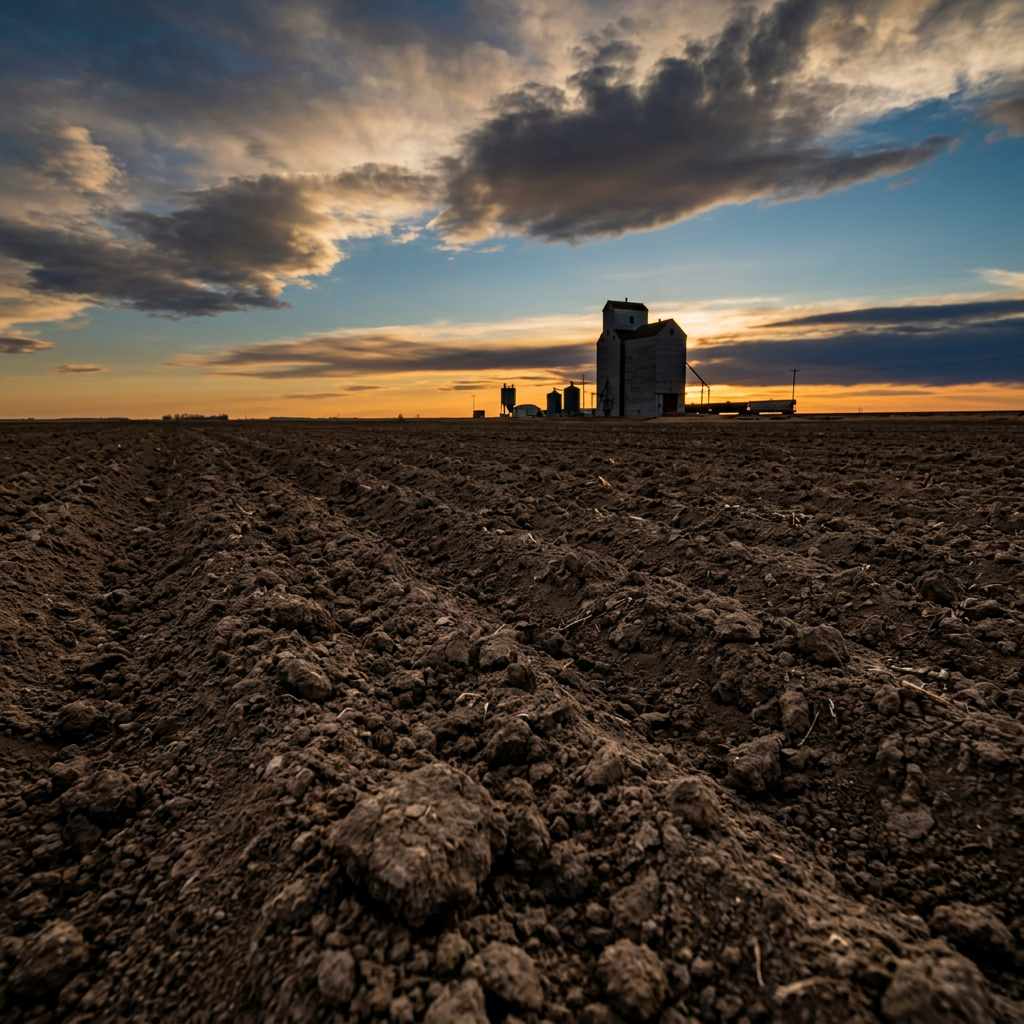
One of the most underappreciated drivers of competitive farmland rental pricing is a parcel's proximity to grain handling infrastructure. A quarter section sitting five kilometers from a major grain elevator will attract meaningfully higher bids than an equivalent parcel located forty kilometers away, even if soil classifications are identical. Fuel, time, and logistics costs are real line items in a farmer's operating budget, and they translate directly into what any tenant is willing to pay.
- Grain elevator proximity: Closer access to handling facilities reduces haulage costs and increases profitability for the tenant, supporting higher rents.
- Road access and field shape: Land that accommodates large modern equipment efficiently is worth more in practice than awkwardly shaped or poorly accessed parcels.
- Drainage infrastructure: Tiled or well-drained land reduces crop risk, making it more attractive and commanding a corresponding premium.
- Power and water availability: For parcels with livestock or irrigation potential, utility access adds tangible value beyond crop production alone.
- Population and tenant density: In areas with high farmer-to-land ratios, demand pressure itself pushes rates upward regardless of soil classification.
Historical Land Use and Parcel Condition
A field with a documented history of responsible agronomy, consistent yields, and no chemical contamination issues carries real value. Farmers know that soil quality can be degraded by poor cropping practices, and they factor the agronomic track record of a parcel into what they are willing to pay. Parcels with detailed, verifiable production history tend to attract stronger bids from tenants who want certainty over risk.
Lease Structure Has a Direct Impact on Rate
The terms of a lease agreement shape the rate as much as the land itself. How risk is distributed between landlord and tenant, how long the lease runs, and how payments are structured all influence what a tenant considers a fair number.
Cash Rent vs. Crop Share Arrangements
The cash rent vs crop share lease comparison is a fundamental consideration for any landowner. Cash rent provides a predictable, guaranteed income regardless of yield or commodity prices. Crop share arrangements tie the landlord's return to production outcomes, which can outperform in strong commodity years but introduce significant income variability. Neither structure is universally superior; the right choice depends on the landowner's risk tolerance, the tenant's financial position, and local market norms. According to Statistics Canada's agricultural census data, cash rent agreements have become increasingly dominant across the Prairies, reflecting both tenant preferences and the desire for planning certainty.
Lease Term Length and Rate Stability
A multi-year lease typically commands a modest discount relative to what a single-year auction might generate, because the tenant gains security and the landowner accepts reduced flexibility. Fixed lease rate vs auction-based farmland rental decisions hinge on this trade-off. Short-term leases allow landowners to reprice at market intervals, which is particularly valuable when farmland rental rate trends in Canada are moving upward, as they have been across much of Alberta and Saskatchewan over the past several years.
Regional Variation Across the Prairies
The farmland lease rate in Saskatchewan does not look the same as the farmland lease rate in Alberta per acre, even for parcels with similar soil ratings. Provincial grain markets, input cost environments, land scarcity, and local tenant competition all create material differences in what the market will bear from region to region.
Why Province-Level Benchmarks Can Mislead
Provincial averages for farmland rental rates by province in Canada are useful as a broad orientation, but they can obscure significant within-province variation. A parcel in the dark brown soil zone of central Saskatchewan may rent for a figure that is dramatically different from what a similar soil-class parcel in the northwestern part of the province commands, simply because of local demand dynamics, available acreage, and proximity to processing infrastructure. Relying on a provincial benchmark to set your rate is roughly as reliable as using a city-wide average to price a specific house. The Alberta government's farm business management resources reinforce this point, noting that localised factors consistently outweigh broad averages in lease rate determination.
Competitive Bidding as a Market Signal
The most accurate way to discover what a specific parcel is actually worth in the current market is to let qualified tenants compete for it. Farmland rental auctions accomplish exactly this: they aggregate the knowledge, budgets, and priorities of multiple bidders into a single transparent outcome. The resulting rate reflects genuine demand, not one party's estimate of what the other party might accept. This is why the gap between privately negotiated rates and auction-derived rates can be substantial, especially in areas with strong tenant demand. Online farmland auctions have made this kind of transparent price discovery accessible even in rural markets where in-person competition was previously limited.
How Landowners Can Capture the True Value of Their Land
Understanding the variables that shape a rate is only useful if it leads to a better leasing strategy. Landowners who bring a complete picture of their parcel to the market, including infrastructure access, drainage, agronomic history, and lease structure options, are better positioned to attract serious tenants and achieve rates that reflect real value.
Presenting Your Parcel Accurately and Completely
Incomplete listings attract cautious bids. Tenants who cannot assess a parcel fully will price in uncertainty as a discount. Accurate land data paired with transparent parcel history removes that discount and invites more confident bids. Landowners who document field conditions, soil test results, equipment access, and historical yields consistently see stronger market responses than those who list parcels with minimal detail. According to Agriculture and Agri-Food Canada, transparent leasing arrangements benefit both parties and contribute to longer-term tenancy stability.
Using the Right Platform to Surface Market Demand
Passive income from farmland depends on pricing the asset correctly, and pricing correctly depends on exposing it to real competition. Land4Rent's auction-based model connects verified landowners with verified tenant farmers, letting competitive bidding surface the rate the market actually supports. Because the platform handles everything from listing through to lease agreements across Canada and secure payment processing, the operational overhead for landowners is minimal while the pricing outcome is market-driven.
Conclusion
Soil quality matters, but it is one input in a multi-variable equation that experienced farmers evaluate every time they consider a lease. Landowners who understand the full range of factors, from infrastructure and drainage to lease structure and regional demand, are equipped to price their parcels accurately and attract the tenants best positioned to work the land well. The alternative, anchoring to soil scores alone, is a reliable path to underpricing or mismatched expectations. If you want the market to tell you what your land is genuinely worth, the smartest move is to put it in front of verified, motivated tenants and let the bids speak for themselves.
List your parcel on Land4Rent and let competitive bidding surface the rate your land actually deserves.
Frequently Asked Questions (FAQs)
What factors affect farmland rental rates?
Beyond soil quality, farmland rental rates are shaped by proximity to grain handling infrastructure, drainage condition, historical land use, regional tenant demand, lease term length, and the structure of the lease agreement itself.
Why are farmland lease rates increasing in Canada?
Rising commodity prices, increased competition for available acreage, limited new farmland supply, and strong export demand have collectively driven agricultural land lease rates upward across most Canadian provinces over the past several years.
How is a farmland lease rate calculated?
A fair market lease rate for farmland is typically calculated by weighing soil productivity, comparable rental transactions in the area, infrastructure access, parcel condition, and the competitive dynamics of current tenant demand in that specific region.
Cash rent vs crop share lease: which offers a better rate?
Cash rent provides predictable income and is generally preferred by landowners seeking income stability, while crop share arrangements can generate higher returns in strong commodity markets but introduce yield and price risk into the landlord's income.
How do online farmland rental auctions determine lease rates?
Online farmland rental auctions determine lease rates through competitive bidding among verified tenant farmers, where each bid reflects the bidder's full operational assessment of the parcel, producing a market-derived rate rather than a privately negotiated estimate.

.png)



.svg)


.svg)