%20(1).svg)

.svg)

Introduction
Agricultural land value in Canada has climbed steadily over the past decade, and the forces behind that trajectory extend well beyond soil quality or farm size. Commodity prices, interest rate cycles, inflationary pressures, export market dynamics, and regional supply constraints all converge to determine what an acre of farmland is worth and how much demand exists in the leasing market. For landowners evaluating rental returns and farmers weighing where to expand operations, these economic variables are not abstract concepts. They directly shape lease negotiations, bidding activity, and long-term investment outcomes. Understanding how each factor moves farmland prices across provinces like Ontario, Saskatchewan, and Alberta gives both parties a sharper edge when the next leasing season arrives.

Macroeconomic Forces Driving Farmland Market Value
Farmland does not exist in an economic vacuum. The price of every acre listed for sale or lease is tethered to larger forces moving through national and global markets. While local conditions like drainage infrastructure and road access matter at the parcel level, the macro picture sets the baseline for what buyers and tenants are willing to pay. Two of the most influential macro drivers are commodity prices and interest rates, each capable of shifting farm property values by significant margins within a single year.
Commodity Prices and Their Ripple Effect on Land Values
When grain, oilseed, or livestock prices rise, the revenue potential of every cultivated acre rises with them. Higher commodity returns increase what a farmer can justify spending on rent or a purchase, pushing farmland lease rates and sale prices upward in tandem. The reverse is equally true: a sustained drop in canola or wheat prices compresses margins, and tenant demand softens as operators become more conservative about taking on additional acreage.
Direct revenue linkage: Higher crop prices translate directly into higher net returns per acre, increasing what tenants bid at lease time
Speculative effect: Rising commodity cycles attract investor capital into farmland, increasing competition for available parcels
Input cost offset: Commodity gains can be partially eroded by rising fertilizer, fuel, and seed costs, tempering the land value increase
Lagged response: Land values often respond to commodity trends with a 12 to 18 month delay, as farm rent trends take time to reflect changed economics
Interest Rates and the Cost of Capital
Interest rates represent the other half of the macro equation. When borrowing costs are low, farmers can finance land purchases with smaller debt-servicing burdens, which pushes purchase prices higher and makes leasing a comparatively less urgent path to acreage expansion. Conversely, rising rates increase the cost of carrying debt on land, cooling the purchase market and often redirecting demand toward leasing instead. The relationship between interest rates and agricultural markets is well documented across Prairie provinces, where debt-financed expansion is common among mid-size operations.
The Bank of Canada's rate decisions ripple through farmland markets with particular force because agriculture is capital-intensive. A 200 basis point shift in borrowing costs can move the breakeven calculation on a land purchase by tens of thousands of dollars, making the rent-versus-buy decision highly sensitive to monetary policy. This is one reason renting versus buying farmland in Canada remains one of the most actively debated strategic questions among producers.
Regional Dynamics and Supply-Side Constraints
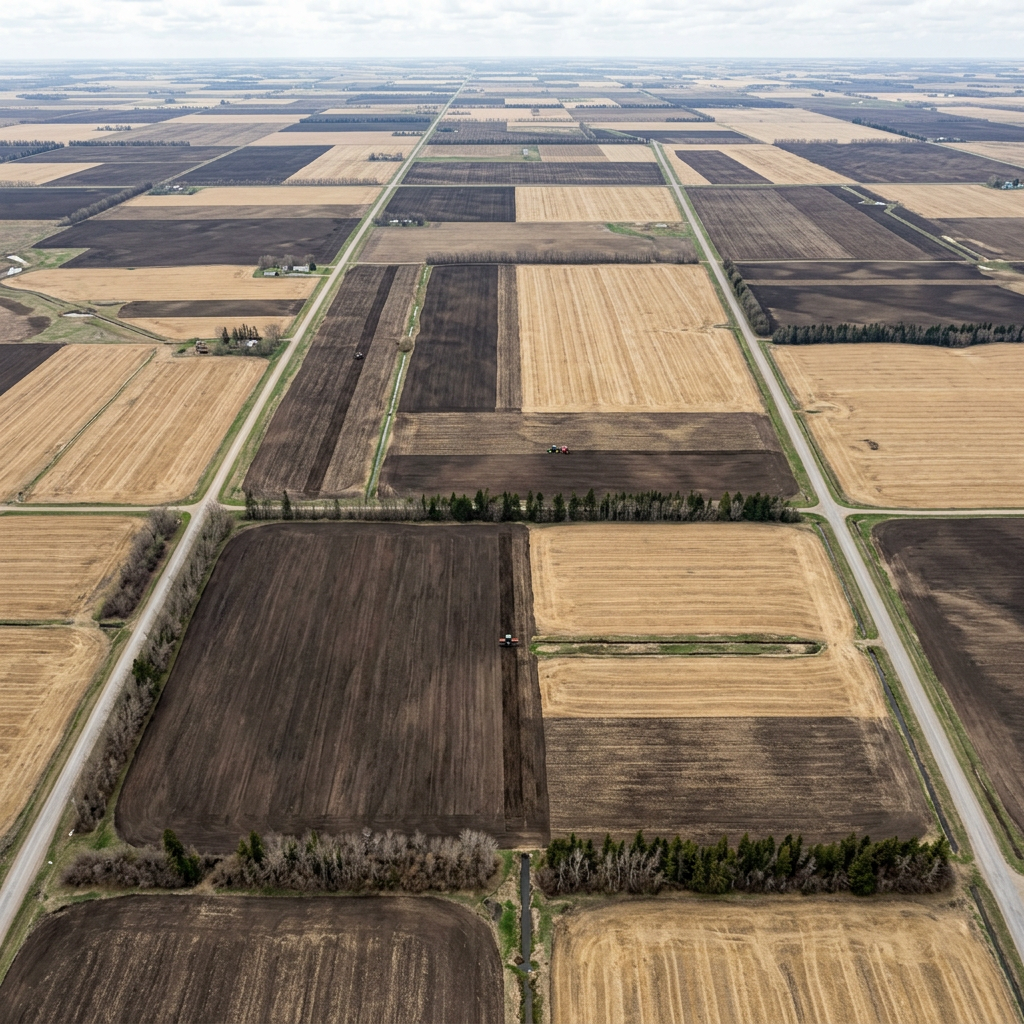
National averages for Canadian farmland pricing tell only part of the story. The real action happens at the provincial and even sub-regional level, where supply constraints, land use policies, and local agricultural economies create dramatically different conditions for both buyers and renters. A quarter section in southwestern Ontario carries a fundamentally different value profile than one near Saskatoon, and the reasons go deeper than just crop type.
Provincial Variation in Farmland Prices
Ontario consistently ranks among the highest-priced provinces for agricultural land, driven by proximity to urban markets, strong horticultural demand, and intense competition from non-agricultural land uses like residential development. Agricultural land value in Ontario reflects not just farming potential but also the scarcity premium created by the Greenbelt and other land protection policies that limit new supply. Meanwhile, Saskatchewan agricultural land value has been climbing rapidly from a lower base, fueled by large-scale grain and pulse operations that benefit from economies of scale.
Alberta presents its own distinct picture. Alberta pasture land prices remain lower per acre than cropland in either Ontario or Saskatchewan, but rangeland demand is influenced by cattle market cycles and the province's energy sector employment, which can pull labour away from agriculture. The FCC farmland values report highlights how regional variation continues to widen as different provincial economies respond to global pressures in different ways. This farmland pricing comparison by region underscores why national benchmarks can be misleading for landowners pricing a lease.
Supply Scarcity and Urban Encroachment
Canada is not running out of land in an absolute sense, but the supply of productive, accessible agricultural acreage near infrastructure and markets is tightening. Urban sprawl around major centres like Toronto, Calgary, and Vancouver permanently removes farmland from production, concentrating demand onto the remaining parcels. This supply squeeze is one of the most reliable long-term supports for farmland values, and it directly affects lease demand because fewer available acres mean more competition among tenants for what remains.
Zoning restrictions, agricultural land reserves, and environmental protections further limit the conversion of non-agricultural land into production. While these policies protect the farming base, they also create a structural floor under land prices that insulates farmland from the kind of sharp corrections seen in other real estate markets. For investors evaluating whether farmland is a good long-term hold, this supply-side constraint is one of the strongest arguments in favor of the asset class.
Inflation, Export Demand, and the Outlook for Lease Activity
Beyond interest rates and commodity cycles, two additional forces shape how farmland values and rental demand evolve over time: inflation and international trade. Both have played outsized roles in the Canadian agricultural economy over the past five years, and both continue to influence how landowners and tenants approach leasing decisions heading into 2026 and beyond.
Inflation as a Structural Support for Farmland
Farmland has historically performed well during inflationary periods because the asset is tied to food production, a sector with inherently inelastic demand. When consumer prices rise, food prices tend to follow, which supports crop revenues and by extension supports what tenants are willing to pay in rent. Unlike financial assets that can lose real value during inflation, productive land retains its purchasing power because its output is a basic necessity. This dynamic has made farmland a popular hedge for investors seeking long-term land investment strategies that preserve capital.
However, inflation also raises operating costs for farmers. Fertilizer, equipment, labour, and transportation all become more expensive, which can erode the margin available for rent payments even as crop prices climb. The net effect on lease demand depends on whether revenue gains outpace cost increases, a calculation that varies by crop type, region, and management efficiency. Landowners who track these cost pressures alongside revenue trends are better positioned to set farmland lease rates that attract committed tenants without leaving money on the table.
Export Markets and Global Food Demand
Canada is a major agricultural exporter, and global trade dynamics exert significant influence on domestic farmland values. When international demand for Canadian wheat, canola, lentils, or beef is strong, farm gate prices rise and lease demand follows. Trade agreements, tariff disputes, and currency fluctuations all play into this equation. The OECD-FAO agricultural outlook projects continued growth in global food demand through 2034, driven by population growth in Asia and Africa, which bodes well for Canadian producers with exportable commodities.
For the leasing market specifically, strong export conditions create a competitive environment where farmers are willing to bid more aggressively for productive acreage. Land4Rent captures this dynamic through its live auction system, where real-time bidding reflects the actual market appetite for land in specific regions. When export conditions are favorable, auction activity tends to increase, and winning bids move higher. Platforms that surface this kind of transparent price discovery help both landowners and farmers make decisions grounded in current market conditions rather than outdated assumptions.
Conclusion
Agricultural land value and lease demand in Canada are shaped by a layered set of economic forces that operate at global, national, and regional scales simultaneously. Commodity prices, interest rate environments, inflationary trends, export market conditions, and provincial supply constraints each contribute to the pricing landscape that landowners and farmers navigate every leasing season. Staying informed about these drivers is not optional for anyone serious about optimizing their position in the farmland market. Whether the goal is maximizing rental income, securing productive acreage at a fair rate, or evaluating farmland as a long-term investment, grounding decisions in economic fundamentals produces consistently better outcomes.
Explore Land4Rent to access competitive lease auctions and transparent farmland rental pricing across Canada.
Frequently Asked Questions (FAQs)
What factors affect agricultural land value?
Agricultural land value is influenced by commodity prices, interest rates, soil productivity, regional supply constraints, proximity to markets, and broader economic conditions like inflation and export demand.
How are farmland prices determined?
Farmland prices are determined by a combination of comparable sales data, productive capacity of the soil, local market demand, and macroeconomic factors such as borrowing costs and crop revenue projections.
Why do farmland prices vary by region?
Regional variation results from differences in crop suitability, proximity to urban markets, provincial land use policies, infrastructure access, and the intensity of competition from non-agricultural buyers.
How does inflation affect farmland lease demand in Canada?
Inflation tends to support lease demand by driving food prices and crop revenues higher, though rising input costs can partially offset those gains and compress the margin available for rent payments.
Which Canadian province has the highest agricultural land value?
Ontario consistently reports the highest per-acre farmland values in Canada, driven by urban proximity, horticultural demand, and strict land use protections that limit available supply.


.png)



.svg)


.svg)