%20(1).svg)

.svg)

Introduction
Owning farmland in Canada can be a reliable source of income, but only when the right management decisions are in place long before a lease is signed. Farmland management is not a passive exercise. Every choice, from selecting tenants to structuring payment terms, compounds over the years and either protects or quietly erodes the value of the land. For landowners and agricultural asset managers across Alberta, Manitoba, and beyond, understanding which decisions drive sustained leasing outcomes is the difference between a profitable asset and a neglected one. The challenge is that most of the damage from poor management decisions is invisible until rental income starts declining or land quality deteriorates beyond easy repair.

The Pre-Lease Decisions That Set the Foundation
Long before a tenant steps foot on your property, the groundwork for a successful lease is already being laid. The choices made during tenant selection, pricing strategy, and lease design determine whether your farmland leasing arrangement will generate stable returns or create friction that costs you money year after year. Treating these early decisions as formalities rather than strategic priorities is one of the most common mistakes landowners make.
Choosing the Right Tenant and Pricing Structure
Tenant selection is arguably the single most consequential decision in the entire leasing process. A reliable, experienced farmer protects soil health, maintains drainage infrastructure, and pays on time. A poor-fit tenant, even one willing to pay a premium, can cause damage that takes years to reverse. Knowing how to verify farmland tenants through reference checks, farming history, and equipment assessments should be standard practice.
Farming experience: Tenants with documented crop rotation and soil management history are far less likely to deplete your land's productivity
Financial reliability: Reviewing a prospective tenant's payment history and credit standing reduces the risk of missed or late rental payments
Equipment and capacity: A farmer whose operation matches your parcel size avoids the overuse or underuse that causes inefficiency and wear
Local reputation: Talking to neighboring landowners and local ag retailers often reveals more about a tenant than any formal application
Transparent farmland pricing is equally critical. Overpricing drives away qualified tenants, while underpricing leaves money on the table and can signal to the market that the land has issues. Competitive bidding systems, where farmland values are shaped by real demand, offer a more accurate read on what the market will bear than private negotiations alone.
Structuring Farm Lease Terms That Protect Both Parties
The lease agreement is the legal backbone of every farmland rental relationship. Yet many landowners in Canada still rely on verbal agreements or one-page templates that fail to address soil conservation obligations, payment schedules, or dispute resolution. A strong farmland rental agreement should specify crop rotation requirements, drainage maintenance responsibilities, chemical application restrictions, and clear timelines for payment. Without these specifics, disagreements become inevitable, and the landowner almost always bears the financial consequences.
Farm lease terms should also address what happens at the end of the arrangement. Who is responsible for weed management in the final year? What condition should the land be returned to? Lease agreements fail in small details, so addressing these questions upfront prevents costly disputes when a tenant exits. Provincial resources, including the Manitoba government's contracts and leases guidance, provide helpful frameworks for landowners who want to build comprehensive agreements.
Ongoing Management That Sustains Leasing Returns
Signing a strong lease is only the beginning. Agricultural land management requires active oversight during the lease period to ensure the land retains its productive capacity and the tenant upholds their commitments. Landowners who adopt a "sign and forget" approach often discover problems only when they become expensive to fix. Consistent monitoring, structured payment collection, and periodic communication with tenants are the ongoing habits that separate thriving leasing operations from underperforming ones.
Monitoring Soil Health and Land Stewardship
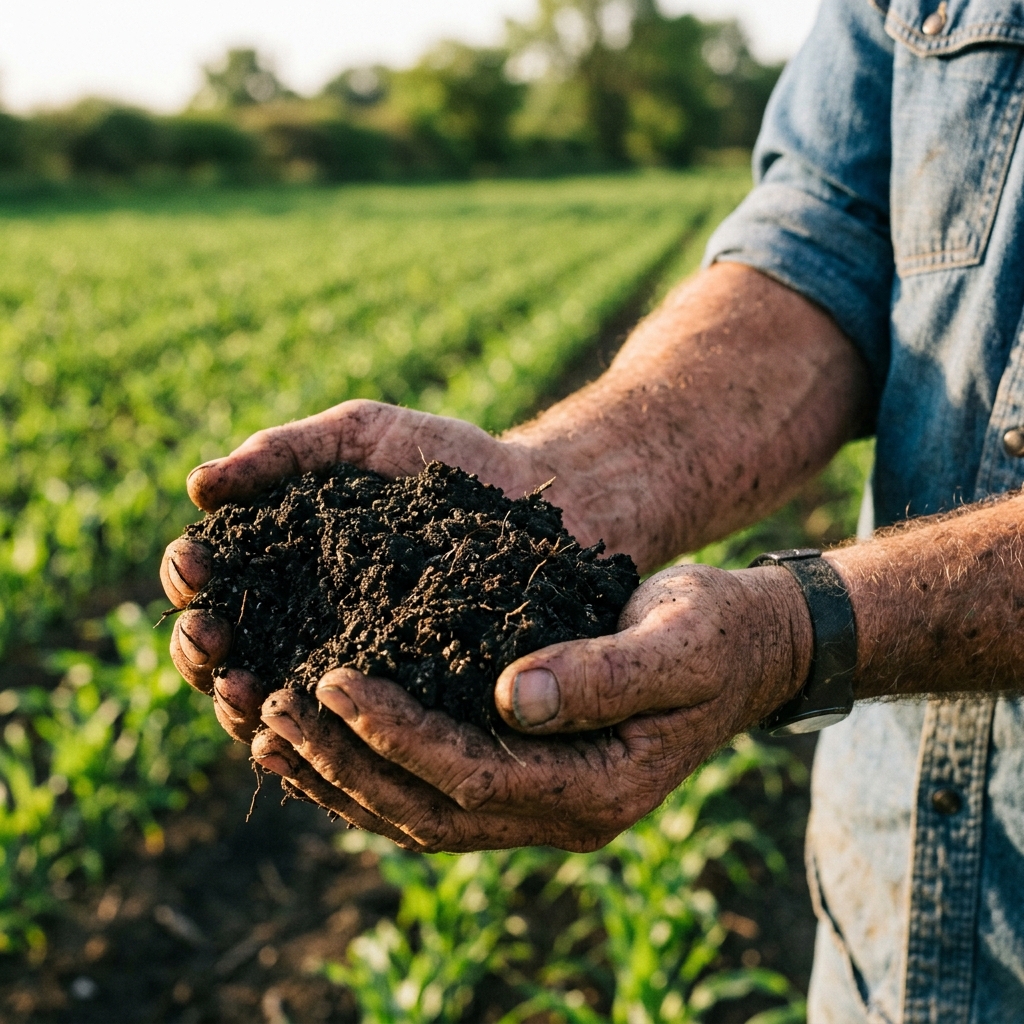
Soil is the asset beneath the asset. When a tenant mines the soil through monocropping, excessive tillage, or poor chemical management, farmland productivity declines, and future rental rates decline with it. Landowners should require periodic soil testing as a condition of the lease and review the results annually. This provides an objective measure of whether the tenant's farming practices are maintaining or degrading the land.
Beyond soil testing, visual inspections matter. Driving the property once or twice per season to check for erosion, drainage issues, weed encroachment, and fence line maintenance catches problems early. Soil management practices recommended by Agriculture Canada offer a useful benchmark for what responsible stewardship looks like. When lease decisions quietly impact land value, it is often because these routine checks were skipped, and small issues were compounded into major ones.
Payment Oversight and Financial Tracking
Secure farm lease payments are not just about getting paid on time. They create a documented financial history that protects landowners in disputes, supports accurate tax reporting, and establishes a track record that strengthens future negotiations. Informal cash payments with no receipts or records create ambiguity that benefits no one. Platforms that offer trackable, digital payment processing eliminate this risk and provide both parties with a clear transaction trail.
Payment timing also deserves attention. Many agricultural land leasing arrangements in Manitoba and Alberta use a single annual payment, but this concentrates risk. If a tenant defaults, the landowner has no income for the entire year. Splitting payments into two or three installments, tied to planting and harvest milestones, reduces exposure and gives landowners an earlier warning if a tenant is struggling financially. Lease agreements that protect long-term rental income almost always include structured payment schedules rather than relying on a single lump sum.
Choosing Between Private Leasing and Platform-Backed Approaches
Canadian landowners have traditionally managed farmland leasing through word of mouth, handshake deals, and local connections. This approach works when the tenant is known, the land is nearby, and the landowner has time to manage every aspect personally. For absentee owners, aging landowners, or those managing multiple parcels, private leasing often means inconsistent pricing, weaker tenant vetting, and minimal documentation. The comparison between farmland management vs private leasing becomes especially relevant as parcels grow in number or value.
Where a Structured Platform Adds Value
A dedicated farmland leasing platform addresses the specific friction points that cause private arrangements to underperform. Verified tenant profiles, competitive bidding that reflects actual market demand, automated lease generation, and centralized payment processing collectively reduce the administrative burden on landowners while improving outcomes. Land4Rent was built specifically for this purpose, offering Canadian landowners a single system that handles listing, bidding, lease creation, and payment collection.
The value of this approach is not just convenience. When expectations are defined early and enforced through a structured process, tenant retention improves because both parties understand their obligations from day one. Landowners using Land4Rent's auction system also benefit from transparent pricing driven by verified bids, which removes the guesswork from setting rental rates. For farmland asset management at any scale, having a repeatable, documented process matters more than any single lease negotiation.
Recognizing When Professional Management Makes Sense
Not every landowner needs a platform or professional farmland management services. If you own a single quarter section, live nearby, and have a trusted tenant with a 20-year track record, your current approach may be perfectly adequate. The calculus changes when you inherit land in a province you do not live in, when your long-term tenant retires, or when you want to benchmark your rental rates against farmland lease decisions that impact income stability across your region.
The question is not whether private leasing can work. It clearly can. The question is whether it consistently produces the best outcome for your land and your income over a 10, 20, or 30-year horizon. Landowners who treat their farmland as the long-term asset it is tend to adopt more strategic leasing approaches as their portfolios or circumstances evolve.
Conclusion
The management decisions that shape farmland leasing success are not dramatic or complex. They are consistent, intentional, and grounded in the understanding that agricultural land is a generational asset. Selecting qualified tenants, writing detailed lease agreements, monitoring soil health, structuring payment schedules, and choosing the right leasing approach are the building blocks that protect both income and land value over decades. Landowners who commit to a structured, transparent process will consistently outperform those who leave these decisions to chance, regardless of market conditions or commodity prices.
Start listing your farmland on Land4Rent today and take a structured, transparent approach to leasing that protects your land and your income for the long term.
Frequently Asked Questions (FAQs)
How does farmland management affect lease success?
Active management decisions around tenant selection, soil monitoring, lease structure, and payment oversight directly determine whether a lease generates consistent income and preserves land value over time.
What farmland management decisions increase rental income?
Decisions such as competitive pricing through market-based bidding, thorough tenant vetting, enforced soil conservation clauses, and structured payment schedules all contribute to higher and more stable rental income over successive lease terms.
How do farmland rental bids work?
Verified farmers submit competitive bids on listed parcels through a platform, and the resulting rental rate reflects real market demand rather than an arbitrary number set through private negotiation.
Is online farmland leasing better than private leasing in Canada?
Online platforms offer advantages in pricing transparency, tenant verification, and documentation that private leasing often lacks, making them especially beneficial for absentee owners or those managing multiple parcels.
How do lease terms affect long-term farmland value in Canada?
Lease terms that mandate crop rotation, restrict harmful chemical use, require drainage maintenance, and define land return conditions directly protect soil quality and, by extension, the property's long-term market and rental value.


.png)



.svg)


.svg)