%20(1).svg)

.svg)

Introduction
Owning farmland in Canada is one thing. Getting it to perform as a reliable income-generating asset through leasing is another challenge entirely. Effective land management connects every decision a landowner makes, from how they select tenants to how they structure lease terms, directly to the financial and environmental outcomes of their property. Too many landowners treat leasing as a passive, set-it-and-forget-it arrangement, only to face inconsistent rental income, tenant disputes, or declining soil quality years down the road. The gap between high-performing leased parcels and underperforming ones almost always comes down to a handful of deliberate, strategic management practices that any landowner can adopt.

Why Strategic Land Management Matters for Farmland Leasing
Land management is not just about maintaining fences and collecting rent cheques. For Canadian landowners who lease agricultural property, it encompasses the full cycle of decisions that determine whether a parcel generates strong, consistent returns or slowly loses value. A landowner who approaches leasing strategically treats their acreage as a managed portfolio, not a static holding. That shift in mindset is what separates those who build long-term wealth from farmland from those who simply hope for the best each growing season.
Building a Foundation with Clear Lease Terms
The single most important step in farmland leasing is getting the lease agreement right. A well-drafted agreement protects both parties by spelling out rental rates, payment schedules, permitted land uses, maintenance responsibilities, and termination conditions before the first seed hits the ground. Without these details locked in, disputes become inevitable, and resolving them without documentation is expensive and time-consuming. Writing a lease that holds up in court requires specificity, not generic templates downloaded from the internet.
Payment terms: Define exact due dates, acceptable payment methods, and late payment penalties to avoid ambiguity
Land use restrictions: Specify which crops or practices are permitted and which are prohibited to protect soil health
Maintenance obligations: Clarify who handles drainage, fencing, weed control, and infrastructure repairs
Term and renewal: State the lease duration, renewal process, and notice periods required for termination
Dispute resolution: Include a clause outlining how disagreements will be handled, whether through mediation or arbitration
Why Vague Agreements Cost Landowners Money
In provinces like Ontario and Alberta, landowners frequently rely on handshake deals or one-page agreements that leave critical details unaddressed. When a tenant overapplies fertilizer, neglects drainage infrastructure, or fails to pay on time, the landowner has limited recourse without documented terms. The British Columbia guide for agricultural lease agreements highlights how even basic omissions in lease language can lead to significant financial exposure. Lease agreements that fail in small details are often the ones that looked fine on paper but never addressed the scenarios that actually arise during a typical growing season.
Tenant Selection and Pricing: The Two Levers That Drive Results
Even with a bulletproof lease agreement, the wrong tenant or the wrong price can undermine every other management effort. Tenant quality and rental pricing are the two variables that most directly affect whether a farmland lease delivers strong returns or creates ongoing headaches. Getting both right requires a structured, data-informed approach rather than relying on word-of-mouth recommendations or gut feel.
How Verified Tenants and Competitive Bidding Change the Game
Selecting a tenant based solely on a phone call or a neighbour's referral introduces risk that is easy to avoid. Verified tenants, those whose identities, farming experience, and financial standing have been confirmed through an independent process, are far less likely to default on payments or damage the property. Platforms that verify both the listing and the bidder create a layer of trust that private negotiations simply cannot replicate. Creating a listing that attracts verified farmers starts with providing accurate acreage details, soil class data, and clear photos of the property.
On the pricing side, competitive bidding removes the guesswork. Instead of relying on outdated rate surveys or accepting the first offer that comes in, landowners who list through Land4Rent can let real-time demand from multiple verified farmers determine what the land is actually worth. This transparent farm leasing approach consistently delivers rates that reflect current market conditions, not last year's assumptions. In Saskatchewan and Alberta, where acreage values fluctuate seasonally, this method has helped landowners capture fair value that rental price benchmarking tools alone cannot always identify.
Avoiding the Pitfalls of Private Negotiation
Private negotiation is not inherently bad, but it carries specific risks that landowners should understand. When only one prospective tenant is at the table, there is no competitive pressure to push the rental rate to fair market value. Landowners often accept below-market offers out of convenience, loyalty, or simply because they lack comparable data. The difference between a negotiated rate and a market-driven rate can amount to thousands of dollars per year on a single quarter section.
There is also the issue of bias. Private deals tend to favour tenants who are already known to the landowner, which can exclude better-qualified operators who would bring improved farming practices and higher productivity to the land. Competitive bidding is changing farmland leasing in Canada precisely because it removes these barriers and creates a level playing field. Leasing without clear criteria frequently leads to poor tenant fit, which compounds into larger problems over multiple growing seasons.
Protecting Long-Term Value Through Ongoing Property Oversight
A lease signed and a tenant placed is not the end of the management cycle. Ongoing property oversight is what separates landowners who preserve and grow their asset value from those who watch it erode. The physical condition of the land, particularly soil health, drainage function, and weed management, determines not only future productivity but also the rental rates the property can command in subsequent lease periods.
Soil Stewardship as a Financial Strategy
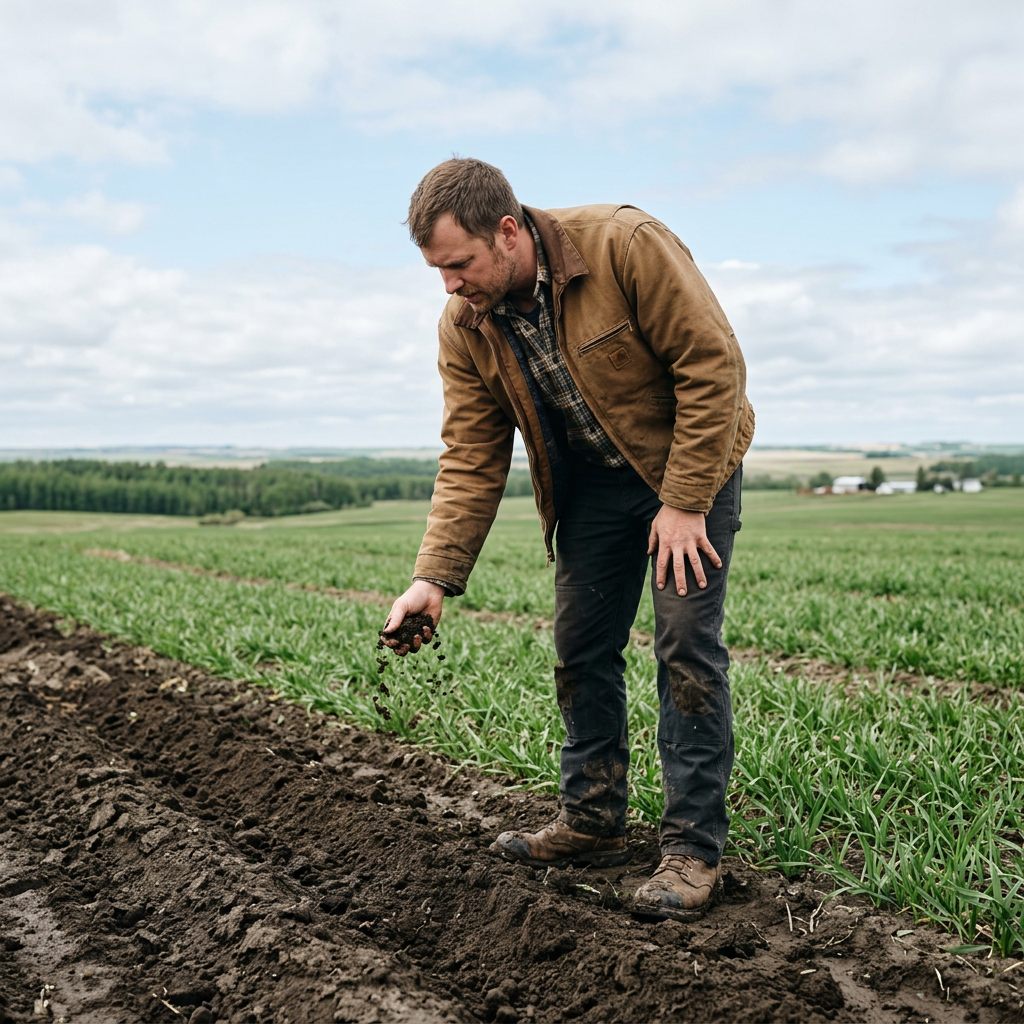
Soil health is the foundation of agricultural land rental income. Degraded soil produces lower yields, which reduces what tenants are willing to pay. Landowners who include soil stewardship clauses in their leases, requiring cover cropping, crop rotation, or limits on tillage intensity, are protecting the long-term earning power of their property. Ontario's agricultural soil health and conservation strategy outlines provincial priorities that align directly with what responsible landlords should be monitoring on leased parcels.
Annual or biennial soil tests, conducted at the landowner's expense or shared with the tenant, provide objective data on whether the land is being managed sustainably. These tests measure organic matter, nutrient levels, compaction, and pH, all factors that affect both yield potential and land value. Land4Rent encourages landowners to make soil condition part of the leasing conversation from day one, ensuring that expectations are defined early rather than discovered after damage has already occurred.
Monitoring Lease Compliance and Maintaining Communication
Even the best lease agreement is only as good as the enforcement behind it. Landowners should schedule at least one annual property visit to visually assess land condition, check for unauthorized structures or uses, and verify that agreed-upon practices are being followed. This does not need to be adversarial. A quick walk-through with the tenant builds trust and gives both parties a chance to address concerns before they escalate.
Automated lease agreements and digital payment tracking make compliance monitoring much simpler than it was a decade ago. When payment records, lease terms, and communication history are all stored in a single platform, landowners have a clear audit trail if issues arise. This kind of structured approach to Canadian agricultural land management is especially valuable for absentee owners or those managing multiple parcels across different provinces. Lease agreements that protect long-term rental income combine strong initial terms with consistent follow-through during the lease period. For landowners looking to generate passive income from farmland, this balance of structure and stewardship is what makes the difference between a good year and a good decade.
Conclusion
Better leasing outcomes do not happen by accident. They are the direct result of deliberate land management: clear lease terms, verified tenants, market-driven pricing, and ongoing property oversight working together as a system. Canadian landowners who treat their farmland as a managed asset rather than a passive holding consistently outperform those who leave results to chance. The strategies outlined here are not theoretical; they are practical steps that any landowner, whether in Ontario, Alberta, or Saskatchewan, can begin implementing today to secure farm leasing arrangements that deliver reliable, long-term returns.
Ready to take a more strategic approach to leasing your farmland? Explore Land4Rent to list your property, connect with verified farmers, and let competitive bidding work for you.
Frequently Asked Questions (FAQs)
How to manage rental farmland?
Managing rental farmland involves setting clear lease terms, selecting qualified tenants, monitoring soil health, and maintaining regular communication to protect both income and property value.
What should be in a farm lease agreement?
A farm lease agreement should include payment terms, permitted land uses, maintenance responsibilities, lease duration, renewal conditions, and a dispute resolution process.
How to set farmland rental prices?
Farmland rental prices should be set using current market data, comparable sales in the region, soil productivity ratings, and ideally competitive bidding to reflect real demand.
How to verify farm tenants?
Farm tenants can be verified by confirming their identity, farming experience, financial standing, and references through a trusted platform or independent background check.
Why use a farmland rental marketplace?
A farmland rental marketplace provides access to a larger pool of verified tenants, competitive pricing through bidding, and streamlined lease and payment management in one place.

.png)




.svg)


.svg)