%20(1).svg)

.svg)

Introduction
Canadian farmland has quietly outperformed many traditional asset classes over the past two decades, yet a surprising number of landowners treat their holdings as static stores of value rather than active income-generating instruments. Farmland leasing bridges that gap by allowing investors to capture recurring rental income while the underlying land continues to appreciate. For those evaluating farmland investment opportunities in Alberta, Saskatchewan, and Ontario, the decision to lease rather than leave land idle can meaningfully alter the trajectory of long-term returns. According to recent data from Farm Credit Canada, average farmland values rose by 11.5% nationally in 2024 alone, a figure that becomes even more compelling when layered with consistent rental cash flow. The strategic question is not whether to invest in agricultural land, but how to make that investment work harder through structured leasing.
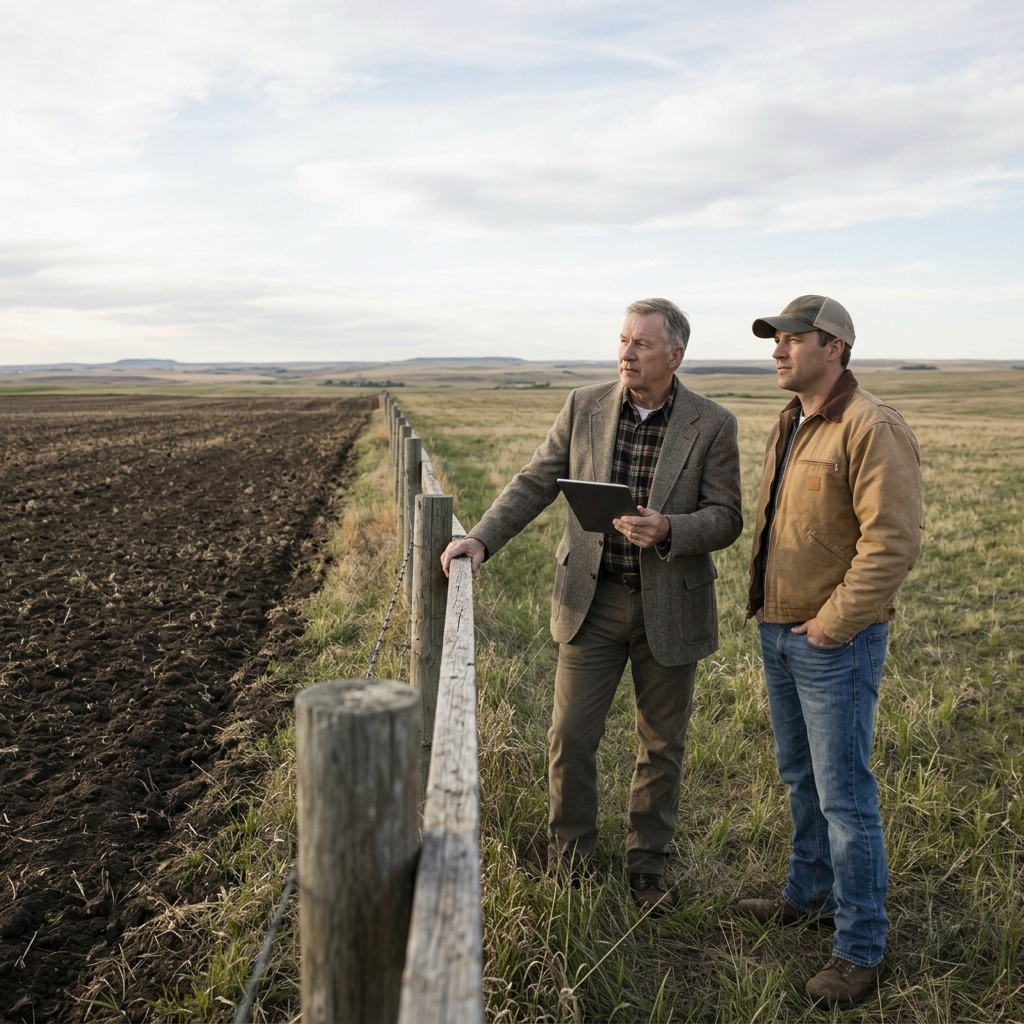
How Leasing Creates a Dual-Return Framework for Landowners
One of the clearest advantages of farmland leasing is the predictable income stream it generates. Unlike selling, which produces a one-time capital event, a well-structured lease delivers recurring cash flow that compounds the total return on a land investment over years or decades. In the Prairie provinces, annual farmland rental rates have steadily climbed alongside land values, with Saskatchewan farmland rental rates now averaging between $55 and $85 per acre depending on soil class and location. This steady income acts as a financial buffer, providing returns even during periods when land appreciation temporarily slows.
The dual-return model works like this: the landowner collects rental income (the yield component) while the land itself grows in market value (the appreciation component). Together, these two streams can deliver annualized returns that rival or exceed traditional equity portfolios, but with significantly lower volatility. When comparing farmland investment vs stocks, the case becomes especially persuasive for risk-conscious investors seeking long-term wealth preservation.
Cash flow predictability: Lease agreements lock in annual or seasonal payments that landowners can count on regardless of commodity price swings
Appreciation upside: Rental income does not diminish capital gains because the landowner retains full ownership and benefits from rising land values
Tax efficiency: Rental income from farmland can be structured to qualify for favorable tax treatment under CRA guidelines for agricultural properties
Inflation hedge: Farmland rental rates tend to rise with input costs, meaning leasing income naturally adjusts upward over time
Portfolio diversification: Adding leased farmland to an investment portfolio introduces a real asset with low correlation to equity and bond markets
Preserving Land Value Through Active Stewardship
A common concern among landowners is that leasing might degrade the land's condition over time. In practice, the opposite is often true when lease terms are structured correctly. A well-drafted lease agreement can include soil management clauses, crop rotation requirements, and conservation provisions that ensure the tenant maintains or even improves soil health. Lease agreements that protect long-term rental income are not just legal formalities; they are stewardship tools that directly impact future land value.
Tenant farming arrangements in regions like Alberta and Saskatchewan typically involve experienced operators who understand that maintaining soil productivity is in their own economic interest. A farmer who degrades soil quality reduces yield potential, which in turn reduces the rent they can justify paying in future lease cycles. This natural alignment of incentives means that a leased parcel often receives more attentive management than land sitting fallow, especially when landowners live off-site or lack farming expertise themselves.
Why Competitive Bidding and Market-Rate Capture Matter
Historically, farmland rental rates in Canada were set through informal negotiations between neighbors, often resulting in below-market pricing that persisted for years. A landowner who agreed to a flat rate in 2015 and never revisited the terms may be leaving tens of thousands of dollars on the table by 2026. The shift toward transparent, competitive processes for setting rental prices represents one of the most significant changes in how structured farmland leasing works across the country.
Competitive bidding platforms allow multiple qualified farmers to submit offers on the same parcel, with the final rate reflecting genuine market demand for that specific piece of land. This approach eliminates guesswork and ensures that farmland rental rates align with current economic conditions rather than outdated agreements. For landowners in Ontario and the Prairies, where agricultural land rental demand has intensified, this difference can amount to 15% to 30% more annual income compared to privately negotiated leases.
Land4Rent operates exactly this kind of live online rental auction system, connecting verified landowners with verified farmers through a transparent bidding process. The platform handles everything from listing to lease generation, ensuring that competitive bidding sets fair rates while minimizing administrative burden for both parties.
Regional Dynamics That Shape Rental Income Potential
Rental income potential varies considerably across Canadian provinces, and understanding these regional dynamics is essential for optimizing a land investment strategy. In Saskatchewan, high-quality cropland near major grain corridors commands premium rental rates because tenants can minimize transportation costs and access better infrastructure. Agricultural land rental in Alberta benefits from proximity to diverse end markets, including livestock operations that pay a premium for feed grain acreage and irrigated parcels that support specialty crops.
Ontario farmland, while carrying higher per-acre purchase prices, also generates proportionally higher rental income due to the province's shorter supply of available acreage and strong demand from cash crop operators. Across all three markets, the trend is consistent: landowners who actively maximize farmland returns through structured leasing outperform those who rely on passive or informal arrangements. The key is treating the lease as a financial instrument, one that deserves the same attention as any other component of an investment portfolio.
Long-Term Strategy: Leasing as an Investment Discipline
Selling farmland locks in a single capital gain and removes the asset from your portfolio permanently. For landowners who do not need immediate liquidity, this can be a costly decision. Canadian farmland values have compounded at an average annual rate above 8% over the past decade, and that growth rate shows no sign of reversing given ongoing constraints on available agricultural land supply. Leasing preserves the option to sell later at a higher price while generating income in the interim, a strategy that maximizes total return across the full holding period.
There are also tax implications worth considering. Disposing of farmland triggers capital gains obligations, whereas rental income can be managed through deductions for property taxes, maintenance, and other eligible expenses. For investors comparing the farmland leasing pros and cons against an outright sale, the math often favors holding. The combination of rental yield and deferred capital appreciation creates a compounding effect that is difficult to replicate through alternative investments. Leasing can outperform selling precisely because it keeps both return streams active simultaneously.
Building a Repeatable Leasing Process
The strongest long-term outcomes belong to landowners who treat leasing as a repeatable, optimized process rather than a one-time transaction. This means reviewing lease terms at the end of each cycle, benchmarking rental rates against current market data, and ensuring that common leasing mistakes do not erode income over time. It also means choosing tenants carefully, prioritizing operators with strong track records of soil stewardship and timely payment.
Platforms like Land4Rent simplify this discipline by centralizing the entire leasing workflow, from listing and bidding through to automated lease agreements and secure payment tracking. For landowners managing multiple parcels or those who live far from their holdings, this kind of infrastructure turns what was once a fragmented, time-consuming process into something systematic and scalable. The result is a land investment strategy that delivers consistent, market-rate returns year after year without requiring the landowner to become a full-time property manager.
Conclusion
Farmland leasing is not a passive fallback for landowners who cannot find a buyer. It is a deliberate investment strategy that combines income generation with asset preservation and long-term appreciation. For Canadian landowners holding agricultural land in Saskatchewan, Alberta, Ontario, or anywhere across the country, structured leasing transforms idle acreage into a productive financial instrument. The landowners who approach leasing with the same rigor they apply to any other investment decision will consistently capture stronger returns over time.
Visit Land4Rent to list your farmland, access competitive rental auctions, and start building a leasing strategy that strengthens your long-term investment returns.
Frequently Asked Questions (FAQs)
How does farmland leasing work?
Farmland leasing involves a landowner granting a tenant farmer the right to use their land for agricultural production in exchange for regular rental payments under agreed-upon terms.
Is farmland a good investment?
Canadian farmland has delivered consistent appreciation and low volatility over the past two decades, making it a strong option for investors seeking long-term wealth preservation.
How to maximize farmland returns?
Combining competitive lease pricing with careful tenant selection and regular lease renewal benchmarking ensures that rental income keeps pace with rising land values.
How are farmland rental prices determined?
Rental prices are influenced by soil quality, location, local demand from tenant farmers, commodity prices, and whether rates are set through negotiation or competitive bidding.
What is the average farmland rental rate in Canada?
Average rates vary significantly by province and soil class, ranging from roughly $30 per acre for marginal land to over $150 per acre for prime cropland in Ontario.


.png)



.svg)


.svg)