%20(1).svg)

.svg)

Introduction
When Canadian landowners set a lease rate, the instinct is often to divide the land into acres and apply a regional average. It is a straightforward calculation, but it regularly undervalues properties with strong soil profiles, reliable water access, or infrastructure that working farmers genuinely prize. Farmland rental rates across provinces like Ontario, Saskatchewan, and Alberta vary dramatically for land with identical acreage counts, and the gap is not random. Understanding what drives farm lease value at the property level is the difference between leaving money on the table and commanding a rate that reflects what your land actually delivers to a farming operation.
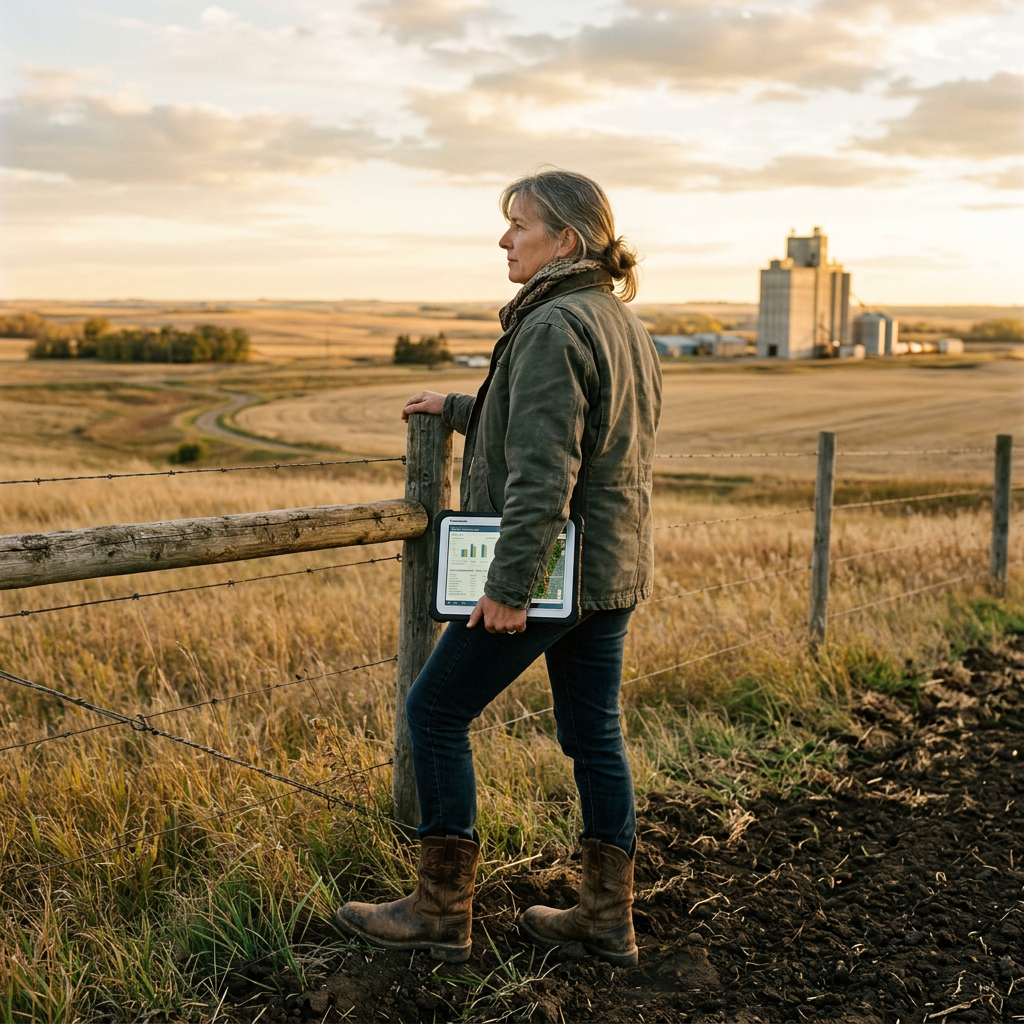
The Core Variables That Shape Farm Lease Value
Acreage tells a farmer how much land exists. It says almost nothing about how productive, accessible, or operationally efficient that land will be. The factors that genuinely move the needle on an agricultural land lease rate are tied to what the land can produce, what it costs a tenant to farm it, and how reliably it can be worked across a growing season.
Soil Quality and Crop Yield Potential
Soil quality is the most significant driver of farm lease value for productive agricultural land, and it is not a simple metric. Canada's soil capability classifications for agriculture in Ontario illustrate how dramatically adjacent parcels can differ in productive value. Farmers evaluating a lease bid do not just see acres; they see soil class, drainage characteristics, organic matter content, and historical yield data. Landowners who understand and can document their soil classification are far better positioned to justify premium farmland rental rates, particularly when competing for experienced, commercially-oriented tenants. A deeper look at Canadian soil types and their leasing implications shows just how much variation exists even within a single province.
- Soil class: Higher-rated soils produce more reliable yields and attract more competitive tenant bids
- Drainage: Tiled or naturally well-drained land reduces crop loss risk and equipment downtime significantly
- Organic matter: Higher organic content reduces input costs for tenants, which translates into their willingness to bid higher
- Topography: Flat, workable land allows larger equipment to operate efficiently, increasing its appeal to commercial-scale farmers
- Crop history: Documented rotation history and yield records reduce uncertainty for prospective tenants and support stronger lease offers
Water Access, Infrastructure, and Operational Readiness
Practical infrastructure drives lease value more than many landowners expect. Reliable water access, whether from a drilled well, a dugout, or proximity to irrigation infrastructure, can be a decisive factor in drier regions of Saskatchewan or Alberta. Grain bins, equipment storage, access roads, and fencing reduce setup costs for incoming tenants and make the property operationally ready from day one. According to Farm Credit Canada's 2025 farmland rental rate data, infrastructure presence and land condition are consistently cited as factors that separate high-value leases from average-rate agreements across provinces. When a tenant does not need to invest capital to make land workable, they are typically willing to commit a higher per-acre rate.
Location, Market Conditions, and Regional Demand
How Geography and Proximity Influence Lease Rates
Distance to grain elevators, processing facilities, and major transport routes directly affects a tenant's cost structure. A parcel of Saskatchewan crop land rental that sits 10 kilometres from an elevator costs the tenant meaningfully less to haul than an identical parcel 60 kilometres away, and that difference gets reflected in what they are willing to bid. Similarly, Ontario farm land for lease near established agricultural corridors in Middlesex or Perth counties consistently commands higher rates than comparable land in more remote locations, simply because tenant competition is more intense and operational logistics are tighter. Understanding what drives farmland rental rates in Canada at the regional level is critical before setting a listing price.
Market Timing and Commodity Prices
Farmland lease rates do not exist in a vacuum. They rise and fall with commodity prices, input cost trends, and the local supply of available land. When grain prices are strong and available lease farm land in Canada is limited, farmers compete aggressively for productive acres, while softer margins cause tenant bids to follow suit. Landowners who time their lease renewals or new listings to coincide with strong commodity environments, or who list when local supply is low, consistently achieve stronger outcomes than those who renew on autopilot. Tracking farmland lease rates in 2026 and understanding broader economic signals gives landowners a meaningful advantage when entering or re-entering the leasing market.
Lease Structure, Tenant Quality, and the Role of Transparent Pricing
Two leases on paper-identical parcels can produce very different real-world outcomes depending on how the lease is structured and who the tenant is. These variables do not affect the theoretical value of the land, but they significantly affect the realized value to a landowner over the lease term.
What Lease Terms Add or Remove from Your Return
The length of the lease, the payment schedule, maintenance responsibilities, and provisions for soil health all influence the effective return a landowner receives. A multi-year lease at a fixed rate may offer stability, but without adjustment clauses tied to commodity prices or inflation, the landowner can fall behind market rate over time. Landowners should understand that farmland lease rates vary more than most landowners expect, and that lease terms play a major role in locking in or eroding the value those rates represent. Provisions protecting soil health, prohibiting overuse, and outlining clear renewal terms are not just legal formalities; they protect long-term asset value. It is also worth understanding how land lease rates reflect factors beyond soil quality alone when designing terms that hold up across multiple seasons.
Tenant Quality and the Value of Verified Farmers
A lease signed with a financially stable, experienced farmer who has a documented track record of responsible land stewardship is worth more than the same per-acre rate signed with an unknown or unverified tenant. Poor tenants can deplete soil health, miss payments, leave infrastructure in disrepair, or abandon operations mid-season in difficult years. Landowners who access their leasing market through a platform that attracts higher-quality tenant interest benefit not just from stronger bids but from a fundamentally more secure lease arrangement. Platforms that verify tenant credentials before allowing bidding protect landowners from exactly the risks that turn a competitive rate into a costly problem.
Land4Rent operates precisely on this principle. The platform's live auction system surfaces genuine market demand from verified farmers across Canada, ensuring that the rate a landowner receives reflects real competition rather than a single private negotiation. This is also where a farmland rental auction with competitive bidding adds measurable value beyond just the final number on the lease. The FCC's farmland rental price agreement guidance offers a useful reference for structuring rate expectations before entering the market.
Conclusion
Acreage is a starting point, not a valuation. The real drivers of an agricultural land lease rate are soil quality, drainage, water access, infrastructure, location, market timing, lease structure, and tenant quality, and each of these can shift the per-acre return significantly in either direction. Canadian landowners who take the time to understand and document these factors are consistently better positioned to attract qualified tenants and command rates that reflect what their land genuinely delivers. Approaching the leasing market with the same rigour applied to any other asset transaction, including using competitive, transparent processes, is what separates informed landowners from those who default to regional averages. Not all agricultural land performs the same, and your lease rate should reflect that reality.
List your farmland on Land4Rent to access verified tenant bids and competitive pricing that reflects your land's true market value.
Frequently Asked Questions (FAQs)
What factors affect agricultural land lease value beyond acreage?
Soil quality, drainage, water access, proximity to grain infrastructure, crop history, on-farm infrastructure, market timing, and lease structure all significantly influence what a farm lease commands on the open market.
How are farmland rental rates determined in Canada?
Canadian farmland rental rates are shaped by a combination of regional land supply, tenant demand, commodity prices, soil classification, and local agricultural productivity benchmarks, with significant variation across provinces.
What should be in a farm lease agreement?
A comprehensive farm lease agreement should include the lease term, per-acre rental rate, payment schedule, soil maintenance obligations, renewal conditions, permitted crop types, and clear responsibilities for property upkeep.
How does soil quality affect farmland lease value in Saskatchewan?
In Saskatchewan, higher soil capability ratings directly increase tenant willingness to bid, since better soils reduce input costs and support more consistent yields across the variable growing conditions common to the Prairies.
How do location and crop type affect farm rental rates in Canada?
Proximity to processing facilities and transport infrastructure lowers a tenant's operating costs, while high-value crop types like corn and soybeans in Ontario or canola in Alberta and Saskatchewan support higher lease rates due to stronger margin potential.


.png)


.svg)


.svg)