%20(1).svg)

.svg)

Introduction
Farmland leasing is one of the most reliable ways for Canadian landowners to generate returns from an asset that would otherwise sit idle, but reliability is not automatic. Too many landowners deal with late payments, mismatched expectations, or lease gaps between tenants simply because no clear system is in place. The difference between inconsistent outcomes and stable, year-over-year farmland rental income almost always comes down to structure: how rates are set, how tenants are verified, and how agreements are documented and enforced. Getting that structure right is less complicated than it sounds, and the payoff is an income stream you can actually plan around.

Why Most Land Rental Income Stays Inconsistent
Inconsistency in farmland rental income rarely comes from the land itself. It comes from the process, or more accurately, from the absence of one. When landowners rely on informal handshakes, word-of-mouth tenant referrals, or rates pulled from vague regional impressions, they leave every variable in the arrangement exposed to uncertainty.
The Cost of Flying Blind on Rates
Setting rental rates without data is one of the most common and costly mistakes farmland owners make. In Canada, farmland rental rates vary significantly by province, soil class, parcel size, and proximity to grain terminals or processing facilities. Farmland rental rates in Canada are not uniform, and using a neighbor's informal deal as your benchmark means you are almost certainly leaving money on the table. According to Farm Credit Canada's 2024 rental rate data, competitive farm rental rates across provinces like Alberta and Ontario have shifted meaningfully in recent years, reflecting changes in crop input costs, commodity prices, and land demand. Landowners who revisit their rates annually based on real market signals consistently outperform those who lock in a number and leave it alone.
When Tenant Vetting Gets Skipped
An informal approach to tenant selection carries real financial and legal risk. A farmer who defaults on payment, damages drainage infrastructure, or abandons a lease mid-term creates problems that go well beyond a missed rent cheque. Landowners who consistently achieve better rental outcomes treat tenant vetting the way a residential landlord would: verifying farming credentials, reviewing references, and confirming the tenant's capacity to manage the acreage being offered. Verified tenants are not just safer, they are more likely to maintain land quality, honor multi-year agreements, and pay on time without follow-up.
The Pillars of a Reliable Farmland Leasing Framework
Building predictable land rental income is not about micromanaging every detail of your lease, it is about getting the foundational elements right so the arrangement runs itself. Four pillars matter most: transparent rate-setting, verified tenant relationships, legally sound agreements, and secure payment systems.
Transparent Rate-Setting Grounded in Market Data
The most durable farmland rental arrangements start with rates that both parties understand and accept as fair. That means landowners need access to real comparable data, not just intuition. A farmland rental income calculator can help estimate expected returns based on province, acreage, and soil productivity index, but the real advantage comes from understanding what active farmers in your market are actually willing to pay. Competitive bidding through an auction-based leasing process removes the guesswork entirely by letting market demand set the rate. This approach is especially effective in high-demand areas like farm rental in Ontario and farmland leasing in Alberta, where qualified tenant pools are large, and competition among farmers for quality acreage is genuine.
Lease Agreements That Are Built to Last
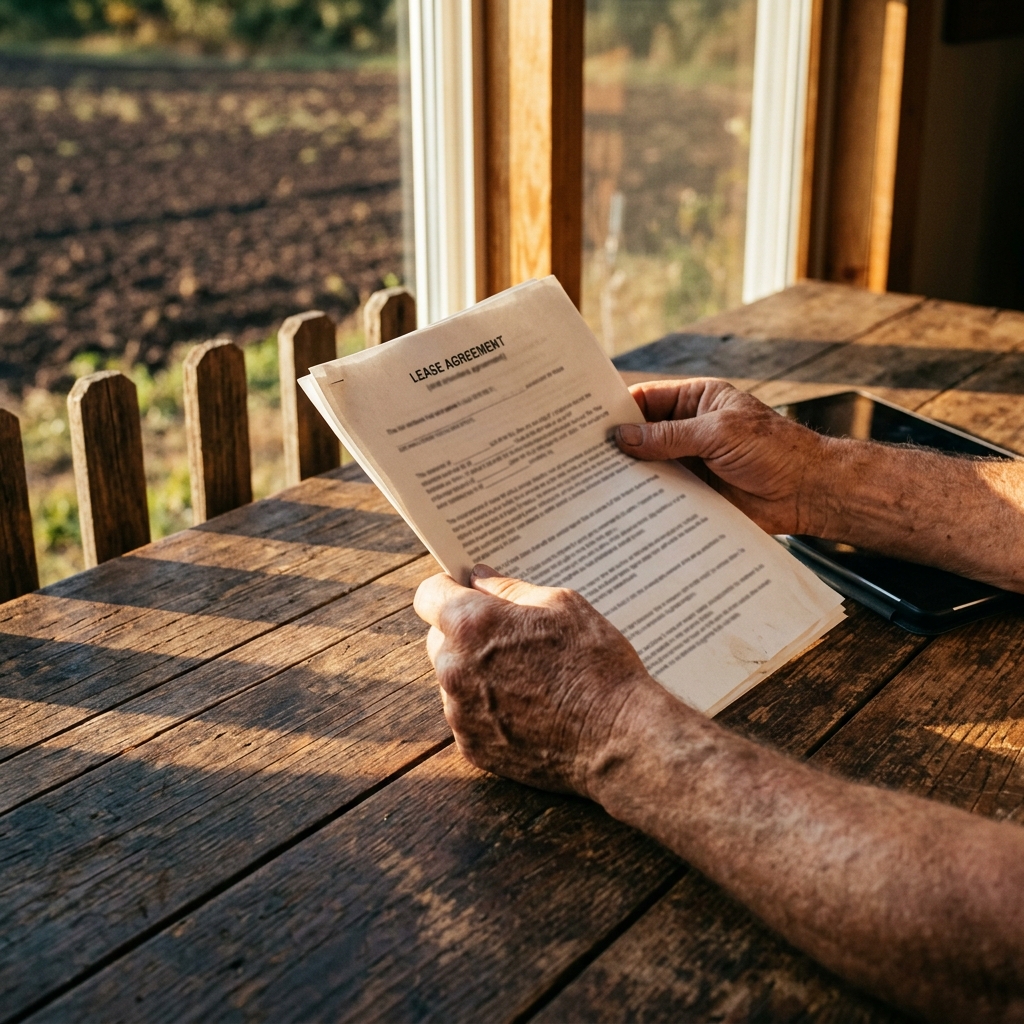
A verbal agreement or a one-page template is rarely sufficient for a serious farmland lease. The lease document is your primary protection in any dispute, and it needs to address crop rotation obligations, permitted use, access rights, payment schedules, renewal terms, and what happens at the end of the agreement. Land lease agreements that actually protect long-term rental income include clauses that account for real scenarios: what if a tenant wants to sublet? What happens if commodity prices collapse and the tenant requests a rate reduction? What if you want to sell? A well-built digital farm lease agreement answers these questions before they become arguments, and having it signed before any keys change hands is non-negotiable.
Provincial governments across Canada guide what a legally sound lease should contain. Manitoba Agriculture's contract and lease resources are one example of how provincial frameworks can inform more complete lease documentation, with comparable guidance available in Ontario and Alberta as well. Landowners who skip this step often discover the gap when they most need the protection.
Making the System Work End-to-End
Having a good rate and a solid lease is necessary, but it is not sufficient. The payment process, the documentation chain, and the ongoing management of the relationship all need to function reliably for income to stay predictable across multiple seasons and lease cycles.
Streamlining Farmland Rental Payment Processing
Payment disputes and delays are among the most common friction points in landowner-tenant relationships, and they are almost entirely preventable. Farmland rental payment processing through a structured platform creates a documented transaction record, removes the awkwardness of chasing payments manually, and gives both parties a clear reference point if questions arise. The ability to accept credit card payments or pre-authorized transfers within a single system also reduces the administrative burden considerably. Stable land income comes from process, not just demand, and payment infrastructure is a core part of that process.
Managing the Full Leasing Lifecycle
The lifecycle of a farmland lease does not start at signing and end at payment. It spans listing and marketing the property, attracting the right tenant pool, negotiating or bidding terms, executing legally sound documentation, collecting and tracking payments, and eventually renewing or remarketing the parcel. Structured farmland leasing in Canada manages all of these stages in a coordinated sequence rather than treating each one as a separate task. When these steps are integrated, gaps between tenants shrink, disputes become easier to resolve, and the landowner has visibility into what is happening at every stage without needing to manage it all manually. Landowners who generate passive income from farmland while maintaining land stewardship typically rely on platforms or systems that handle this coordination on their behalf.
Platforms like Land4Rent are built around exactly this end-to-end model, covering listing, verified bidding, automated lease generation, and secure payment tracking within one system designed specifically for Canadian agricultural leasing. Having all of that infrastructure in one place reduces the operational lift on the landowner significantly while maintaining the standards that protect long-term returns.
Setting Expectations Early to Prevent Problems Late
The most avoidable conflicts in farmland leasing come from assumptions that were never explicitly stated. How the land should be maintained, whether cover crops are required, how access roads are to be managed, and who is responsible for drainage repairs are all details that create disputes when left undefined. Farmland leasing works best when expectations are defined early, before the relationship begins, not after the first incident. Landowners who invest time upfront in defining these parameters in writing report fewer conflicts, stronger tenant retention, and better land outcomes over time.
Conclusion
Predictable farmland rental income is not a function of luck or market timing; it is the result of building a repeatable, documented process that covers every stage of the leasing relationship. Rate transparency, tenant verification, legally complete agreements, and secure payment processing are not optional upgrades to a basic leasing arrangement: they are the arrangement. Landowners who treat their farmland as a managed asset rather than a passive holding consistently generate stronger and more stable returns. The infrastructure to do this properly has never been more accessible, particularly for Canadian landowners operating in competitive provincial markets.
Ready to stop guessing and start building a leasing framework that delivers consistent returns? Explore Land4Rent to list your farmland, attract verified farmers, and manage every step of the process in one place.
Frequently Asked Questions (FAQs)
How to generate income from farmland if you're not a farmer yourself?
Landowners who do not farm can generate income by leasing their acreage to verified farmers through a structured leasing platform or agreement that handles rates, documentation, and payment on their behalf.
What is a fair farmland rental rate in Canada?
A fair farmland rental rate is determined by soil class, province, parcel size, and current crop commodity prices, and it should be benchmarked against current comparable data rather than historical informal agreements.
What should I charge for farmland rental in Ontario or Alberta?
Rental rates in Ontario and Alberta vary by region and land quality, but competitive rates are best established through market data sources or a bidding process that reflects genuine demand from active farmers in your area.
Why use a farmland rental marketplace instead of self-managing land?
A dedicated farmland rental marketplace provides verified tenant access, legally compliant lease generation, and secure payment processing that would take a self-managing landowner significant time and expertise to replicate independently.
What are the key elements of a legally sound farmland rental agreement?
A farmland rental agreement should specify permitted land use, payment schedule, crop rotation obligations, renewal and exit terms, and responsibilities for infrastructure maintenance to be enforceable and protect both parties.

.png)


.svg)


.svg)